



Followers of JoeBen Bevirt’s X account were surprised in March when the founder and CEO of eVTOL company Joby posted a photo of him wearing a pair of the company’s branded socks, limited numbers of which were only available during a promotion on the Joby website.
The post was a response to a lawsuit filed by eVTOL competitor Archer Aviation that alleges Joby has fraudulently disguised Chinese imports for its eVTOL as socks, napkins, hair clips and other miscellaneous corporate paraphernalia.
The Archer lawsuit was a response to legal action that was launched by Joby in November 2025, accusing Archer of stealing trade secrets. The suit alleges that a former Joby employee stole trade secrets, including business strategies and technical specifications, before joining Archer.
The Joby lawsuit has echoes of a similar filing made by eVTOL company Wisk against Archer in 2021, for stealing trade secrets and infringing patents. That suit alleged engineers took more than 5,000 files with them when switching companies.
After a contentious battle, Archer and Wisk settled in August 2023, with Wisk taking a stake in Archer and agreeing to provide its autonomy technology to Archer in the future.
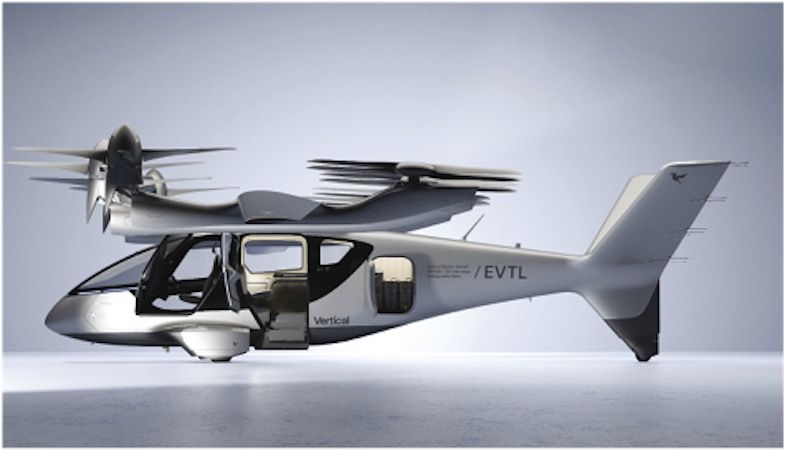
The Archer–Joby countersuit also followed a patent infringement complaint Archer filed against Vertical in February, alleging that the UK firm is copying parts of the Archer Midnight aircraft in Vertical’s Valo eVTOL.
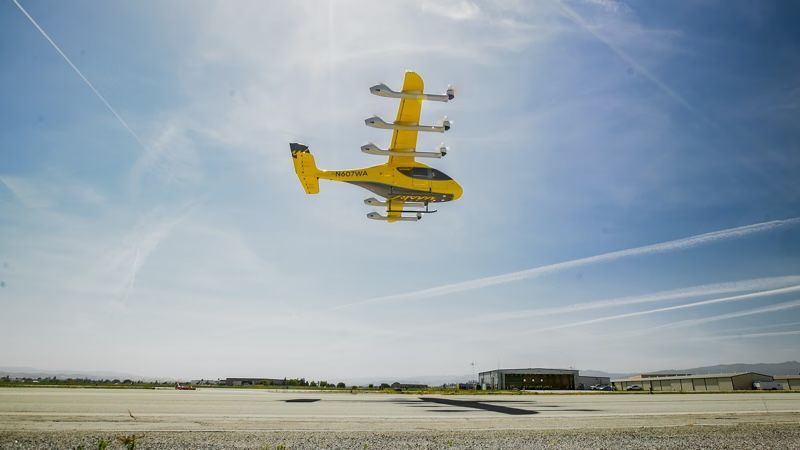
The legal twists and turns have left some commentators scratching their heads. Not only do the designs all look very similar, but none of these companies make production aircraft or any money yet.
US import regulations
As a result of Archer’s filing, Joby is being investigated by the USA’s International Trade Commission (ITC). According to Graham Phero, director at Washington DC based intellectual property law firm Sterne, Kessler, Goldstein and Fox, there could be severe consequences for Joby if the investigation finds wrongdoing.
The ITC is a more aggressive legal action than an intellectual property (IP) case in a district court. Although IP infringement and trade secret cases can take years and mostly result in financial judgments through out-of-court settlements, ITC investigations take months, and do not involve money – only injunctions that could severely restrict or even stop a company’s operations.
A competitive edge
The spate of litigation in the nascent eVTOL sector can be seen from a business perspective as well as a technical innovation one.
Competition for investment is growing among eVTOL companies. Some, such as Lilium and Volocopter, have gone bankrupt through failing to raise funds and hit aircraft development milestones.
Within that context, Phero isn’t surprised about an increase in legal cases among eVTOL firms. “We would expect companies to act to protect their investments in an immature industry that isn’t profitable yet. Some are even in the same FAA testing programs,” he says.
“But there can only be one winner in terms of who brings the first air taxi to market. They need an edge on their competitors.
“It also sends a message to employees – if you move companies be careful what information you take with you, and if you use our information over there, we’re coming after you.”
Sergio Cecutta, managing partner of SMG Consulting, which tracks the eVTOL sector and publishes reports on development progress, says, “The legal cases are normal. It’s unfortunate because it distracts from other things, but if there is a case of infringement it needs to be examined.
“There might be validity to the claims, but no one has a patent on every single design detail of an eVTOL. It’s a bit like claiming ownership of the shape of an airplane. A claim could be a stretch in some cases.”
Financial protection
The amount of money eVTOL startups are investing in IP is large. Investments must be protected, but can also be “ammunition” for defensive legal action, believes Mike Nathanson, partner at Sterne, Kessler, Goldstein and Fox.
“Following the Wisk litigation, Archer stockpiled IP with acquisitions from Lilium and Overair. Now they are asserting those patents in the ITC action against Joby,” says Nathanson.
“Both companies are intentionally building up their IP to keep others out and counter-claim if someone wants to assert something against them. You don’t want to be a sitting duck.”
“Counter-suing can be worked out financially or with a cross-license. But if you don’t have IP in your armory, the checks you are writing will be larger,” adds Phero. “Joby and Archer are extracting value from their IP.”
Filing strategies
Parallels can be drawn with the early days of social media, says Nathanson, when Facebook went on a massive IP acquisition spree to defend against lawsuits. However, the best approach to IP protection will differ depending on whether you are a large, rich corporation or a small startup.
“For most of aerospace’s history, the industry was military-related. If you are Raytheon or Lockheed Martin, there are military and government contracts, industrial partners and shared programs,” says Nathanson.
“But the big primes’ IP filing strategies don’t apply in the eVTOL space. If you are looking to get into the eVTOL market you don’t have a choice about IP protection. You can’t keep everything as a trade secret and work under the assumption you can completely trust your employees.”
“Investors won’t invest in a startup unless there is a way for them to stop others taking their market share, and that means a patent,” says Phero.
For modern aerospace development, early patent protection is important and can be accomplished affordably with a quick provisional application, says Nathanson. Patent protection should be built into a company’s development process and early patents updated to cover things that come up in testing.
Understanding what to patent and what to keep secret is equally important. Patents don’t have to be issued to be effective in court, just on file. There are other ways of deferring and delaying costs too.
Assessing the validity of design patents is tougher than assessing the validity of utility patents, so they can be seen as a vulnerability. Nathanson says, “With trade secrets you must be able to show the length of time they had access to the information and that they took it with them. You don’t need that with patents.
“But a utility patent is probably the biggest concern. You will need some ammunition to fight back.”
The assertion of design patents by Archer in the Vertical filing is therefore an unusual move. Litigation involving utility patents is not common, but design patents even less so. “If there are a lot of designs that are similar, minor differences matter more,” Nathanson adds.
Legal action consequences
“The worst-case scenario of losing an IP-related case is an injunction that stops a company making their product. A case might also consume so much time and resources you can no longer operate on a daily basis,” says Phero.
“A case can require entire engineering teams pulling and reviewing documents, plus engineers and corporate people giving depositions. It’s very disruptive, not to mention if you get to trial.”
Legal action is also very costly, financially and in terms of reputation. A company can become perceived as an unreliable partner in the industry if it is constantly involved in litigation, Nathanson points out.
“Suppliers and the government might begin to view you as unreliable, and you miss out on future contracts. It weighs on the business,” he says.
“There is a publicity element to this too. Archer has done a great job of building up its reputation. It’s not great for PR to get sued when you are the official air taxi partner of the LA28 Olympics.
“Part of a case can be showing you are the good guys with your own IP.”
A single solution
There is the thinking that eVTOL aircraft are beginning to look similar, because the vehicles are shaped by the same physics, aerodynamic challenges and technology. Design convergence occurs when people are solving the same problem, to which there is an optimal solution.
Cecutta says, “Outside of multicopter designs we are seeing developers coalesce around the lift + cruise configuration. Although it’s not as efficient, it has the advantage that it is simpler, especially for the flight controls, which regulators will be scrutinizing closely.”
Lift + cruise eVTOLs use a set of propellers for lift and a different pusher for cruise once airborne. The alternative tiltrotor configuration, being developed by Archer, Vertical, Joby and Wisk, is more mechanically complex but aerodynamically more efficient.
Lift + cruise is not popular in the USA, where Beta is the only major company using the approach. In the rest of the world it is the most prevalent design, with companies such as Brazil’s Eve and China’s Autoflight closing in on market deployment rapidly.
Despite the similarities between designs, Cecutta does not believe certification is homogenizing eVTOL designs. “There are different configurations going through. But I wouldn’t be surprised if we skew toward a mean configuration.”
Phero believes similarity currently works in eVTOL companies’ favor: “You don’t want to look too different right now for the purposes of regulatory approval. Plus, you want the aircraft to operate similarly so that a pilot doesn’t have to certify on multiple types of aircraft.”
He therefore predicts eVTOL designs will converge for approval, and then once mature, design differences might be introduced.
Weaponization
In practice, says Cecutta, distinguishing between IP lawsuits being used to prevent copying and being used as a corporate weapon to slow down the competition is almost impossible. He also does not believe there will be a rise in the number of cases to do with eVTOLs.
“The determining factors are money and the level of distraction. They can be a drain on cash reserves, and the truth is although they are growing, these companies are still startups with no revenue to speak of.”
Cecutta also suggests that the potential number of cases is limited by how law is applied around the world and the number of companies. “The Chinese system doesn’t support lawsuits,” he says. “And in Europe and the USA what is needed to be done has been done. There aren’t that many players. Who else are you going to sue?”
Phero believes that the trade secret cases in the eVTOL market are a result of employee movement and the breakneck speed at which the sector is developing. He says, “I expect more litigation in this space and further consolidation in the market. Now that it has started, I don’t think it is going to stop.
“But the risk of launching a suit is that it becomes a quagmire for all involved. It will be interesting to see how it all plays out.”
