


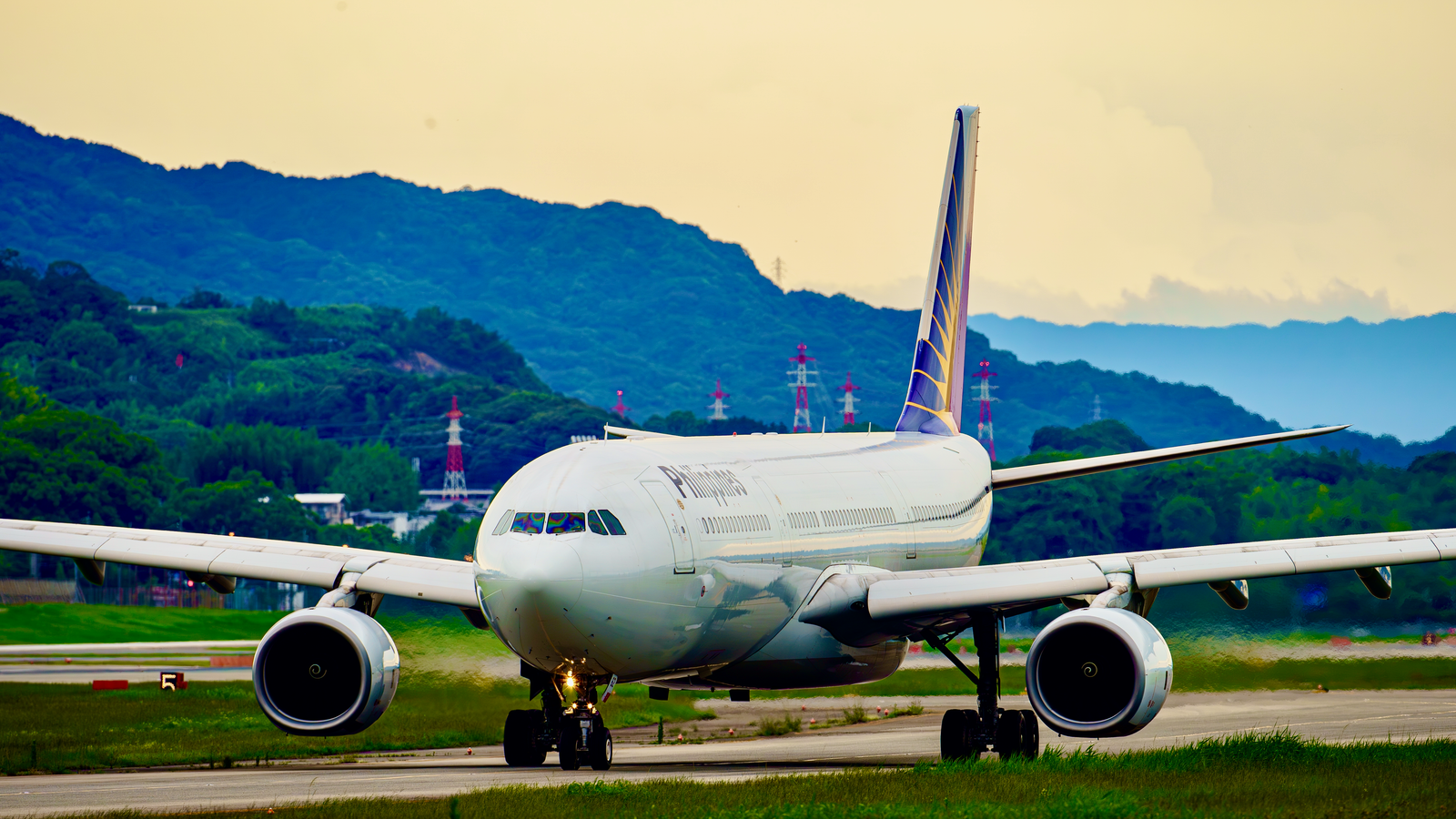
In early November, I flew with Philippine Airlines (PAL), the flag carrier of the Philippines, from Guam to Tan Son Nhat International Airport (Ho Chi Minh City) in Vietnam (Saigon). This was not the first time I had flown with the airline. In 2024, I flew from Brisbane to Bali via Manila. Philippine Airlines offers excellent inflight service and is, as an airline, thoroughly acceptable. The main issues are its terrible Manila hub and its insistence on an onward fare, which often annoys me.
In February 2026, Cirium presented PAL with its Asia Pacific’s on-time award, although, as fate would have it, my flight was delayed. Some passengers may have different opinions about PAL. The A321s I flew had generous seat pitch, but others may have a very different experience. Its new A350-1000s (which I haven’t flown) are being configured with a rather snug ten-abreast configuration. Worse, these are for long and ultra-long all-route flights (e.g., Manila to NY), so economy passengers are squished in for the long haul.
Checking In At Guam International Airport
Philippine Airlines operates an early morning flight from Guam International Airport. It departs at around 4:30 AM and is one of only a couple of flights operating at around that time; the low-cost Korean airline, Jin Air, was the other. When I approached the check-in desks, they were completely empty, and so there was no queuing at all. However, one somewhat annoying requirement was to have an onward ticket.
I have flown into Vietnam dozens of times, and mainland carriers like Vietnam Airlines, AirAsia, VietJet, Bamboo, China Eastern, and even IndiGo to some extent never require me to present an onward ticket for Vietnam. In my experience, island-nation carriers like Philippine Airlines, Cebu, China Airlines (Taiwan), and even the tiny island-hopping airline Pacific Missionary Aviation tend to require onward tickets much more than their continental counterparts.
I stood my ground and insisted I didn’t need an onward ticket, pointing to the numerous Vietnamese stamps in my passport. The staff called the manager and eventually printed out a liability waiver form acknowledging I didn’t have an onward ticket and that they weren’t responsible. First time I’ve seen that. One time, flying to Taiwan, VietJet solved the issue by issuing me a sort of dummy reserve ticket that would automatically time out in 48 hours if left unpaid.
Onboard Experience Flying With Philippine Airlines
 Credit: Aaron Spray
- Credit: Aaron Spray
- Credit: Aaron Spray
 Credit: Aaron Spray
 Credit: Aaron Spray
 Credit: Aaron Spray
Boarding the aircraft was a Cirium sticker on the fuselage by the doorway showcasing Philippine Airlines as an On-Time Performance Winner 2025 award for Pacific Asia, impressive given the state of its hub in Manila (more below). The meals, service, and inflight entertainment on Philippine Airlines were acceptable for a mainline carrier on a short international flight. The flight from Guam to Manila was on a ten-year-old Airbus A321ceo (registered RP-C9928), with in-seat entertainment and meals served in economy class.
I bring my own high-quality noise-canceling headphones to avoid using the tiny headphones provided. On this flight, I didn’t notice the airline serving alcohol. It’s possible they did, and I missed it, but I didn’t see it. The meal was a standard airplane meal, nothing exceptional or memorable. Seat pitch on these aircraft is a relatively generous 31–32 inches (78.7–81.3 cm).
In my opinion, the two-hour flight to Vietnam came with a better meal. On that flight, the airline was definitely offering complimentary wine to economy class passengers. The Vietnam route is also operated by an A321neo with economy class cabins fitted with 10.1-inch touchscreens and a selection of movies. The aircraft (registered RP-C9933) was delivered by Airbus to Philippine Airlines in 2018 and comes with a 168-seat configuration: 12 business-class and 156 economy seats.
The Old Manila Terminal
The highlight (and not in a good way) of flying with Philippine Airlines is the layover in Manila. Manila’s Ninoy Aquino International Airport (NAIA) is significantly over capacity, having been built to serve around 33 to 35 million passengers but is currently operating at over 52 million. The airport relies on a crossing-runway layout and scattered, incrementally built terminals, which limit aircraft movements.
The main terminal is also old and crowded. Its infrastructure gives the impression of crumbling. Transit passengers bypass immigration and move through security into the international departure area. This is a relatively small area, with passengers thronging the halls, and the few cafés are packed to the point that even moving around in them is a negotiation. There are significant areas with temporary works.
One of the biggest issues for me, being in transit without roaming data, was the airport WiFi. One of the two WiFi networks basically didn’t work at all, and when it did, only in select areas where the signal was strong enough. Fortunately, I managed to wander through the terminal until I found a spot where the 3-hour-limit WiFi was working smoothly. The main café lacks its own WiFi, and it’s beyond the range of airport WiFi. The Philippines is currently building a new replacement airport expected to open in 2028.
Boarding The Second Flight & Dual Nationality
- Credit: Aaron Spray
- Credit: Aaron Spray
- Credit: Aaron Spray
 Credit: Aaron Spray
 Credit: Aaron Spray
 Credit: Aaron Spray
Philippine Airlines did two things on this flight that I have never experienced before. The first was the waiver mentioned above; the second was not inputting my passports correctly, although this may have been due to US regulations. I have two passports, one British and one New Zealand. I was in Guam with my New Zealand passport, as that is the passport with my US visa. But the UK passport is better for Vietnam, as it is visa-free instead of an e-visa.
During transit, Philippine Airlines called out (by far) the longest list of names to come to the desk that I have ever heard called. My name was called, and they asked me to present a visa for Vietnam, as none was showing in their system. I said I didn’t need one as I was flying in on a visa-free British passport. They said the passport in their system was the New Zealand passport and then switched it over.
I have flown dozens of times presenting both passports (like I did this time) to the airline at check-in, saying “out on this, in on that.” There has never been an issue, apart from very confused faces in Bangladesh once. My guess is that Philippine Airlines was required to use my New Zealand passport on the outbound flight, as there is no US emigration checkpoint. The US works with the airlines to know when people depart the US. This was the first time I was legally a New Zealander for the first leg of the journey and British for the second on a single ticket.
Arriving Late In Vietnam

The first flight with Philippine Airlines departed more or less on time, while the second flight was initially delayed by around 40 minutes. By pushback, it had been delayed by one hour and 45 minutes. The aircraft landed at Ho Chi Minh City at 3:22 PM, almost exactly an hour late, making up for some of the delay. This is somewhat ironic, given the Cirium on-time award sticker on the aircraft, and mildly amusing to board a late aircraft with an airline boasting its on-time record.
It is unclear what caused the delay; the weather conditions were fair (including in Vietnam), and the aircraft actually arrived 27 minutes ahead of schedule. Likely it had something to do with an operational issue in Manila. Looking at FlightRadar24’s flight records, this flight (PR597) had a reasonably good on-time record earlier in 2026 until late October. In the last 12 flights, it was more than one hour late six times, and on October 25 it was over three hours late. That may have been due to a typhoon around that time.
Philippine Airlines fleet (per Planespotters.net) | In inventory | On order |
|---|---|---|
Airbus A321 | 26 | 11 |
Airbus A330-300 | 11 | – |
Airbus A350-900 | 2 | – |
Airbus A350-1000 | 4 | 14 |
Boeing 777-300ER | 10 | – |
Boeing 787-10 | – | 15 |
Total | 85 | 40 |
Ho Chi Minh’s Tan Son Nhat International Airport is also over capacity and somewhat run-down. Like Manila, this is not lost on Vietnam, and its replacement, Long Thanh International Airport, is expected to open in the coming months. As a mainline carrier, PAL parks at a boarding gate at Ho Chi Minh City’s airport. Passengers flying on Vietnam’s low-cost VietJet typically have to take the shuttle bus, although mainline carriers typically park at the gates.
Philippine Airlines Fleet & Its A350s

Philippine Airlines operates a fleet of 18 Airbus A321-200 (CEOs), eight A321neos, 11 widebody A330-300 (CEOs), a pair of Airbus A350-900s, four A350-1000s, and ten Boeing 777-300ERs. The midlife A330s and Boeing 777s are set to be refurbished in 2027, while the airline has outstanding orders for 13 A321neos and 14 A350-1000s.
PAL’s A350 fleet is remarkable for a couple of reasons. One is that operating a mere pair of A350-900s is almost unheard of for a mainline flag carrier. It originally ordered six, but returned four during its COVID-era financial restructuring and Chapter 11 bankruptcy. Two were returned in 2021 and two in 2022. After that, it decided to move to purchasing the higher-capacity A350-1000s.
The second remarkable A350 factoid is that Philippine Airlines is the only traditional full-service national flag carrier to select ten-abreast (3-4-3) economy seating in its new 4-inch-wider (10 cm) production-standard A350-1000s. Apart from a pair of low-cost carriers, the A350 is universally configured nine-abreast. This allows the airline to pack 316 economy seats into the aircraft (382 seats total). Interestingly, PAL is assigning the A350-1000 primarily to its most important long-haul, premium international routes, not to secondary leisure markets.
