


Talks produce updated agreement after years of deadlock but airline association IATA is not impressed.
Negotiators have reached provisional agreement on updating European Union passenger rights legislation after some 13 years, acknowledging that the revision has been difficult to achieve and, in places, falls short of ambitions.
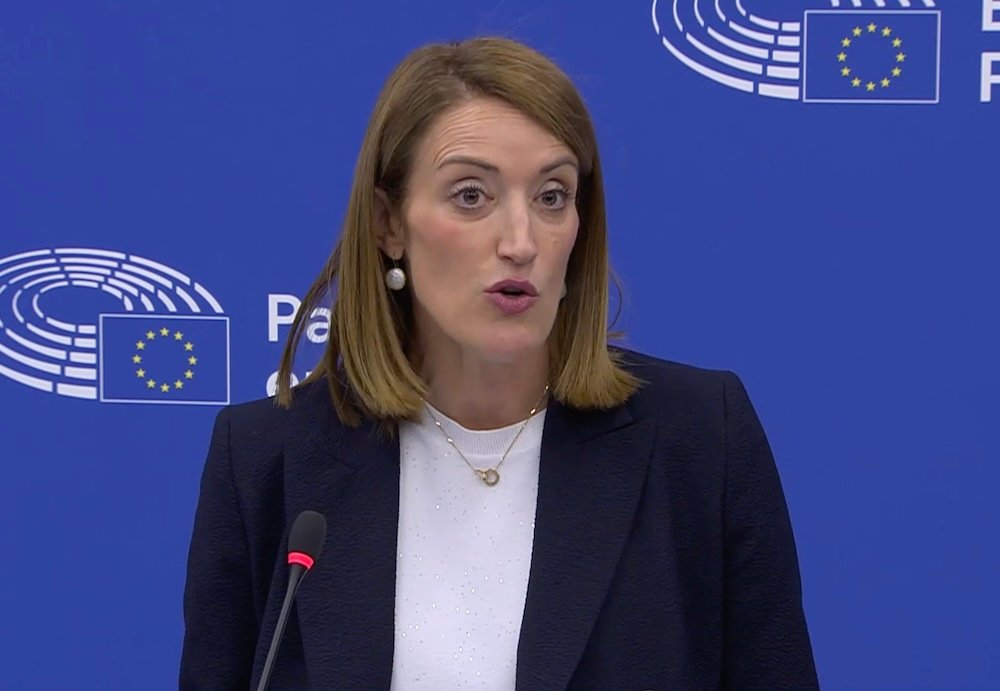
European Parliament president Roberta Metsola, speaking during a 15 June briefing, said: “There were moments when we were wondering whether we would manage — but here we are.”
While there has been pressure to weaken passenger rights, says the Parliament, this has been “resisted”.
Passengers will retain the right for reimbursement or re-routing, and to claim compensation if they are denied boarding, or if flights are delayed by more than 3h, or cancelled with less than 14 days’ notice.
The agreement sets out provisions for faster, simpler reimbursement, protection for vulnerable passengers, and additional rights regarding luggage and fees.
Transport and tourism committee vice-chair Virginijus Sinkevicius says that “more than a decade of deadlock” has been overcome. The rules had not been updated since 2004.
“Parliament was clear from day one,” says Sinkevicius. “We wanted to modernise the rules, but we would not let passengers pay the price.”
Cyprus has the EU presidency, and Cypriot transport minister Alexis Vafeades says the agreement concludes “one of the most complex legislative files of the past decade”.
He says the file remained “unresolved” for 13 years after the original European Commission proposal.
“Many thought agreement would be impossible,” he says.
He says the modernised framework will deliver “certainty, fairness, and stronger prediction”.
“Passengers and airlines will finally have clearer, simpler and more predictable rules, in one single text, and not in fragmented case-by-case court decisions,” he adds.
Airlines will still be able to avoid paying compensation, if the delay or cancellation was caused by events beyond their control.
“The new rules will have an open list of these extraordinary circumstances,” says the Parliament.
Commissioner for sustainable transport and tourism Apostolos Tzitzikostas says the compromise reached ensures greater predictability and legal certainty for airlines, helping them to operate more efficiently.
“Reaching an agreement on this reform has taken longer than any of us would have wished. And yes, I would have liked to have gone even further,” he says. “But what matters is that we got here.”
Tzitzikostas says the negotiations have resulted in the first overhaul of EU passenger rights in more than two decades.
“We have achieved the right balance,” he states. “EU air passenger rights have improved, and will remain the strongest in the world.”
This provisional agreement — reached through a conciliation committee — will have to be confirmed within the next six weeks, and the Parliament will vote on the pact during a plenary session in July.
IATA is unimpressed by the result, claiming the revision “stopped short” of effective reforms to address “deep flaws” in passenger-rights legislation.
The association had backed European Commission proposals to increase the time threshold for delays before compensation obligations take effect.
“This would have increased an airline’s ability to provide alternative arrangements,” it states. “This meaningful reform was removed in negotiations with the European Parliament.”
IATA says the only “substantial” changes are the addition of a non-exhaustive list of extraordinary circumstances — which absolves airlines of paying compensation — and a requirement for airports to have contingency plans for accommodation in case of mass disruption.
“It’s a reform in name only that does nothing to help disrupted passengers,” argues director general Willie Walsh.
“Those responsible for this political trade-off must be held accountable with transparent data to monitor its costs and impacts.”
Subscribe to gain access to all news
Already have a subscription? Log in.
Choose your subscription
Considering a corporate subscription? Contact us to find out more.
