


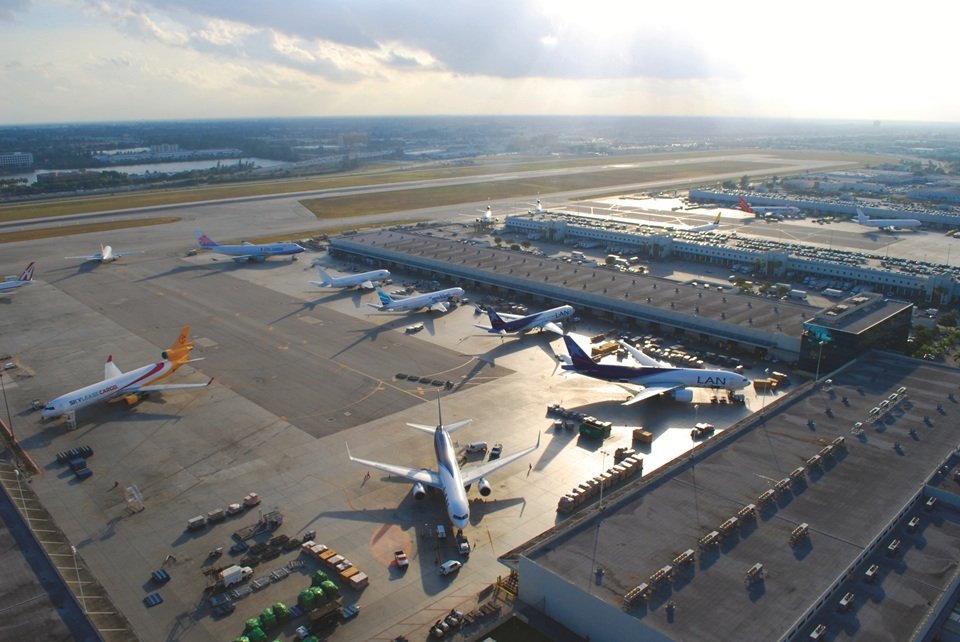
Miami International Airport (MIA) has launched a new airport cargo community system (ACCS) through its partnership with Kalé Logistics.
The ACCS platform is available to freight forwarders, cargo handlers, truckers, carriers, and ground handlers and aims to reduce reliance on fragmented, manual information exchange.
Kalé said that currently, cargo trucks arrive at MIA with limited information about their arrival times and cargo types, increasing congestion, carbon emissions, and inefficiencies. The ACCS systems will improve the situation.
“The new platform will improve information sharing, advanced planning, and truck scheduling. The ACCS will also help reduce waiting times and increase productivity across MIA’s cargo ecosystem,” the software firm said in a press release.
“This will also serve as the foundational digital infrastructure for MIA to connect with its international partner airports, further facilitating the flow of goods along specific international trade lanes.”
Miami-Dade County mayor Daniella Levine Cava said: “Most importantly, this is about making MIA more future-ready: simplifying and expediting the movement of goods through our global gateway, supporting the businesses and jobs that depend on international trade, and ensuring that our airport remains an industry leader not just in cargo volume, but also in efficiency and sustainability.”
The deployment comes as MIA has seen cargo volumes grow rapidly. Last year, Airports Council International figures show the hub registered a 13.6% year-on-year increase in cargo volumes to 3.1m tonnes.
MIA’s total cargo volume requires a daily average of 190 cargo-only flights and more than 1,600 truck trips, Kalé said.
“If the ACCS were adopted across MIA’s entire cargo operation, it would yield massive environmental and sustainability benefits,” the company claimed.
“Based on modest estimates of savings of 15% in paper handling and an average of two hours of truck turnaround time, implementing Kalé’s ACCS across MIA’s cargo community has the potential to save 5,900 U.S. tons of carbon dioxide emissions, 3,000 trees, and up to $250m in operational costs in the air cargo supply chain annually.”
“Our research shows that cargo community systems are already improving collaboration and visibility across the industry, and MIA gives us an opportunity to apply those benefits at one of the world’s major cargo gateways,” said Amar More, co-founder and chief executive of Kalé.
“Small inefficiencies can quickly grow in scale, and a common digital platform has the potential to make a meaningful operational difference. This will also help MIA digitally link with the world.”
The launch was announced at the TIACA Air Cargo Forum in Miami on 27 October.
Subscribe to gain access to all news
Already have a subscription? Log in.
Choose your subscription
Considering a corporate subscription? Contact us to find out more.
Or
Want to read this article for free?
You can read one free article per month. Enter your email and we’ll send you a free link to access the full article. No payment required.
