


Nigeria’s National Agency for Science and Engineering Infrastructure (NASENI) has announced plans to build the country’s first Metal Additive Manufacturing Hub, an initiative intended to reduce Nigeria’s reliance on imported industrial components and build domestic metal 3D printing capacity.
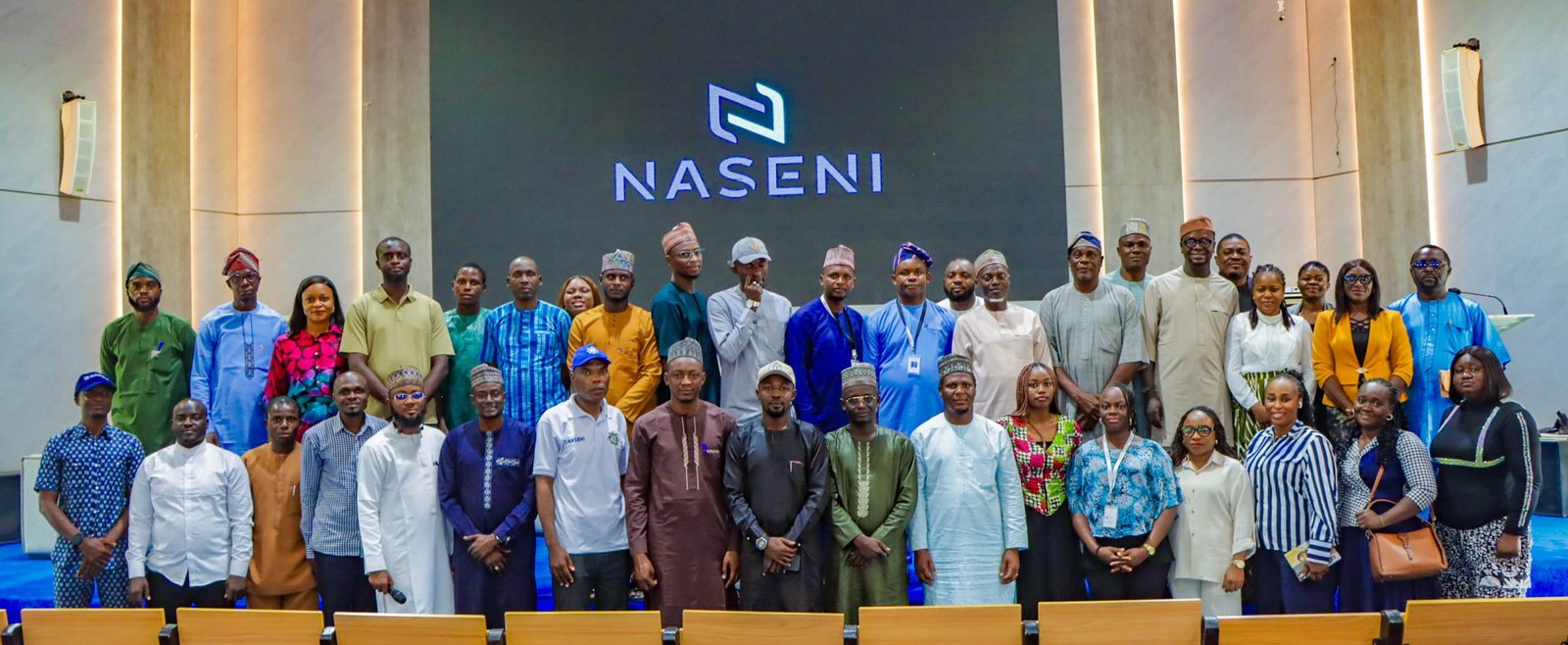
The agency presented the plan at the second edition of its Science Perspective Engagement Series, held at the Technology Orientation Centre at NASENI Headquarters in Abuja.
Hub Would Cover Full Manufacturing Chain
The proposal was outlined in a paper titled “The Science of Layer-by-Layer Fabrication of High-Value Metallic Components: Towards Establishing Nigeria’s Metal Additive Manufacturing Hub,” presented by Abdulrahman Barkindo Bawuro, Overseeing Officer of the Advanced Manufacturing Technology Development Institute (AMTDI) a NASENI division based in Jalingo, Taraba State. The paper was delivered on Bawuro’s behalf by Chief Engineer Okechukwu Chijioke.
As described, the envisioned hub would integrate the full metal additive manufacturing ecosystem under one roof: digital product design, process simulation, laser powder-fusion systems, powder recovery and recycling, surface finishing, and quality assurance facilities. Bawuro proposed a public-private partnership structure to fund and operate it, with government supplying enabling infrastructure while private companies contribute specialized equipment, technical expertise and investment capital.
Link to Nigeria’s Minerals Sector
Bawuro framed metal additive manufacturing, which builds components layer by layer from digital designs rather than removing material from larger stock, as a route to greater precision, less waste, and the ability to produce complex, customized parts. He pointed to existing global applications including aircraft parts, medical implants, turbine systems, electric vehicle components, pistons, brake calipers and oilfield equipment.
He tied the proposal directly to Nigeria’s solid minerals sector, arguing that locally processed minerals could serve as feedstock for the metal powders used in additive manufacturing, adding value domestically rather than exporting raw materials. He said building this capacity would keep capital in Nigeria that is currently spent on imported components, while also creating skilled jobs, generating revenue and strengthening the country’s position in emerging manufacturing technology.
Agency Frames Event as Innovation Platform
Deputy Director and Head of Research and Laboratory Development Hassan Bakare described the Science Perspective Engagement Series as a platform for knowledge exchange and practical problem-solving on Nigeria’s technological and industrial challenges. Closing the session, NanoBio Deputy Director Oladipo Dele Kayode called on participants to turn the discussion into concrete innovations that could advance the country’s industrial development.
No timeline, funding figure, or specific site for the proposed hub was disclosed at the session.
Nigeria Joins a Wider Push for National Metal AM Strategies
NASENI’s proposed hub targets a specific gap: Nigeria imports most of its industrial metal components despite sitting on mineral reserves that could feed a domestic powder supply chain.
Nigeria isn’t alone in this approach. India’s Ministry of Electronics and Information Technology rolled out a National Strategy for Additive Manufacturing in 2022, setting up a national apex body (NCAM) to hit targets of 50 India-specific AM technologies and $1 billion added to GDP.
The UK took a similar route earlier with its AM UK National Strategy, a 44-page roadmap built with industry and government input to keep the country competitive in high-value manufacturing. Both cases paired ambition with a formal apex body and measurable targets, the piece NASENI’s plan has yet to spell out.

3D Printing Industry is inviting speakers for its 2026 Additive Manufacturing Applications (AMA) series, covering Energy, Healthcare, Automotive and Mobility, Aerospace, Space and Defense, and Software. Each online event focuses on real production deployments, qualification, and supply chain integration. Practitioners interested in contributing can complete the call for speakers form here.
To stay up to date with the latest 3D printing news, don’t forget to subscribe to the 3D Printing Industry newsletter or follow us on LinkedIn.
Explore the full Future of 3D Printing and Executive Survey series from 3D Printing Industry, featuring perspectives from CEOs, engineers, and industry leaders on the industrialization of additive manufacturing, 3D printing industry trends 2026, qualification, supply chains, and additive manufacturing industry analysis.
Featured image shows The National Agency for Science and Engineering Infrastructure. Photo via NASENI.
