


A spin out from the UK’s University of Surrey is to flight test a more effective miniature air data probe system that can detect ice build-up as it happens, and reduce the use of power-intensive de-icing systems after being awarded UK Government funding.
Air data probes on aircraft measure air pressure, temperature, and flow direction to calculate flight parameters such as speed, altitude, and angle of attack
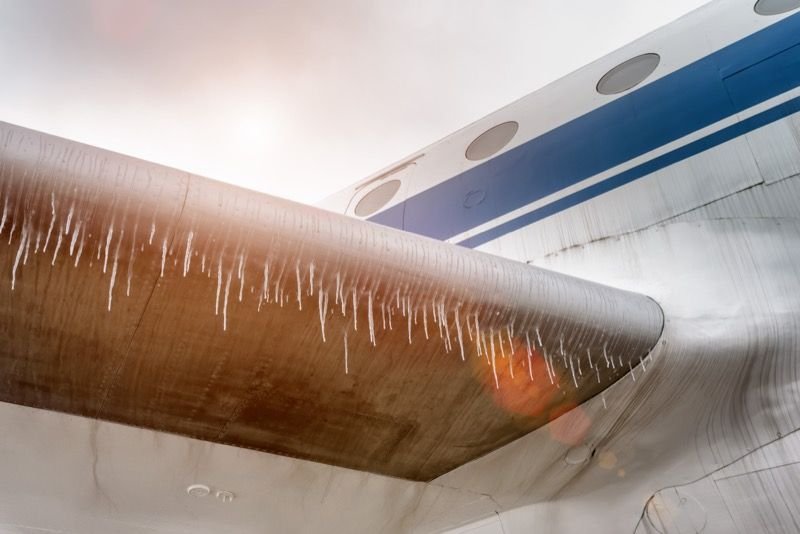
A major challenge in aviation is ice accumulation, which on wings can disrupt airflow, reduce lift and in extreme cases lead to loss of control. Existing probes do not function effectively when ice, water or debris block or damage the pressure sensors they use.
The next generation air data probe combines two technologies: micro-CTA (Constant Temperature Anemometry) sensors which measure air flow speed, developed by Surrey Sensors, and the Airflow Performance Monitor created by the Certification Center Canada.
The probe, which is just millimetres wide sits almost flush on the wing, and because it does not have holes, does not clog up like existing systems. This means the devices can work more reliably in extreme conditions.
The waterproof micro-CTA sensors measure flow speed using heat transfer principles, while the APM detects the effects of contamination such as ice on the aircraft’s surface.
Airflow speed is measured near the surface of the wings quickly as a function of time to give a strong indication if there is fouling from ice or debris, instead of inferring that the effect on the wing from a sensor measurement, like existing systems do.
Dr David Birch, director of research at Surrey Sensors and head of the University of Surrey’s Centre for Aerodynamics, Aerospace and Automotive Engineering said, “We are contributing our micro-CTA pressure measurement system, which is very small and accurate. It enables the device to comply with regulations, because there is no common source of failure.
“ThIS technology means pilots can get a much clearer picture about what’s happening with the wings in real time. It’s not just detecting ice but understanding how it is affecting the aircraft’s performance, enabling better, more reliable decisions in flight.
“Also, because the micro-CTAs are much smaller than existing pressure sensors, it opens the possibility of putting them on the rotor blades of helicopters, to detect if there is anything wrong that could affect performance. Until now, there’s been no way of knowing that.”
As well as this, with more knowledge about the state of the wing, pilots could reduce the use for energy-intensive anti-icing systems, which can increase fuel consumption when used.
In addition, the thermal sensors’ small size and relatively low cost makes them suitable for use on drones.
Birch added, “The next step is the flight tests in Canada and those are happening right now. Once they are done, we will develop a product and start putting them on aircraft. It’s intended to be retrofit, so they won’t necessarily go on new airframes only.”
