


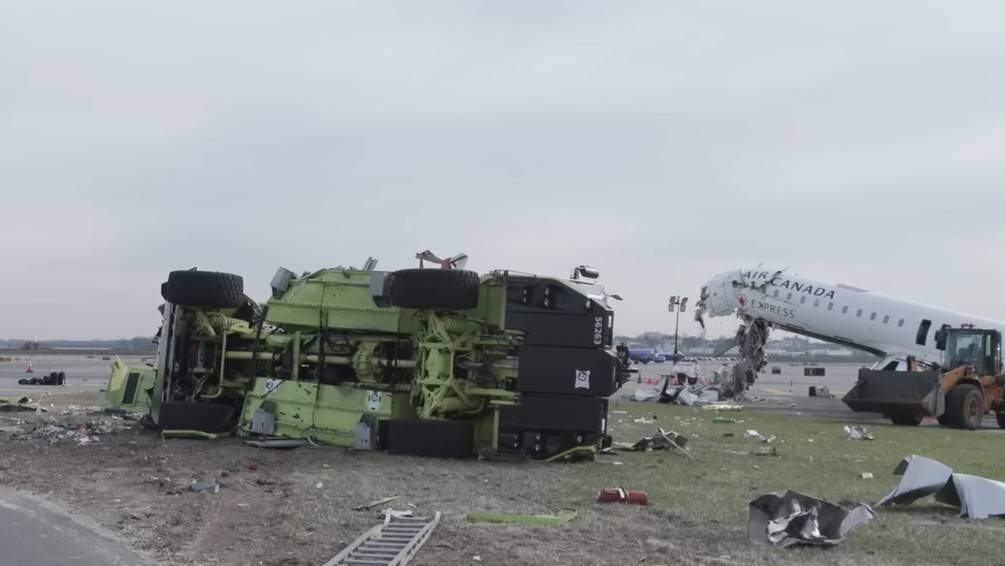
The ongoing investigation into Air Canada Express flight 8646’s deadly collision with a firetruck has led analysts to conclude that although the firefighter driving heard the warning call moments before striking the plane, it was unclear who the call was for. The truck received clearance from air traffic control before crossing the runway at  LaGuardia Airport (LGA), but a breakdown in communication led the vehicle directly into the path of the landing Bombardier CRJ900.
The truck began moving immediately after receiving clearance, in conflict with signals on the airfield, but the monitoring systems also failed to send an alert to either the driver or the controller in the tower. AP News says the surface monitoring system had been unreliably tracking the truck’s movements, and by the time the firefighters understood they were being called by ATC to stop, they had already entered the runway.
Swiss Cheese: Failure After Failure That Led to Tragedy For Flight 8646

Aviation safety consultant John Cox explained that the controller did not use the proper format in the first stop call to the firetruck, which led to confusion. Cox said that it is understandable the firefighters would not have responded because ATC had been directing ground taxi movements for an aircraft just before. It wasn’t until the second call that the tower specified Truck One in its warning message.
Another aviation safety expert, Jeff Guzzetti, also weighed in on the mishap analysis, saying that the pilots should have had an opportunity to wave off and cancel their landing. The truck that was struck by Air Canada Express flight 8646 was in the lead of an emergency vehicle convoy en route to respond to a United Airlines aircraft with fumes, causing the cabin crew to feel ill. It is possible that they were narrowly focused on landing activities in the cockpit and did not recognize the impending hazard.
Investigators found that Truck One was cleared to transit the runway twelve seconds before AC8646 touched down, and it was not until four seconds before impact that ATC began frantically calling the firetruck to stop. Guzzetti said to AP News:
“There were so many opportunities where this accident could have been prevented.”
The Human Cost Price Of Breakdowns In Aviation Safety

When AC8646 collided with Truck One, both pilots, Antoine Forest and Mackenzie Gunther, were killed. Their deaths marked the first fatal accident at LaGuardia in over three decades. They were aged 30 and 24, respectively. Of the 76 souls aboard at the time of the accident, 39 were also hospitalized.
One flight attendant was thrown from the plane after the impact sheared off the jet’s nose and launched her out of the cabin and onto the tarmac. The two firefighters in the truck survived, and both have been transferred from the hospital to outpatient recovery.

United Airlines Jet & Military Helicopter Separated By Only 500 Feet Over Orange County
A close call in the sunny skies of SoCal.
Investigating The Root Cause: The Systemic Crisis Behind A Tragic Accident

LaGuardia was reportedly busier than normal that night. There were just two air controllers on duty per normal staffing standards, despite the volume of inbound flights after 10:00 pm EST being more than double the usual number. The Port Authority of New York and New Jersey is investigating in follow-up to the National Transportation Safety Bureau’s efforts. The more senior controller had delegated routine operations to the junior staff member while coordinating the emergency response to the United aircraft’s odor issue.
In the span of 40 minutes prior to the arrival of AC 8646, 12 aircraft had landed with only a few minutes pacing between each plane. The task saturation of the control tower is indicative of an underlying issue that the Federal Aviation Administration and NTSB are attempting to grapple with. The federal agencies have been spurred by the fatal crash of American Airlines flight 5342 in January 2025, which killed 67 passengers and aircrew at Ronald Reagan International (DCA) when it collided with a military helicopter on approach.
The systemic crisis of understaffed air control towers and inadequate safety equipment across the US is being largely cited for the horrific loss of life aboard both flight AC8646 and AA5342. This concern of wider hazards has been underscored by frequent near-misses and close calls at other airports around the nation.
