


Collier County shows how aerial data and integrated systems are changing police response
At the Motorola Solutions Summit in Orlando, Florida (April 19–22), speakers from the Collier County Sheriff’s Office described how their real-time incident center operates, and how drones and aerial data now play a central role in that workflow.
A Real-Time View of an Incident
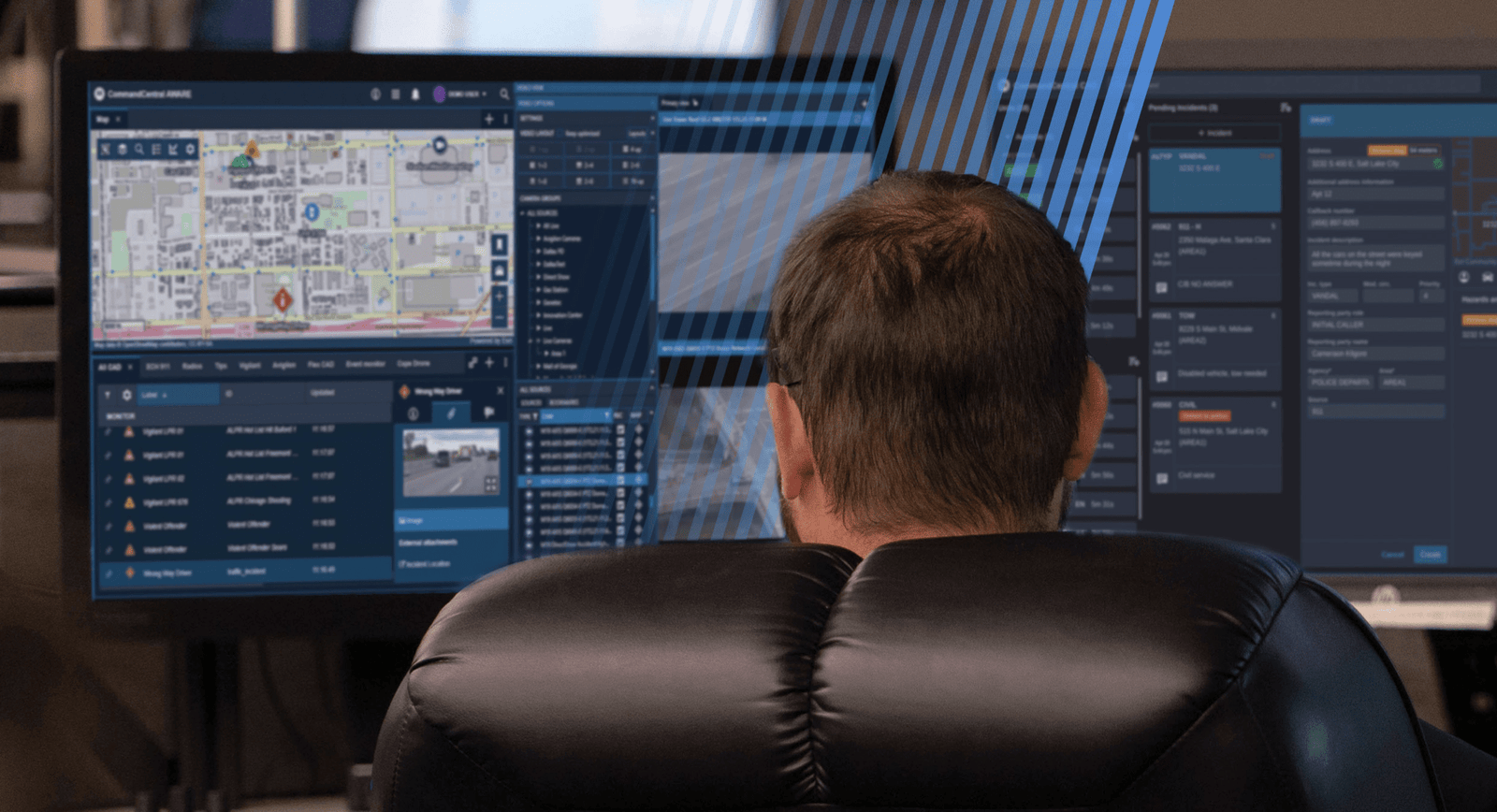
Inside Collier County’s real-time operations center, analysts sit in front of a screen that brings together dozens of data sources and overlays that data on a map. Using CommandCenter Aware from Motorola Solutions, they can see data that includes dispatch calls, officer locations, body cameras, traffic cameras, license plate reader alerts, and drone feeds all at once. Selecting the relevant data for the incident, analysts can instantly see what’s important – in a way that makes sense.
It’s a bit like the glass table in the new TV version of Hawaii 5-0. But in Collier County, the system isn’t fiction. What began as just a few data layers a few years has grown into a powerful tool that can leverage more than 70 different datasets, including aerial imagery and live video from multiple sources.
The goal is simple: eliminate the need to switch between systems during a critical moment. Instead, everything appears in one place, allowing analysts to focus on what is happening rather than where to find the information.
Use Case: Guiding Officers Inside a School
One of the clearest examples shared at the summit involved school safety.
It’s something every community dreads. But in an emergency, officers responding to an incident at a large school may not know the layout. They don’t know where they’re going or what lies around the next corner.
Using CommandCenter Aware, analysts can pull up a detailed map of the building. They can overlay information about where each CCTV camera is placed, see where their officers are by tracking their radios, show where all of the other partnering responders are in the building, and stream video from the cameras (or drones or other data sources) along side the map. Analysts can guide officers step by step, providing the maximum situational awareness.
The result is a coordinated response where field personnel are not operating blindly, even in unfamiliar environments.
Managing a Vehicle Pursuit
The use cases are myriad. Vehicle pursuits, for example, are fast and unpredictable. In these situations, the real-time crime center acts as an aerial and digital command post.
Analysts can monitor the pursuit using traffic cameras, vehicle locations, and increasingly, drone feeds. They can identify the next available traffic camera along a route and quickly switch views as the suspect moves.
From above, drones provide additional context. Analysts can see gaps in a perimeter, monitor nearby traffic conditions, and watch for critical details such as objects being thrown from a vehicle.
This “10,000-foot view” supports officers on the ground, who are focused on driving and immediate safety.
The Next Generation of DFR
Collier County has integrated Drone as First Responder (DFR) capabilities directly into its command center environment. During incidents, drones can be deployed to provide live video before officers approach.
The integration goes beyond video. Drone telemetry and flight paths can appear on the same map as officer locations. This helps teams understand not just what the drone sees, but where it has already been – so commanders can see what still needs to be done.
Extending Visibility Through Partnerships
The system’s value increases as more data sources are added. Collier County has built partnerships with neighboring agencies, allowing them to share selected data during major events or emergencies. During hurricanes, for example, agencies can view each other’s vehicles on a shared map, improving coordination across jurisdictions.
Public-private partnerships also play a role. Businesses, churches, and homeowners can choose to share or register camera systems. This expands visibility beyond government-owned infrastructure, giving analysts more context during incidents.
From Tools to Workflow
The session made one point clear: the impact is not just about adding drones, license plate readers or body cameras. It is about how these tools work together.
Drones provide the aerial view. Cameras offer fixed perspectives. Dispatch systems track incidents. When combined into a single interface, they create a continuous, real-time picture of an event.
For analysts, this reduces the challenge of managing multiple systems during high-pressure situations. For officers, it means receiving clearer, faster information when it matters most.
As agencies continue to expand drone programs, their effectiveness will depend on this kind of integration—where aerial data is not separate, but part of a unified operational workflow.
Read more:
