


By Dronelife Features Editor Jim Magill
Powerus counter-UAS deal signals a new private sector paradigm.
In what might be the first transaction of its kind, U.S.-based autonomous systems company Powerus recently announced a $22.3 million contract to export its networked counter-UAS technology – not to the government of an allied nation, but to a private corporate entity.
According to a press release, Powerus has agreed to provide networked systems for “detection, tracking, classification and early-warning capabilities supporting the protection of critical oil and gas infrastructure in the Middle East.” Powerus declined to identify the customer or to give any further details about the deal.
In an interview, Powerus CEO and Co-founder Brett Velicovich said the transaction could represent a paradigm shift in the way that UAS-oriented defense contractors market their products.
“This is really a pioneering event in the drone space, in the counter-drone space,” he said. “I am not aware of a scenario where commercial entities are taking it upon themselves to buy what is essentially military-grade equipment for protecting their infrastructure, because they just can’t wait for their governments to protect them.”
Powerus will provide the equipment and will support the integration of the network in phases, in accordance with the customer’s operational requirements. “The system will provide a unified operational picture through command and control capabilities located at the customer’s operations center, allowing operators to identify, track and assess potential unmanned aerial threats across their operating environment,” the press statement says.
“We are also providing our own people to be able to man the systems. These people will have combat experience working under the threat of enemy drones and they’ll help man the systems and provide the experience that’s needed to know what an incoming threat looks like,” Velicovich said.
Guardian Interceptor Technology to Expand Scope of Deployment
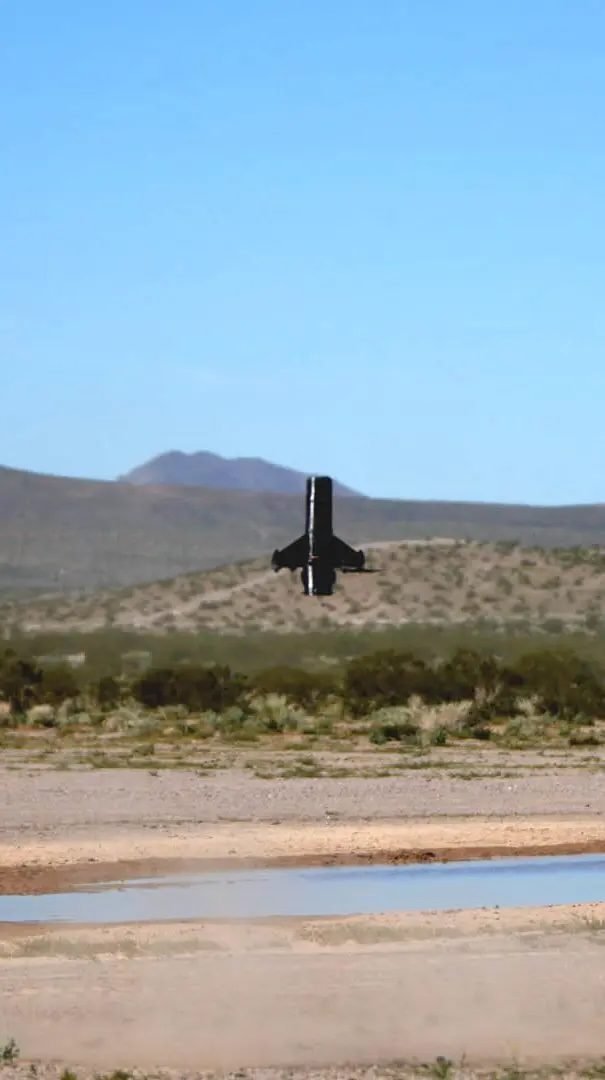
The initial deployment of the technology will focus on providing operators with the ability to detect and identify potential unmanned aerial threats. He said the system’s architecture is designed to accommodate the further integration of Powerus’ Guardian interceptor technology, which would give the customer the counter-UAS capabilities to mitigate the threat of hostile drones over its facilities.
“So, you can see this is bigger than just a big sum of money and a contract. It’s actually telling where the industry is headed,” Velicovich said.
He said recent technological developments and advances in the use of drones by militaries in conflicts from Ukraine to the Middle East have demonstrated the need for private infrastructure owners around the world to seriously think about developing their own counter-drone capabilities.
“The reality is things that were considered off-limit targets are now no longer off-limit targets,” he said. Privately owned infrastructure, such as data centers, warehouses and even hotels have all come under attack from UAVs in recent months.
“For centuries, people have put up fences and said that was good enough because they were focused on stopping prying eyes and all that,” Velicovich said. “Now companies are going to have to start putting up fences in the air.”
He said the contract calls for Powerus to install “the baseline infrastructure for our full-stack sense-detect-and-defeat solution that we announced a couple months ago in partnership with Digital Force Technologies.” He added that the company developed the integrated system for detecting and defeating hostile drones at the urging of the Pentagon.
Officials with the U.S. Department of War approached Powerus, asking for the company’s help in improving the operations of a shipment of drone interceptors, which the Pentagon had obtained from another defense drone contractor, he said. The Defense officials reportedly told Velicovich, “We sent a bunch of interceptors to the Gulf States, to certain countries who asked for help, and then we realized that those interceptors were useless without radar, without people who are combat-trained, without folks that have the knowledge on the ground.”
Restrictions on Import, Export of Technology
Equipment to be used in the contract will be produced at Powerus’s manufacturing facility in North Carolina. Powerus was required to adhere to stringent U.S. export restrictions in order to ship out the military-grade technology.
“Most of our stuff is restricted from export without approval from the US government. And this is a scenario in which the US government was involved in approving certain aspects of the system,” Velicovich said.
In other facets of its business, Powerus is establishing overseas manufacturing hubs, such as one recently established in the United Arab Emirates to assemble 3D printed components to build interceptors for the use of the U.S. military in the Iran war.
According to a recent New York Times article, factories affiliated with Powerus make about 3,000 drone interceptors a month, and the company is planning to establish a network of factories that will increase global production to 15,000 units a month by the middle of next year.
Velicovich said the overseas production hubs are part of the company’s larger strategy to shorten supply chains and to build drones and related equipment at scale, close to where it is most needed.
“What we want to do is to be able to manufacture locally. We’re not building systems that are like some Patriot missile that’s designed to build 10 of them a month,” he said. “We’re designing systems that you need to be building tens of thousands per month if you look at what Russia and Ukraine are doing.”
This manufacturing model is in keeping with the Pentagon’s new drone procurement directive, emphasizing speed of production. The U.S. military’s Drone Dominance agenda in turn is largely based on Ukraine’s military strategy that has relied on the rapid manufacture and deployment of drones to greatly help that country continues its fight against the larger and more powerful forces of its Russian foe.
Defense Drone Market Heating Up
Powerus has a history of working with the Ukrainian drone industry, since the onset of the war. Its Guardian interceptor is based on a Ukrainian design that was effective against Russian Shahed drones, according to The Times.
Velicovich said the company’s experience in working with the Ukrainians and seeing first-hand the use of drones in combat has given the company “a leg up” on rival drone manufacturers in securing contracts with the U.S. government.
“There’s a ton of competition. There’s more competition than ever before, in my opinion, in the drone space,” he said. “We go into a meeting with 10 other competitors, and none of those competitors can say that their systems are being used in Ukraine. But we can because we know that’s the gold standard for what works and what doesn’t.”
Read More

Jim Magill is a Houston-based writer with almost a quarter-century of experience covering technical and economic developments in the oil and gas industry. After retiring in December 2019 as a senior editor with S&P Global Platts, Jim began writing about emerging technologies, such as artificial intelligence, robots and drones, and the ways in which they’re contributing to our society. In addition to DroneLife, Jim is a contributor to Forbes.com and his work has appeared in the Houston Chronicle, U.S. News & World Report, and Unmanned Systems, a publication of the Association for Unmanned Vehicle Systems International
