


PrintPal, a 3D printing technology platform headquartered in Chicago, Illinois, has launched PrintPal Tools, a suite of more than 15 browser-based tools for hobbyists, professional makers, and online sellers. All tools run entirely in a browser and can be accessed without installing software or creating an account. PrintPal Tools spans three categories: seller and business tools, CAD and design tools, and printer calibration utilities.
Available features include a parametric bin generator, a 3D text generator, a multi-format 3D model viewer and converter, a G-code visualizer, and a lithophane generator. Calibration utilities cover layer height calculation, flow rate tuning, e-steps adjustment, volumetric flow limits, stepper motor voltage settings, filament drying guidance, and material shrinkage estimation. According to the Chicago-based developer, the tools are intended to reduce the need for users to rely on multiple websites for file conversion, printer calibration, and design preparation.
Two tools introduced with the release focus on marketplace selling and model modification. The AI Product Listing Generator allows users to upload a product image or 3D model file together with a short description and target audience. The system generates a complete SEO-optimized product listing, including a title, description, tags, and three to five AI-generated studio-quality product photos. Output formats support listings for Etsy, Facebook Marketplace, Amazon, and other e-commerce platforms.
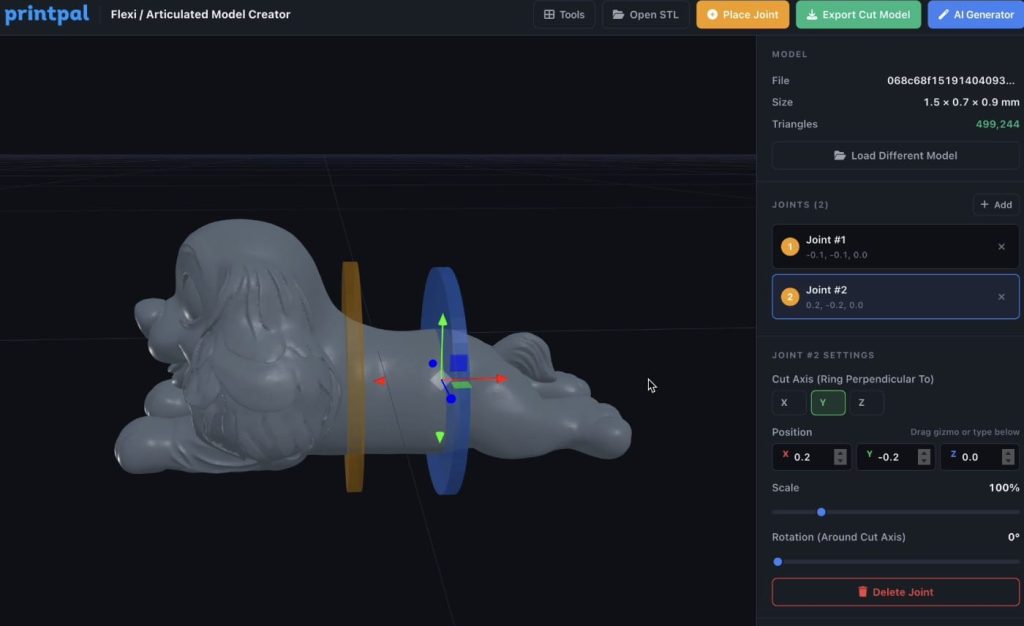
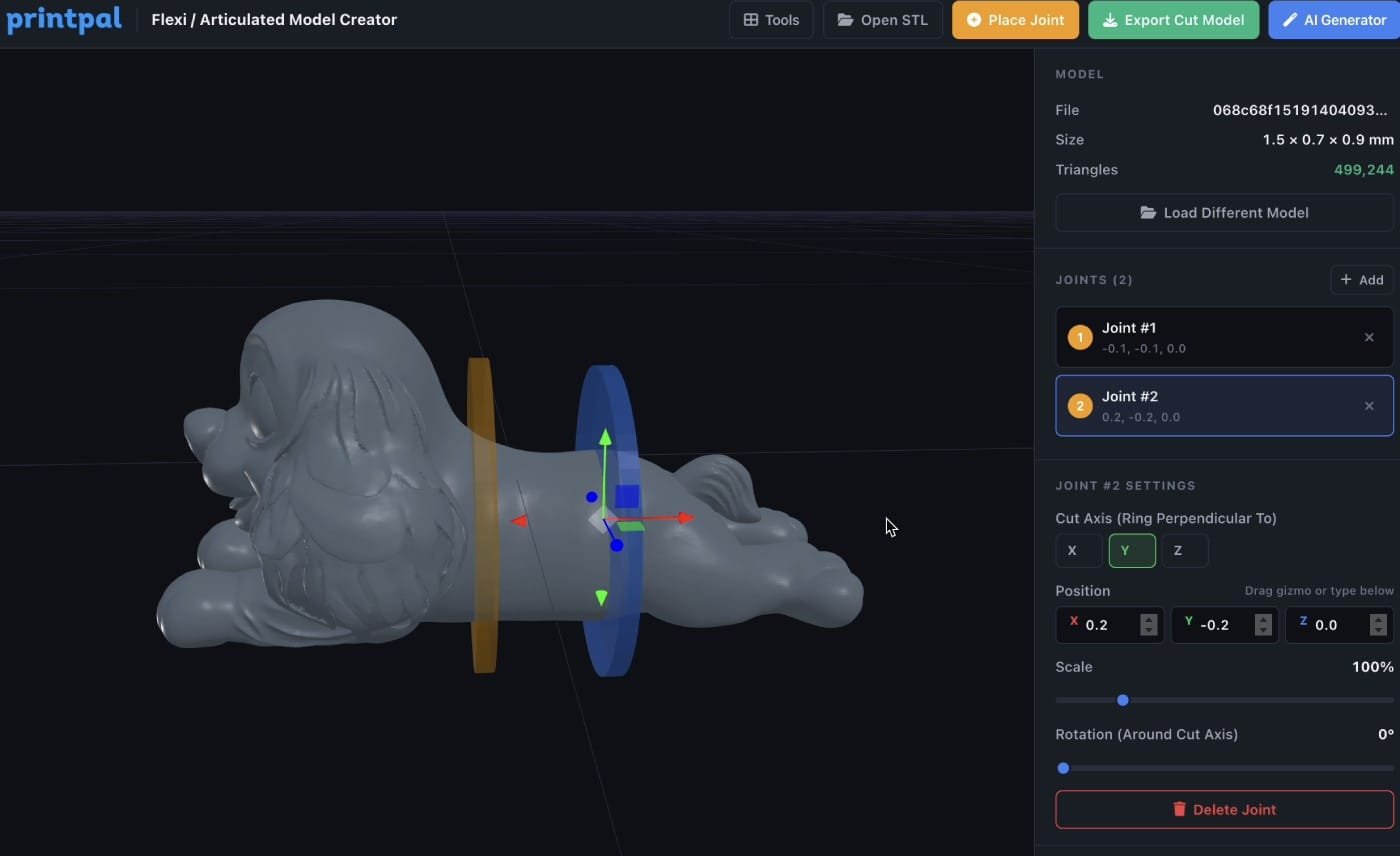
Another feature, the Flexi or Articulated Model Creator, converts an STL file into a flexible articulated model by allowing users to place joint cuts directly on the geometry. PrintPal’s browser-based system performs real-time Boolean subtraction using a WebAssembly geometry engine and exports a print-ready STL file. According to the company, this process allows users to generate articulated designs without requiring prior CAD experience.
“We built these tools because we needed them ourselves,” said Peter Lebiedzinski, Founder and CEO of PrintPal. “Makers and sellers have been bouncing between five different websites just to find a working calculator or convert a file. We wanted to put everything in one place, make it free, and make it fast. The AI Listing Generator alone saves sellers 30 or more minutes per product listing.”
Growth in consumer desktop 3D printing has expanded opportunities for individuals producing custom goods for online marketplaces. Platforms such as Etsy host a large number of sellers offering 3D printed products, ranging from replacement components to decorative items and articulated toys. Most utilities in the PrintPal Tools suite are free to use, while export capability in the Flexi Model Creator and access to the AI Listing Generator require a PrintPal Pro or Studio subscription. Additional AI generations can also be accessed through API credits.
3D printing platforms expand creator ecosystems and browser-based design tools
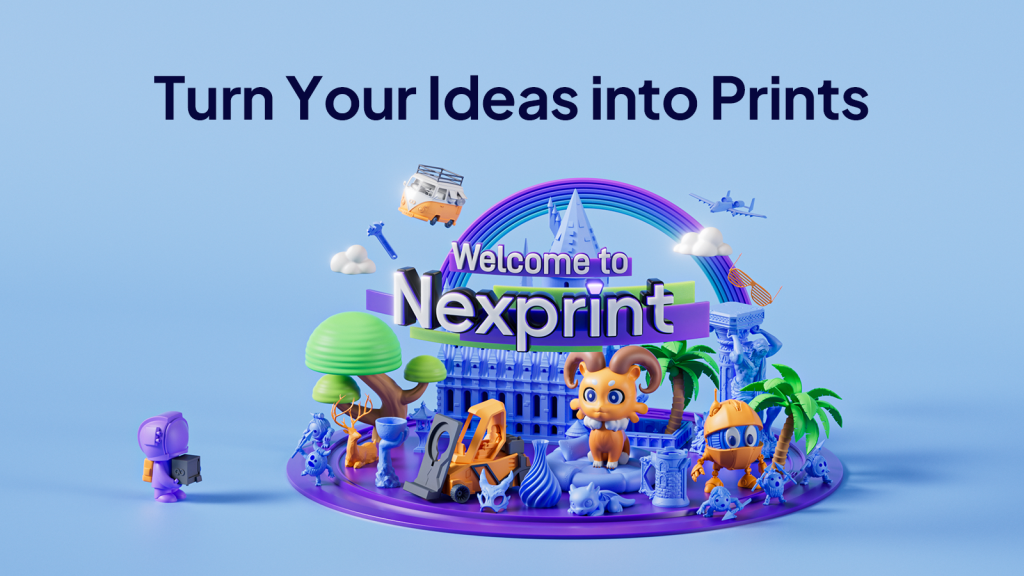
Model-sharing platforms are increasingly integrating discovery and print preparation tools to reduce fragmentation in desktop 3D printing workflows. Elegoo, a Shenzhen-based manufacturer of consumer-grade 3D printers and related equipment, recently introduced Nexprint, an open-source 3D model platform designed to simplify browsing, downloading, and sharing printable files through a centralized interface. Nexprint integrates with Elegoo Slicer and OrcaSlicer and aggregates models from multiple repositories, allowing users to locate designs and prepare them for printing without switching between platforms. According to the company, hundreds of thousands of creators are already contributing to the system, which combines official model libraries with user-generated designs.
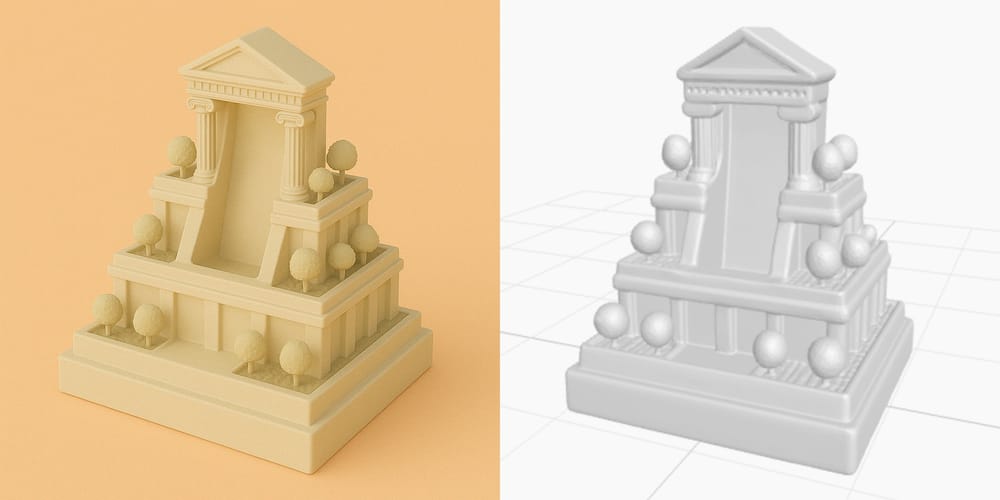
At the same time, browser-based tools are emerging to simplify how creators design and prepare models for production. Womp, a web-based 3D modeling platform, recently introduced a generative AI system that allows users to produce 3D models from text prompts or images within a browser workspace. The platform includes print preparation tools such as hollowing models and checking printability before manufacturing. Finished designs can be produced through Womp’s stereolithography printing service using materials including White Prototyping Plastic and Clear Resin. Platforms combining AI design and browser-based workflows reflect efforts to reduce technical barriers for users entering the 3D printing ecosystem.
3D Printing Industry is inviting speakers for its 2026 Additive Manufacturing Applications (AMA) series, covering Energy, Healthcare, Automotive and Mobility, Aerospace, Space and Defense, and Software. Each online event focuses on real production deployments, qualification, and supply chain integration. Practitioners interested in contributing can complete the call for speakers form here.
To stay up to date with the latest 3D printing news, don’t forget to subscribe to the 3D Printing Industry newsletter or follow us on LinkedIn.
Explore the full Future of 3D Printing and Executive Survey series from 3D Printing Industry, featuring perspectives from CEOs, engineers, and industry leaders on the industrialization of additive manufacturing, 3D printing industry trends 2026, qualification, supply chains, and additive manufacturing industry analysis.
Featured image shows PrintPal’s browser-based tool showing joint placement on an STL model. Image via PrintPal.
