


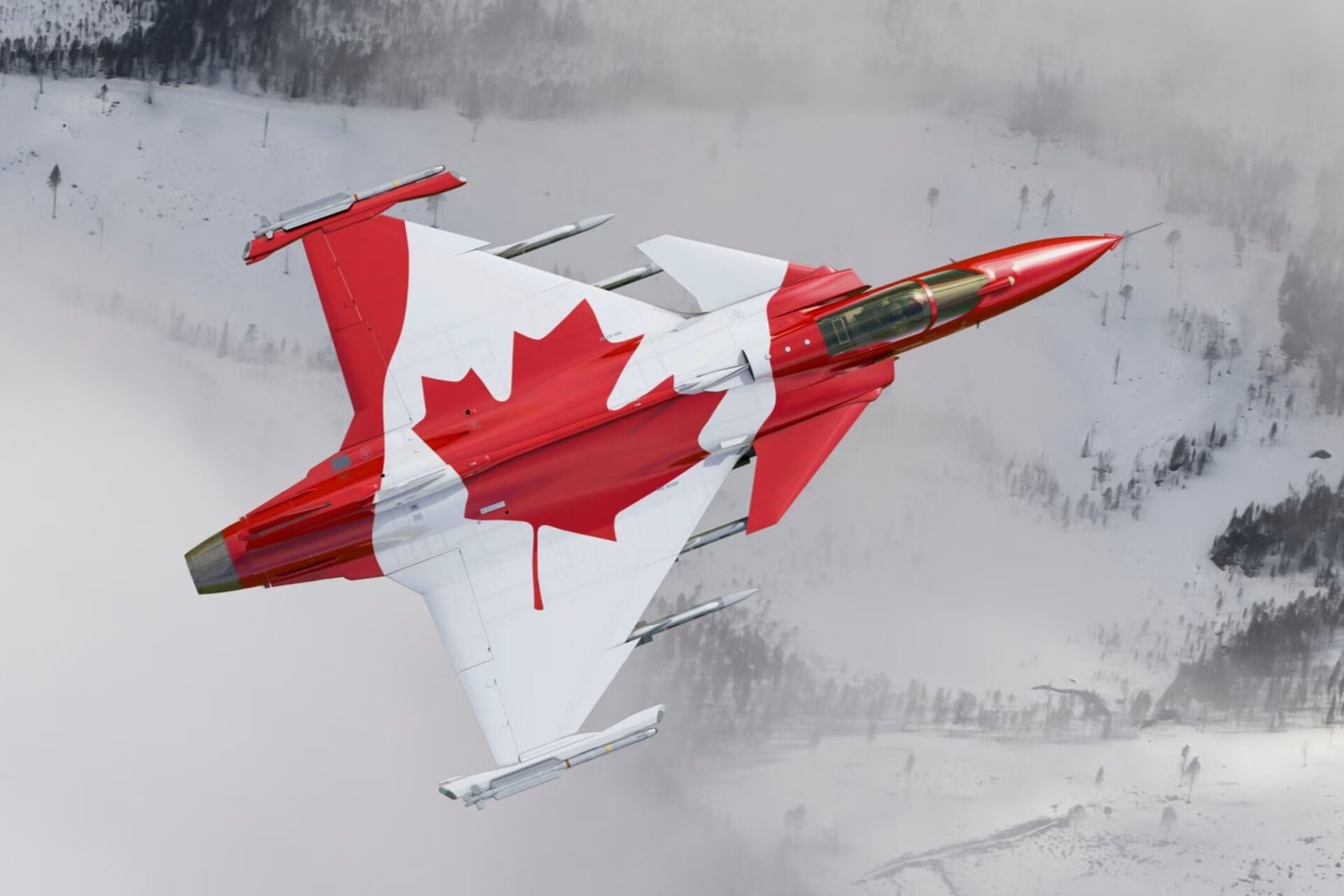
Saab has given Canada a detailed plan for domestic Gripen E production, as Ottawa continues reviewing the size and composition of its planned 88-aircraft F-35 fleet.
In remarks reported by Militär Aktuell and FlightGlobal from a media briefing held alongside the Swedish Air Force centenary air show at Malmen Air Base in Linköping, Sweden, on August 22, 2026, Saab President and Chief Executive Officer Micael Johansson said the company had outlined to the Canadian government how a production line could be established.
Johansson argued that the two fighters could form a so-called “high-low mix,” combining the F-35’s specialized capabilities with the Gripen’s high availability, smaller logistical footprint and ability to operate from a wider range of airfields and improvised bases.
Neither position is new. Saab has pitched a split fleet since the start of 2026, and Johansson already stated in March 2026 that a first Canadian-built Gripen within five years was achievable. What has changed is the demand behind the offer.
Saab aims to double Gripen production
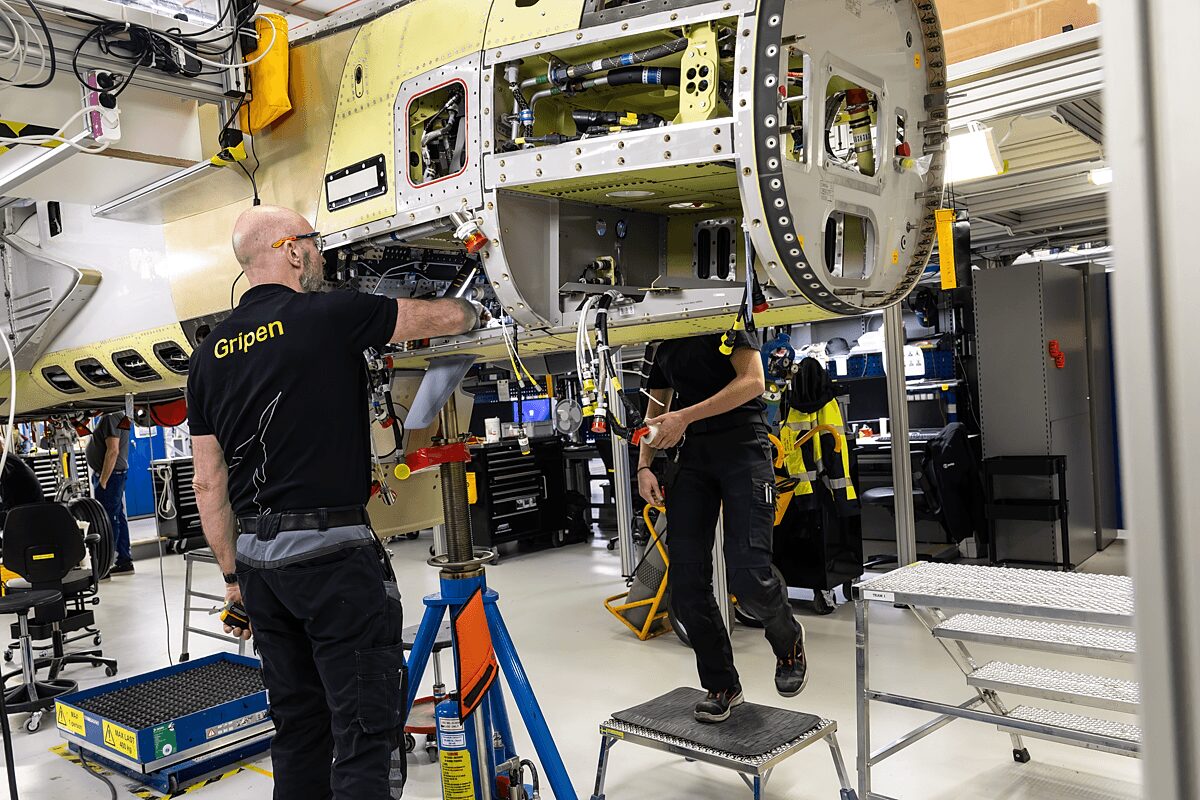
Saab is seeking to roughly double its current Gripen output. During the company’s first quarter call on April 23, 2026, Johansson put production at “roughly 15 a year” and set an annual target of 20 to 30 aircraft.
By the second quarter call on July 17, 2026, he had narrowed the target to “somewhere between 25 and 30 across the year,” describing the main constraint as supply chain rather than floor space or workforce.
Demand continued to accumulate in the meantime. Saab signed a firm SEK24.6 billion ($2.59 billion) contract on June 30, 2026, for 16 Gripen E aircraft for Ukraine, with deliveries scheduled for 2029 and 2030. Further work could come from Sweden, which is expected to order additional Gripen E jets to replace older C/D aircraft earmarked for transfer to Ukraine from around 2027.
That was followed on July 21, 2026, by a heads of agreement with Embraer positioning Gripen assembly at Gavião Peixoto as a complement to the Swedish production line.
Canada still reviewing its 88-aircraft F-35 purchase
Canada remains committed to the first 16 aircraft under its agreement with the US.
The Department of National Defence said in its February 4, 2026, paper, “Delivering Canada’s Future Fighter Jet Capability,” that the wider 88-aircraft, CAD27.7 billion ($20 billion) project remained under review, with “all options, including a mix of fighter aircraft” under consideration.
The government had set no date for completing the review. The Royal Canadian Air Force nevertheless continues to work toward retiring its CF-18 fleet in 2032.
Saab broadens Canadian pitch beyond Gripen
Saab’s Canadian pitch has widened beyond supplying Gripen fighters. In March 2026, the company suggested Canada could participate in Sweden’s development of sixth-generation combat-air technologies, including crewed aircraft, autonomous platforms and advanced sensors.
Later that month, Saab signed an agreement with Canadian artificial intelligence company Cohere to explore GlobalEye applications covering mission support, maintenance tools and information processing. Initial pilot projects had already been identified when the partnership was announced.
Canada then named Saab preferred supplier for its future airborne early warning and control capability on May 27, 2026, though the company has yet to receive a Canadian order for the GlobalEye system.
