


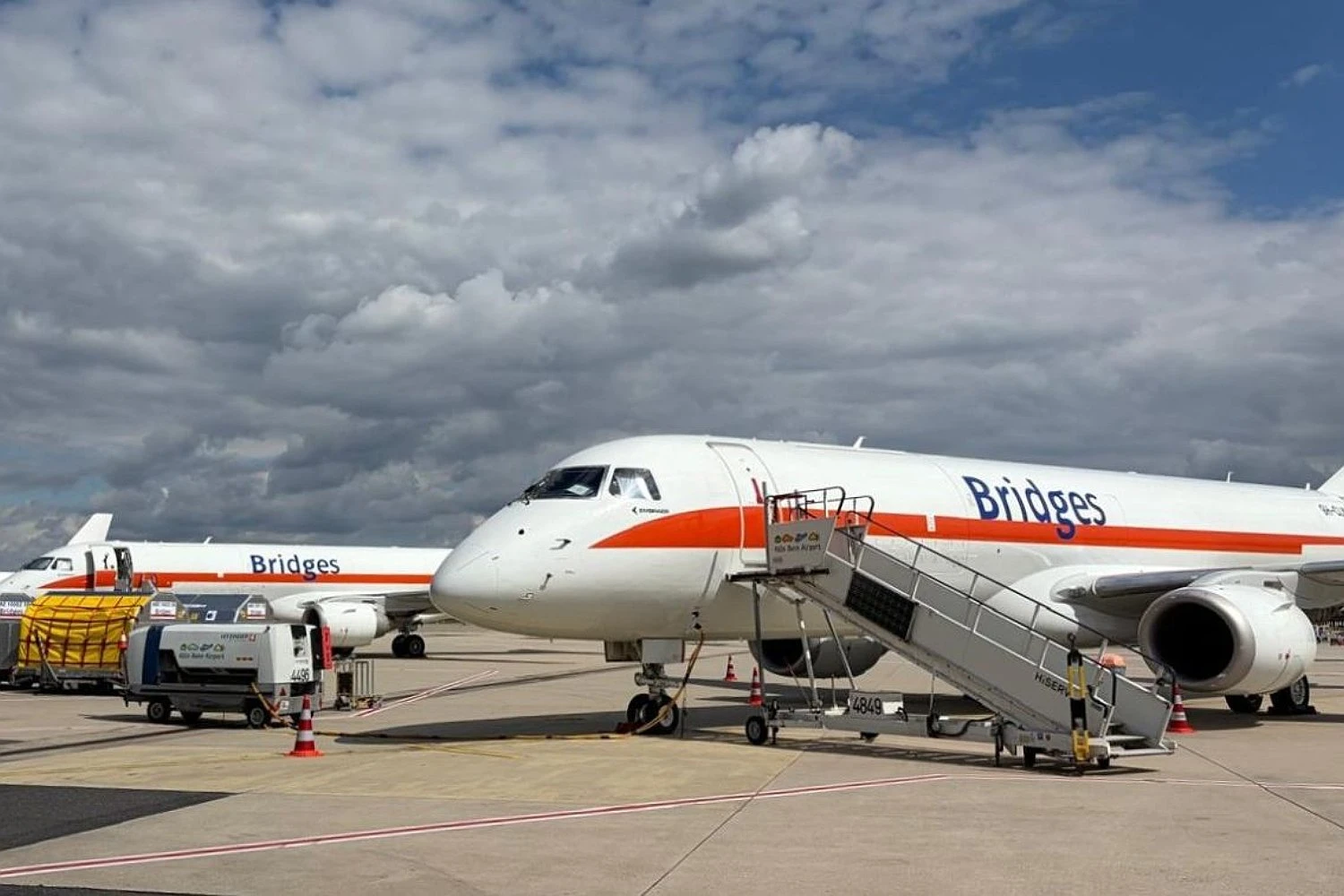
Bridges Air Cargo has placed its second Embraer E190F freighter into commercial service, becoming the only operator currently flying the converted cargo version of the Brazilian regional jet.
The aircraft, registered 9H-CLW, entered service on June 15, according to information released by the Malta-based carrier. Bridges said the addition will support the expansion of its cargo network linking Europe and North Africa.
The freighter is the second E190 converted under Embraer’s E-Freighter program and joins sister aircraft 9H-BRD, which entered service earlier this year as the launch aircraft for the program.
Originally delivered to TACA International Airlines in December 2010, the aircraft later flew for Avianca El Salvador before being acquired by US-based lessor Regional One. It was converted from passenger to freighter configuration at Embraer’s facilities in São José dos Campos and delivered to Bridges Air Cargo on June 14.
The E-Freighter program was launched by Embraer in 2022 to address a segment between large turboprop freighters and larger narrowbody cargo aircraft. The conversion includes a reinforced main deck, a large cargo door and additional freight capacity in both the cabin and lower hold.
Combined payload capacity reaches about 13.5 tonnes, allowing the aircraft to transport containerized cargo on regional and medium-haul routes.
The second conversion took considerably longer to reach service than initially expected. The aircraft remained at Embraer’s facilities for an extended period during the modification and certification process before resuming flight tests in late 2025.
Follow Air Data News: WhatsApp | Google News | Instagram | LinkedIn | Twitter | Facebook
So far, only two E190F aircraft have entered service. Both operate for Bridges Air Cargo, which expanded its commitment to the program during the Paris Air Show in 2025 by increasing its order from two to four converted freighters.
Embraer has marketed the E190F as a solution for express cargo operators and e-commerce logistics networks seeking greater payload and range than turboprop freighters while avoiding the higher operating costs associated with larger cargo jets.
