


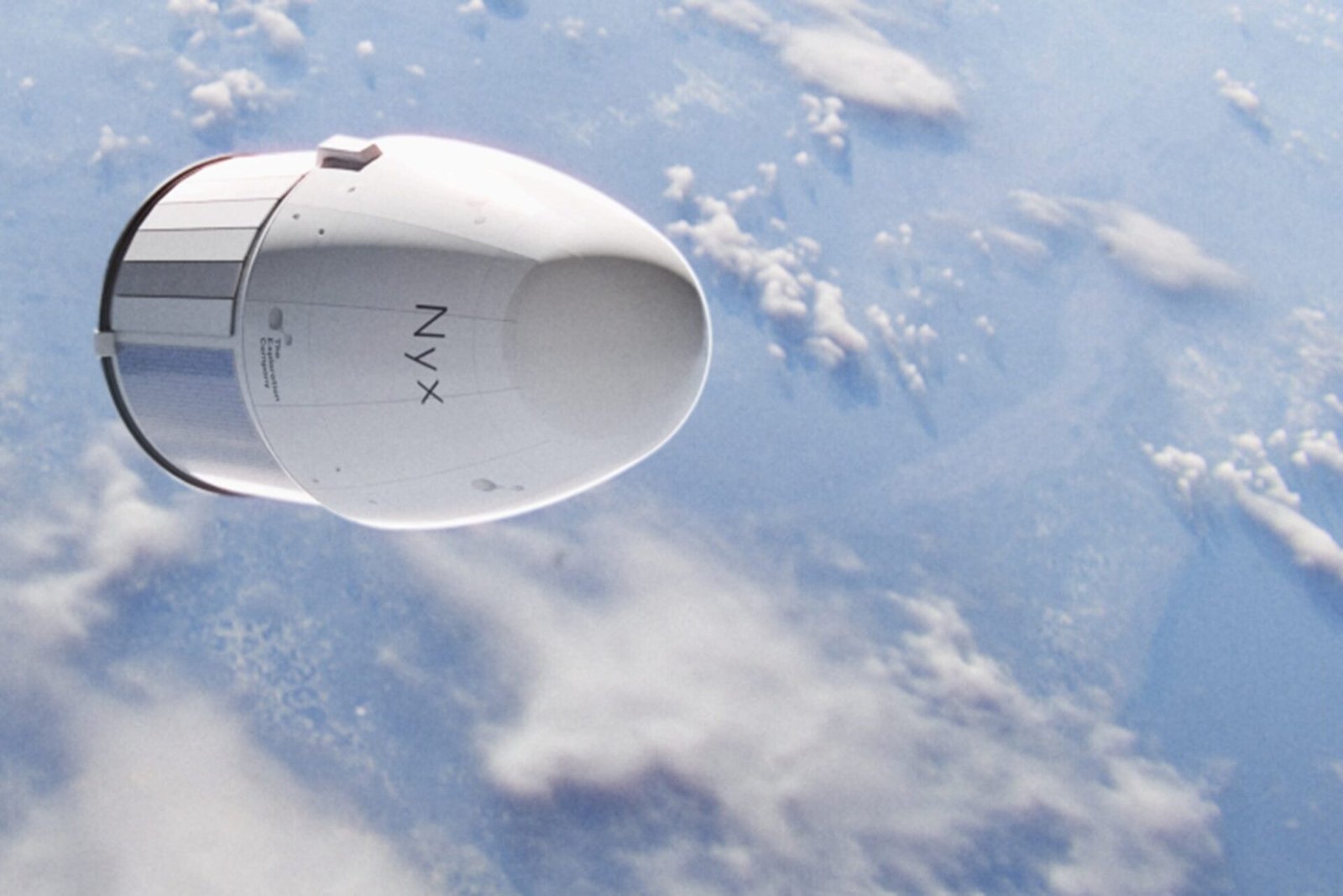
Siemens announced that The Exploration Company has adopted software from its Xcelerator portfolio to support development of Nyx, the reusable cargo capsule the Franco-German startup is building for low Earth orbit and, eventually, lunar destinations.
The Exploration Company is using Siemens Designcenter for mechanical design, Simcenter for engineering simulation, Capital for electrical systems design, and Teamcenter for product lifecycle management.
Siemens said the combination gives the company a single environment in which a change made in one discipline propagates across the others, with Teamcenter serving as a consistent data layer across the vehicle lifecycle.
The company said the toolchain also supports the traceability and certification requirements typical of aerospace programs, an issue that will grow more pressing as Nyx moves toward docking with the International Space Station. Nyx is currently progressing through NASA’s certification process for ISS docking.
Daniel Prudente Martins, principal for electrical wiring interconnection systems and electrical interfaces on Nyx avionics, said the integrated approach helped the company move from initial concept to flight hardware in nine months on Mission Bikini, its first subscale demonstrator.
That capsule flew on the debut launch of Ariane 6 in July 2024, but an anomaly on the rocket’s upper stage left it attached and prevented the reentry test it was meant to perform.
Nyx faces a tight schedule
Founded in 2021 by former Airbus executive Hélène Huby and headquartered near Munich, The Exploration Company is developing Nyx as a launcher-agnostic capsule capable of returning up to 3,000 kg of cargo to Earth and flying up to 10 missions. Europe currently has no sovereign means of returning cargo from orbit.
The company was awarded a €25 million Phase 1 contract under the European Space Agency’s LEO Cargo Return Service initiative in May 2024, alongside Thales Alenia Space.
ESA restructured the second phase in January 2026 under the name ALADDIN, opening it to all bidders and attracting rival concepts including the Dassault Aviation and OHB VORTEX-S spaceplane. The agency plans to award two contracts worth up to €420 million each.
The Exploration Company is targeting 2028 for the first orbital demonstration flight of Nyx, though ESA’s own ALADDIN schedule points to a demonstration mission in early 2029.
Neither of the company’s two flights to date has completed a full recovery: Mission Possible survived reentry after its June 23, 2025, launch on a SpaceX rideshare but lost contact before parachute deployment. A drop test of the recovery system was completed in the Mojave Desert on May 19, 2026.
The company, which raised $160 million in a Series B round in November 2024, was reported to be in talks for a further raise of at least $300 million.
