


At least one fixed-base operator (FBO) that is betting on electric air taxis believes the new aircraft will arrive several years after some manufacturers predict.
The Government Accountability Office (GAO) on Wednesday released a new report examining the infrastructure needs of future electric and hybrid-electric aircraft. Among the stakeholders GAO interviewed were two FBOs—Signature Aviation and Atlantic Aviation—that are pursuing a range of electrification projects at hubs nationwide, partnering with electric air taxi manufacturers such as Joby Aviation, Archer Aviation, and Beta Technologies.
Joby, Archer, Beta, and others have made ambitious plans to begin customer deliveries and commercial operations soon, some as early as 2026 but generally in the next 1 to 3 years, pending FAA certification.
However, either Signature or Atlantic—GAO did not specify which—said it does not expect electric aircraft operations at its facilities until 2030.
Some of the airports, industry associations, state transportation departments (DOTs), and others interviewed by GAO lent credence to that projection. Many shared problems they have faced standing up electric chargers and other resources, from exorbitant costs to uncertain demand. The GAO concluded that electric aircraft infrastructure adoption at U.S. airports is “currently limited,” with most sites still in the “planning and information-gathering stages.”
At the same time, it said the FAA has approved just 6 of the 23 electric aircraft type certification projects it has initiated since 2018.
The regulator has yet to authorize commercial operations with any crewed electric aircraft.
“When such aircraft will be able to commercially operate is not clear,” GAO said.
The agency will send its report to the appropriate congressional committees as well as Transportation Secretary Sean Duffy, Energy Secretary Chris Wright, NASA Administrator Jared Isaacman, and other interested parties.
Growing Pains
According to GAO, electric and hybrid conventional and VTOL (vertical takeoff and landing) aircraft have the “potential to lower operating costs, increase access to air service for regional airports, and reduce environmental impacts and noise from aviation.”
In addition to eVTOL (electric VTOL) air taxis, several developers are building personal eVTOL aircraft. Others are retrofitting existing airframes with electric powerplants or simplified controls, now allowable for light-sport aircraft under the FAA’s Modernization of Special Airworthiness Certification (MOSAIC) rule.
Beyond representatives from Signature, Atlantic, and federal agencies, GAO interviewed seven aircraft and engine manufacturers, 12 airports, three industry associations, two state DOTs, and a flight school.
Per the FAA, as of December there were 47 airports that identified charging stations in their master plans, the vast majority being “nonhub or smaller airports located in the Northeast and Southeast.”
GAO found that 34 of the airports, or more than 70 percent, are part of Beta’s charger network, which as of November comprised 52 sites online and another 32 in progress. The company has a $20 million contract from the Department of Health and Human Services’ Administration for Strategic Preparedness and Response to install 22 of its systems on the East and Gulf coasts.
Beta’s chargers are designed to accommodate any electric air or ground vehicle, including its rivals’ air taxis. But several interviewees noted the lack of consensus on standards, as Joby is developing its own charging system. Though both models are billed as aircraft agnostic, airports told GAO they may need to pick and choose which systems, aircraft, and operations to support.
Even less progress has been made on vertiports, electrified takeoff and landing spaces that will house electric infrastructure.
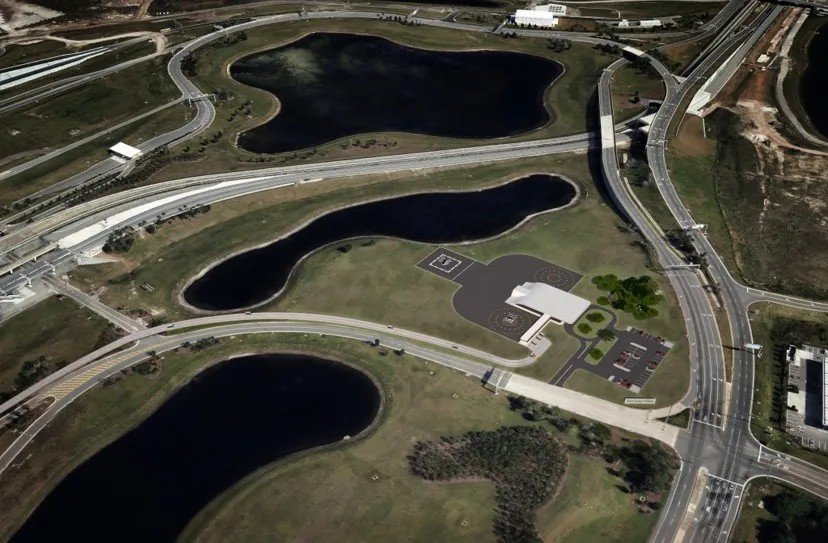
Per the FAA, just two airports have conditionally approved layout plans that include a vertiport. It did not specify which, though Orlando International Airport (KMCO) this year became one of the nation’s first to seek vertiport development and operational partners, targeting completion by 2028. Orlando International has also conducted electric air taxi simulations with the FAA.
GAO said other airports have proposed vertiport projects or designated areas for electric aircraft in their plans. But there are several roadblocks stopping more from following suit.
Several interviewees said the cost of installing a vertiport “may be considerable” due to the demands of electrification. One airport estimated the vertiport it is designing will cost around $2 million to complete.
Power demands will vary by airport size, power generation and storage capabilities, and projected traffic levels, making it difficult to standardize the design process. Some airports worried about meeting demands for electricity, citing increased grid use by non-aircraft operators such as rental car companies.
The FAA’s Engineering Brief 105A (EB 105A) is the latest guidance on vertiport design. But for firefighting requirements, it refers designers to National Fire Protection Association guidance for heliports. GAO said the agency will need to research the topic further, given the flammability of the lithium-ion batteries that power many electric models.
“FAA officials told us they need to develop guidance for responding to fires from lithium-ion batteries, as current procedures—which can include allowing the fire to burn itself out, or using large amounts of water—are impractical for electric aircraft,” it said.
Three airport representatives told GAO that integrating the new aircraft will be a challenge. Though the FAA in 2024 published initial operational rules for certain electric models, it has not yet devised a permanent framework for airspace management. Agency officials in particular said integrating electric aircraft ground movements, arrivals, and departures will be tricky.
FAA Air Traffic Organization (ATO) officials said they require more electric aircraft data in order to create new guidance. The FAA in September said it is working with the industry to gather that data through “tabletop exercises, experimental flights and testing, and demonstrations.”
Are Electric Aircraft Worth It?
Some airports even wonder if accommodating electric aircraft will ultimately be worth the trouble.
Representatives of five airports and a state DOT said they believe those that do will see a decline in revenue due to less traditional aircraft fueling. The state DOT suggested counteracting potential losses with an electric charge fee, akin to a fuel flowage fee, which the American Association of Airport Executives (AAAE) also supports.
GAO summarized a few interviewees’ comments that the “untested” demand for electric aircraft creates what it calls a “chicken-or-egg dilemma.”
“Stakeholders may be hesitant to invest resources in services and facilities to support aircraft before they are certificated, even though the success of the industry depends on such investment,” it said.
Respondents also reported issues with the FAA’s electric aircraft certification framework—which the agency is considering standardizing—such as a dearth of qualified staff. Electric aircraft comprise just 23 of the more than 16,000 certification projects the FAA has received since 2018, but per GAO they are resource intensive.
Per the report, the FAA has issued special conditions for four projects that are being certified under existing conditions—electric engine designs from Beta, ZeroAvia, Safran, and MagniX. Six others have submitted applications and await acceptance.
The remaining 14 projects are in the special class certification pathway, which combines regulations for fixed-wing aircraft and rotorcraft. Only two manufacturers, Joby and Archer, have received special class airworthiness criteria.
