


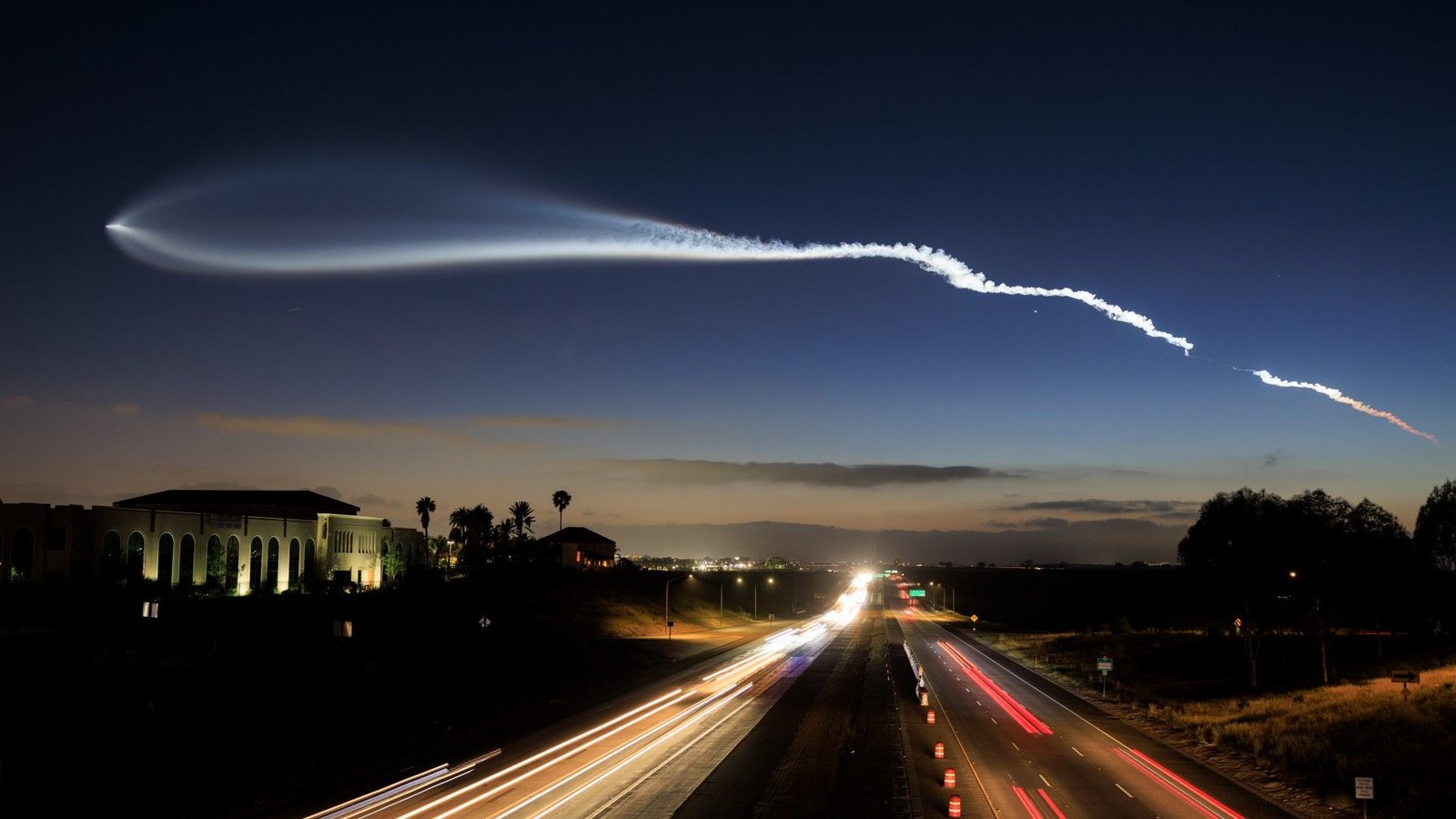
Space industry aficionados have big plans. They talk about the not so distant future when hundreds of thousands or even millions of satellites orbit planet Earth, beaming the internet to the unconnected, processing data in orbital computer centers, generating solar power and more. But this ambitious vision, which many in the sector think will become reality sooner or later, worries atmospheric researchers.
Studies show that since the beginning of the mega-constellation era in 2020, concentrations of potentially dangerous high-altitude air pollution stemming from satellite launches and re-entries has significantly increased. Based on estimates described by researchers as “conservative”, the global space sector will have released by 2030 more climate-altering chemicals into the atmosphere than the entire United Kingdom. If the growth envisioned by the space industry leaders comes to pass, this air pollution, mostly concentrated in higher layers of the atmosphere, will at some point begin altering Earth’s climate, Eloise Marais, a professor of atmospheric chemistry and air quality at University College London, told Space.com.
Geoengineering is a term describing a number of possible interventions that could reverse the rise in global temperatures caused by the increasing concentrations of greenhouse gases in the atmosphere. One of the most commonly discussed geoengineering methods is the Stratospheric Aerosol Injection, which entails releasing large amounts of light-reflecting particles into the stratosphere, the second layer of Earth’s atmosphere, to reduce the amount of heat reaching the planet. The idea is being studied by scientists, who warn that impacts may be unpredictable, including changes in rain patterns, draughts and unforeseen weather changes.
Marais is one of those scientists, leading a team that is studying the effects of satellite-related air pollution. Their latest study found that by 2029, air pollution from megaconstellation satellite launches — such as Starlink, Amazon Leo or Chinese projects Guowang and Quianfan — will account for more than 40 percent of all pollution generated by the space sector.
Megaconstellations — most commonly used to beam internet to users in remote areas from near Earth space — are a quickly growing trend. They rely on satellites with limited life-spans which get replaced about every five years with more modern and powerful technology. The frequent replacements mean a more frequent launching and a more frequent deorbiting compared to old-school missions designed with longer missions in mind. That in turn, means more air pollution inserted into the otherwise pristine upper layers of Earth’s atmosphere.
“Most mega-constellation launches today are burning kerosine fuel, because they usually rely on Falcon 9 rockets, which are producing black carbon,” Marais said. “This black carbon is being released into the higher layers of the atmosphere where it stays for 2.5 to 3 years. Because of that, that black carbon has about 540 times bigger climate effect than black carbon that’s released from surface sources like ships, cars and power plants.”
The researchers estimate the impact of air pollution from rocket launches by calculating the amounts of pollution likely to arise from expected satellite launches and re-entries in a given period. While satellite launches mostly produce black carbon, which has a potential to warm the upper atmosphere, satellite re-entries generate aluminum oxides, which can damage the ozone layer. The team then runs climate models that show the expected impact of the pollutants on the planet.
“The model can very nicely tell us how much ozone is going to be destroyed from this pollution and how much the climate is going to be altered from this pollution,” said Marais.
Marais added the latest modelling was based on “conservative” numbers as the actual growth in satellite numbers has been consistently outstripping the researchers expectations.
Currently, over 15,000 operational satellites orbit the planet, according to the European Space Agency. That is three times more than circled Earth in 2020. The increase is mostly down to SpaceX’s Starlink megaconstellation, which currently consists of more than 10,000 satellites.
New contenders, including Amazon LEO and Chinese operators Guawang and Qianfan, are in the process of building up their own fleets. By 2030, some 100,000 satellites may orbit the planet, with further steep growth expected in the coming decades.
Marais warns about an unregulated growth in satellite launches. The particles released into the upper layers of Earth’s are at some point likely to reach concentrations, which will have an effect on Earth’s climate.

Marais said that although by 2029 concentrations of pollutants from satellite launches and re-entries will amount to only about one hundredth of the quantity required for geoengineering interventions, the continued accumulation of the pollutant resulting from increased satellite deployments raises concerns.
“We need to be taking it far more seriously in terms of regulating the pollution that’s coming from launches and reentries,” said Marais. “There also needs to be far more funding funneled into research to study this because we can’t keep up with the space industry.”
The study was published on Thursday, May 13, in the journal Earth’s Future.
