


WASHINGTON — As SpaceX and others pursue the development of very large launch vehicles, a new study suggests that there may be such a thing as a rocket that is too large.
A report released June 29 by The Aerospace Corp. said that while super heavy lift, or SHL, rockets promise economies of scale, there may be a point where increased size may cause launch prices, on a per-kilogram basis, to go up rather than down.
“SHLs can achieve lower cost per payload by maximizing total mass to orbit. But there are limits before a launch provider could reach a point of diminishing returns wherein increased rocket capacity demands greater cost, time or operational complexity,” the report states.
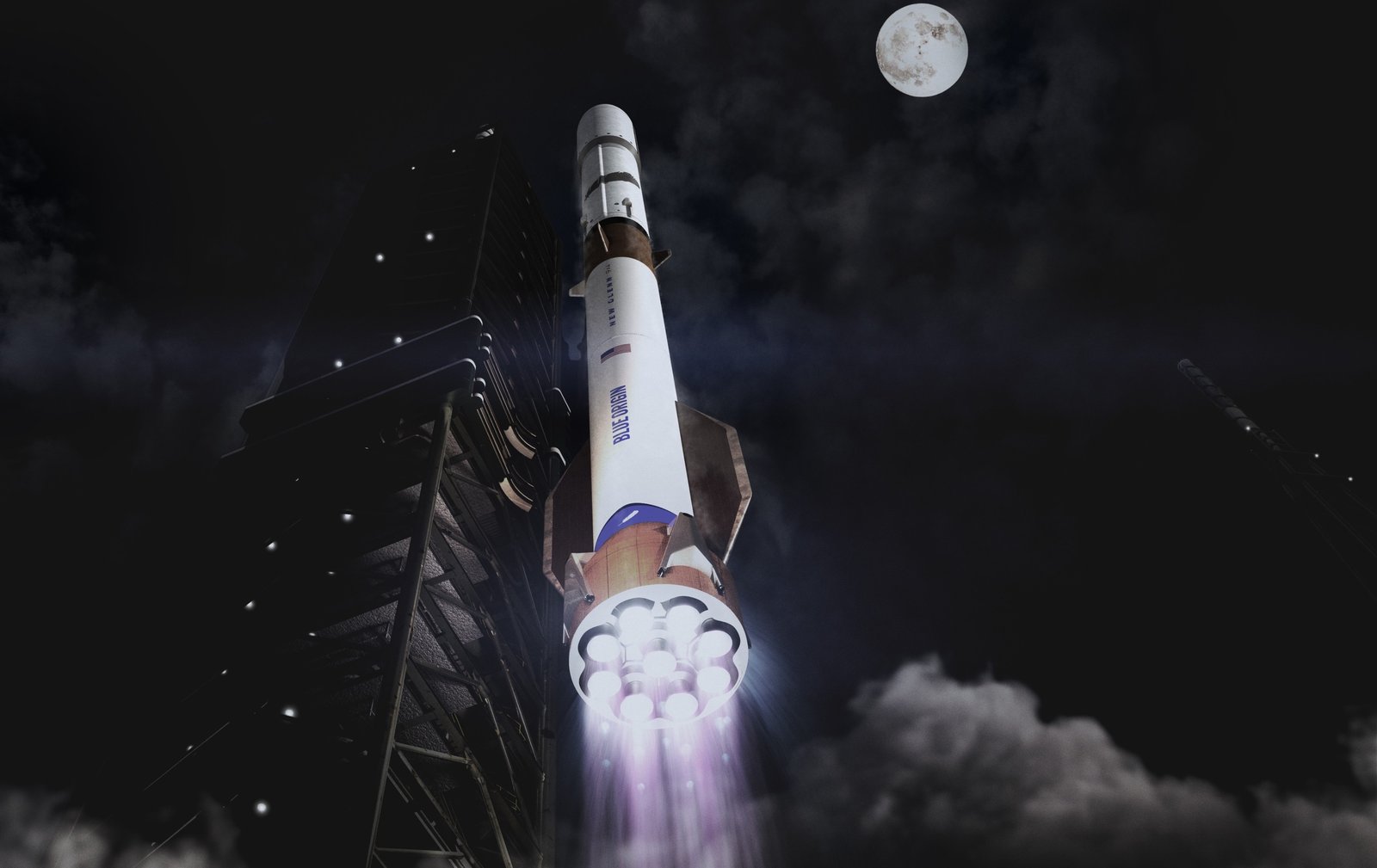
Those increased marginal costs could come from additional work needed to prepare larger vehicles and related operational costs. The Aerospace report does not attempt to calculate what the optimal launch vehicle size would be or whether SHL vehicles in development, such as SpaceX’s Starship and Blue Origin’s New Glenn 9×4, an upgraded version of the vehicle announced last year, would exceed that optimal size.
The report uses the analogy of the Airbus A380, a “superjumbo” airliner that was a technical success but a commercial disappointment because its higher costs made it less competitive with smaller, more fuel-efficient jetliners.
“Those other sectors show that bigger is not always better, as excessive scale sometimes leads to complexity, reduced agility, and often reduced payload utilization; sometimes there are broader market factors and externalities that determine economic success,” the report stated.
Aerospace classifies SHL vehicles as those that can place at least 50 metric tons into low Earth orbit. Under that definition, two such vehicles are operational today: SpaceX’s Falcon Heavy and NASA’s Space Launch System. In addition to Starship and the upgraded New Glenn, China is developing the Long March 9 and Long March 10 vehicles, which would qualify as SHL rockets.
The experience of the Falcon Heavy may be a cautionary tale for SHLs, the report states. The rocket, introduced in 2018, has flown only 12 times, most recently in April. “This raises the question, does the Falcon Heavy’s relatively low usage presage low market demand for future SHL rockets with even greater lift capacity?” the report states.
The study does not conclusively answer that question, noting that the Falcon Heavy has the same payload volume as the smaller Falcon 9, which may limit its ability to support larger payloads. Markets that can make full use of SHLs may also not have fully developed, it added.
Aerospace identifies several potential markets for SHL rockets, ranging from broadband constellations to orbital data centers and space-based solar power. Those markets, other than broadband constellations, do not exist yet, it noted. “The key question is, at what point will these markets emerge and drive enough demand for the launch costs SHL might generate?”
The report suggests broadband constellations will serve as the initial market for those vehicles and could also drive standardization of payload designs, such as SpaceX spacecraft optimized for the slot-shaped payload dispenser on Starship. Having a large internal customer, as both SpaceX and Blue Origin do with their broadband and orbital data center constellations, can help.
“For now, the market maturation path will most likely involve serving megaconstellations with a regular launch cadence,” it concluded. “Such an ordinary effort will define the SHL not as just an engineering marvel but a proven commercial success and the necessary foundation for unlocking and building the extraordinary.”
