


SUMMSEED, a new European project funded by the Research Fund for Coal and Steel, has launched to develop medium manganese steels for mining and heavy industry using industrial casting and laser-wire directed energy deposition. Coordinated by the Technical University of Catalonia · BarcelonaTech, a public university in Spain, the project brings together partners across the manufacturing chain, including Sandvik, a company specialized in mining products; Sidenor, a steel producer; Meltio, a Spanish multinational manufacturer of metal 3D printing systems based on wire-laser metal deposition; Delft University of Technology; CIM UPC; and TU Bergakademie Freiberg.
Companies in the mining and heavy machinery sectors have long sought steels that are more environmentally sustainable, offer properties comparable to those of currently used steels, and meet industrial requirements for quality and cost. The program is focused on medium-Mn steels tailored to industrial casting and remanufacturing through directed energy deposition. Work begins with alloy design and laboratory testing before moving to pilot plant casting trials and the repair of real cone crusher components. The project is intended to support reuse of end-of-life parts and keep high-value components in service longer.
The alloys under development are expected to reduce emissions linked to manufacturing and repair by minimizing the use of critical alloying elements and adapting the material to additive manufacturing processes. Target properties include strength, toughness, and wear resistance for heavy industry, particularly in low- to medium-load conditions where Hadfield steels are used today. The program also describes itself as a first step toward transferring medium-Mn steel metallurgy to industrially relevant conditions using near-net-shape techniques. Validation work will include microstructural and mechanical testing, advanced laboratory analysis, and in situ synchrotron characterization.
Pere Barriobero Vila, coordinator of the SUMMSEED project at UPC, said, “It is expected that this novel material will render an improved service performance than the currently used Hadfield steels, enabling a more sustainable production by reducing alloying elements and the reuse of end-of-life parts. By tailoring alloys for both casting and directed energy deposition (DED) remanufacturing, the project aims to replace traditional Hadfield steels with leaner, more cost-efficient grades that offer high strength, toughness and wear resistance while reducing CO₂ emissions and the use of critical raw materials. From casting to DED repair, the project enables a complete circular process that extends component lifespan and minimizes material waste and environmental impact.”
Partners in the project cover the full manufacturing chain, from alloy design and steel production to wire feedstock development, simulation, additive manufacturing, and industrial validation. Sandvik will lead demonstrator development and test upscaling, while Meltio will provide the directed energy deposition equipment and remanufacturing expertise. Beyond the technical work, the collaboration will produce processing guidelines and workshops to support industrial adoption, while also informing policymakers and standardisation bodies working on lower-emission, circular steel production.
Material and qualification constraints shaping industrial additive manufacturing
In Australia, a QDSA-funded effort led by Charles Darwin University with James Cook University, the Australian Institute of Marine Science, and SPEE3D, an Australian metal additive manufacturing company, is focused on restoring domestic access to nickel aluminum bronze for naval propulsion and other high-wear marine parts. That work centers on whether cold spray manufacturing can produce NAB-equivalent material that performs under real and simulated tropical seawater conditions, with corrosion testing and material behavior treated as core technical requirements rather than secondary checks.
In the United States, America Makes, the national additive manufacturing innovation institute, and the National Center for Defense Manufacturing and Machining opened more than $35 million in Department of Defense project calls focused on production readiness, including modernization of the Organic Industrial Base and qualification of suppliers using laser powder bed fusion and directed energy deposition. That structure points to the same issue behind the SUMMSEED collaboration: new alloys and repair routes matter only if they can be validated, qualified, and deployed under industrial conditions.

3D Printing Industry is inviting speakers for its 2026 Additive Manufacturing Applications (AMA) series, covering Energy, Healthcare, Automotive and Mobility, Aerospace, Space and Defense, and Software. Each online event focuses on real production deployments, qualification, and supply chain integration. Practitioners interested in contributing can complete the call for speakers form here.
To stay up to date with the latest 3D printing news, don’t forget to subscribe to the 3D Printing Industry newsletter or follow us on LinkedIn.
Explore the full Future of 3D Printing and Executive Survey series from 3D Printing Industry, featuring perspectives from CEOs, engineers, and industry leaders on the industrialization of additive manufacturing, 3D printing industry trends 2026, qualification, supply chains, and additive manufacturing industry analysis.
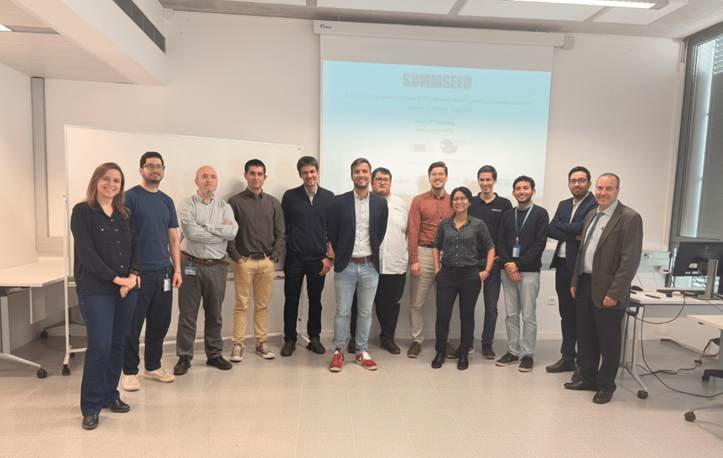
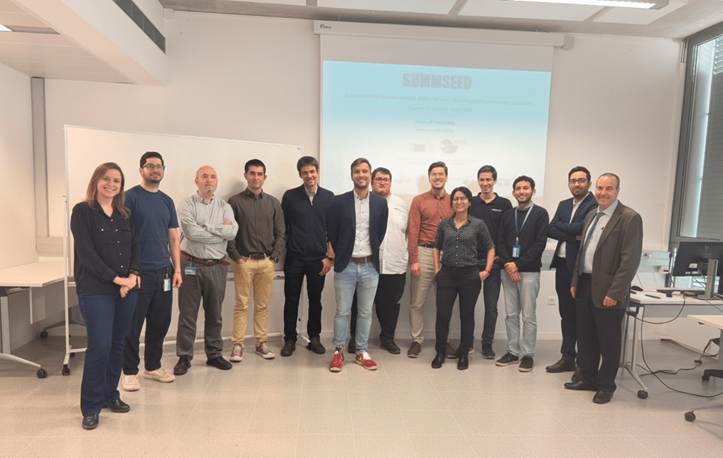
Featured photo shows SUMMSEED consortium partners at project launch. Photo via Meltio.
