


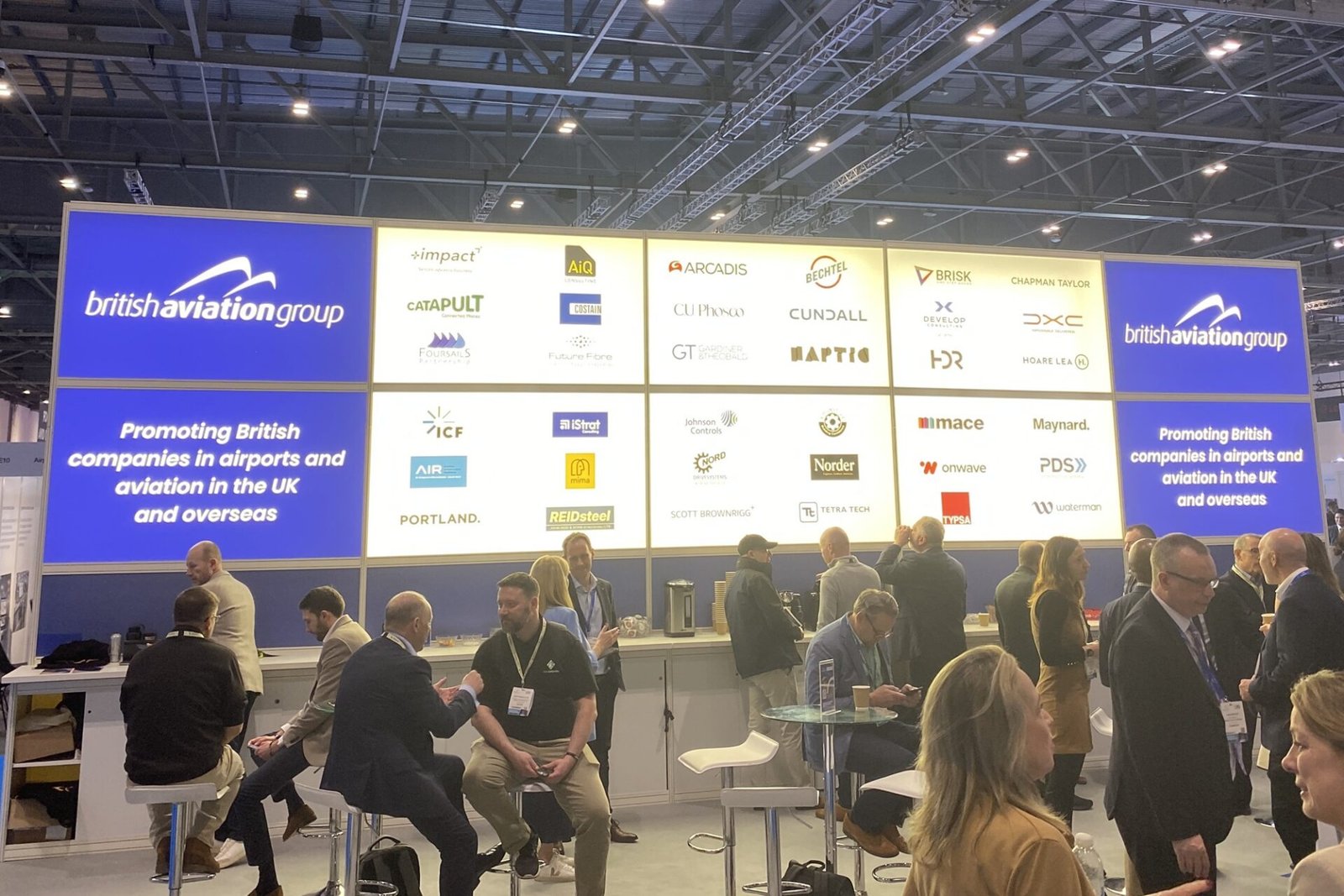
The bustling British Aviation Group (BAG) stand at PTE World London was undoubtably one of the most vibrant and energetic areas on the exhibition floor at this year’s standout event.
It was a hive of activity where conversations flowed, and industry stakeholders exchanged views and celebrated British enterprise across the aviation and airport sector.
Established in 1993, the not-for-profit, UK-based organization, sets out to connect global aviation clients with British expertise among over 200 member companies.
More than 35 member firms alone exhibited at PTE World in March 2026, with the group’s stand acting as a hub for visits from many airport and aviation leaders, including representatives from Miami International Airport (MIA) Port Polska and Ethiopian Airlines.
British Aviation Group described the event as “one of its most impactful and visible programs yet” in “positioning the UK as a global leader in aviation innovation, collaboration, and export capability”.
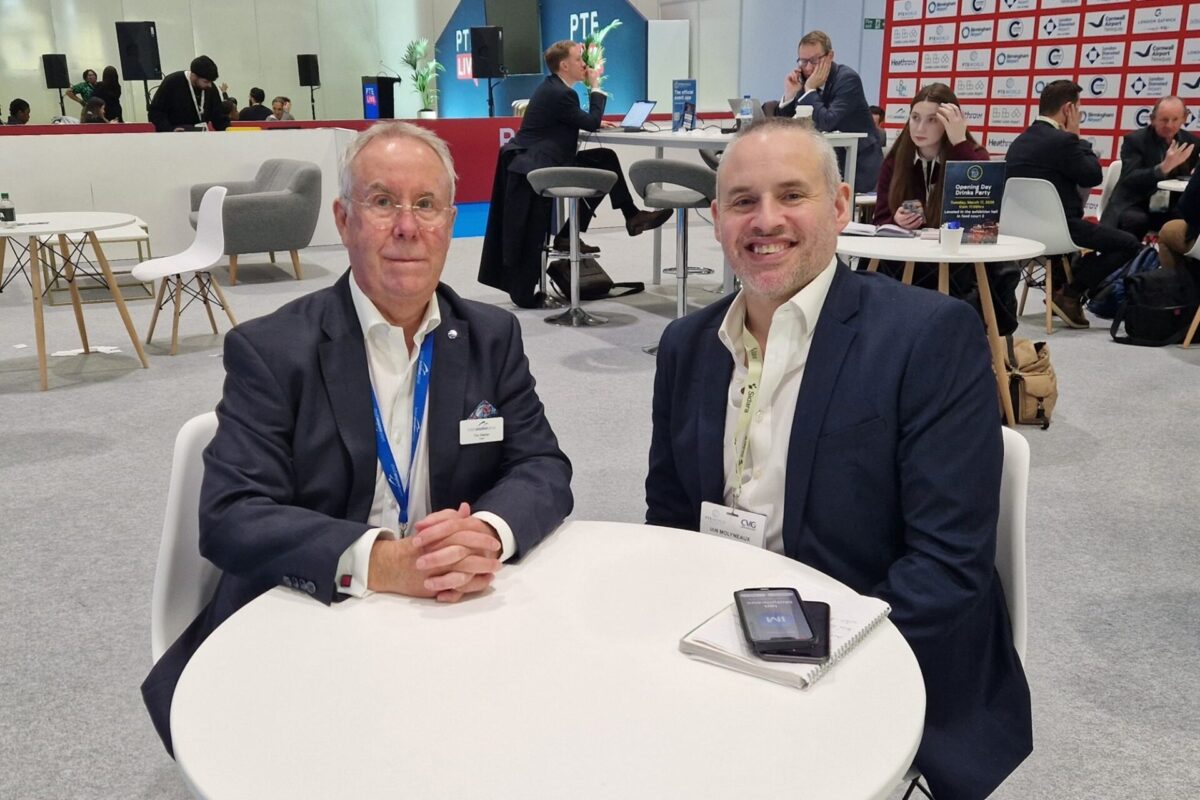
Despite everyone seemingly clamoring for the attention of British Aviation Group Chair Tim Walder, AeroTime managed to grab the industry veteran for a short interview to gather his thoughts on the UK’s aviation landscape and understand more about the organization’s mission.
Walder has been involved with the British Aviation Group since 1993 when it was launched as the Airports Advisory Group by the UK’s Department of Trade and Industry (DTI).
It was later also known as the British Airports Group but evolved into its current formas the organization broadened to include UK-based aviation companies.
Now working for his own aviation consultancy TWW Solutions, Walder said he “fell in love” with aviation after he landed a job at London-Gatwick Airport (LGW) as a chartered surveyor in the 1980s when the North Terminal was under construction.
“I was then employed by what was the British Airport Authority which became BAA and went overseas with them to Macau, where they were doing the master plan and concept design for the Macau Airport,” he said. “And I thought, I just love this. I love aviation.”
Walder said that when he returned in 1997, he really began to see “aviation was changing” with security and passenger safety “beginning to come very much onto the agenda”.
“I realized that aviation was going to keep evolving and every day, honestly, and it was always different,” he added.
Further international projects occupied Walder’s career timeline but once back at home in the UK he participated in key national projects including London-Heathrow’s (LHR) Terminals 5 and 2 and Manchester Airport’s (MAN) Transformation Program.
Walder’s knowledge and expertise was also instrumental in both Heathrow’s third runway and Gatwick’s second runway program.
Walder has been elected as the British Aviation Group chair for a two-year period in a role that he is clearly passionate about.
He highlights the “real mixture” of aviation and airport businesses among the 230 British Aviation Group members which includes contractors, engineers, architects and suppliers.
“It’s a community of companies that all want to work on aviation, and all want to do well,” he explained.
Separate from its members, the British Aviation Group also holds strategic partnerships with several airports including Heathrow, Gatwick, London City (LCY) and Manchester.
The organization also has regional groups based in the north of England, Scotland and Northern Ireland to ensure it works with all its members wherever they are in the UK and connects them with other industry stakeholders.
According to Walder, at points in its history the British Aviation Group has focused on international markets and other times more domestically, but he stated that there is now a balance between the two.
The British Aviation Group has worked closely with the government’s Department for Business and Trade (DFT) and were recently asked to help support growth efforts abroad and perspective clients when visiting the UK.
Before the interview, Walder said he has already met with representatives from both Moroccan and Polish airports and has made recent trips to Poland, China and Dubai to drum up work for its UK-based members.
“Working abroad comes with challenges. I know that from personal experience. How do you get around the procurement understandings? How do you get around the language barrier? DBT are very keen to promote British expertise, but to do that, we’ve got to break down those barriers,” he explained. “So that’s what BAG is also about. Making sure that the memberships find it easier to get involved, not just in UK opportunities, but also international.”
The British Aviation Group is helping to drive further growth through is its ‘Business Intelligence Centre WikiBAG’ where its members can share business opportunities to work on international airport projects.
Walder highlighted how this allows larger member companies, which are often involved in projects from the start, to support some of the smaller firms.
“Some of the large companies may get involved in the very early part of the project. You’ve got the engineers and the architects, for example, and they’ll know about the projects at a very early stage. But some of the other companies, which are more suppliers of the equipment, etc., the lifeblood for them is having that knowledge and understanding it,” he added.
Perspectives on the airline industry
Walder also spoke about the challenges that airports faced during the COVID-19 pandemic with continuing infrastructure but no income.
According to Walder, airport owners and investors had to “dig deep into their pockets”and it took time to understand what future growth was going to look like and “feel confident that the recovery had come through”.
As passenger levels rose post-COVID many of the UK’s airports realized that they were going to be at capacity in the not-too-distant future and would need to expand.
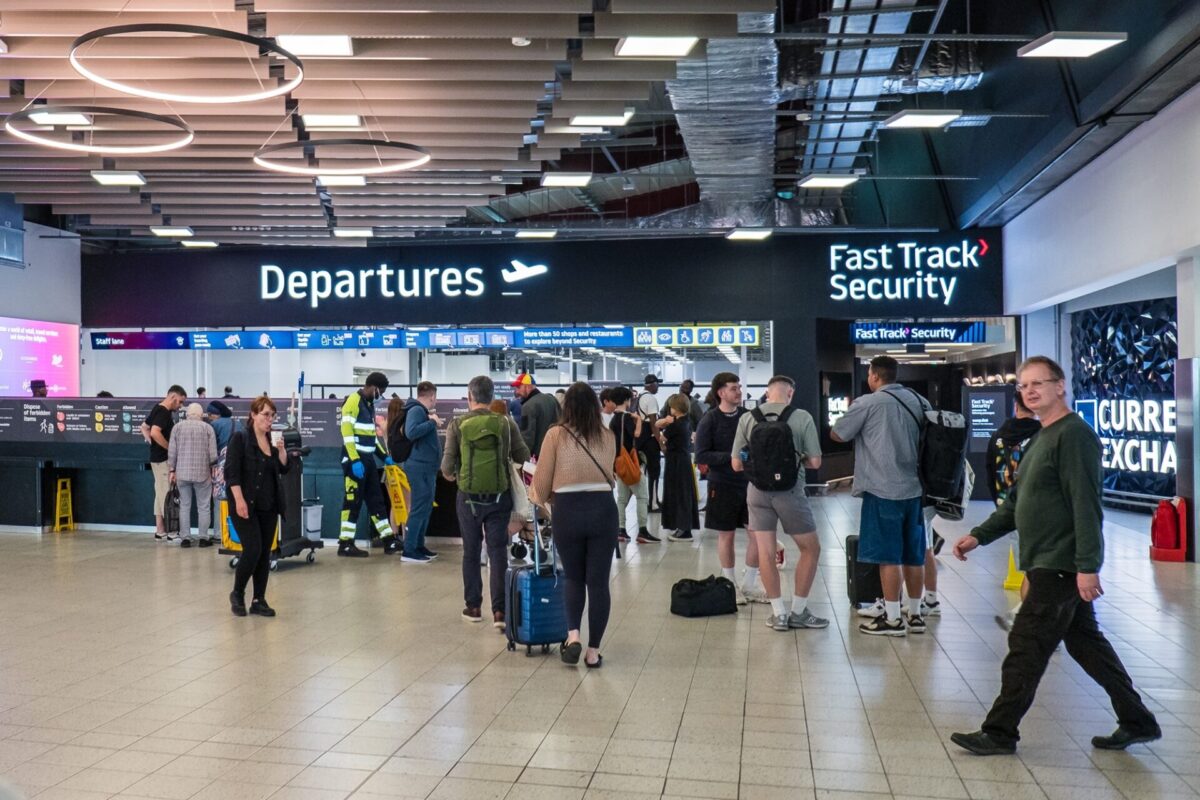
Walder is positive about many of the recent developments in aviation around environmental responsibilities and the greater focus on the passenger journey from “home to destination”.
“The airport might not think it’s the problem, but it needs to be part of the solution,” he said.
In the future Walder would like to see more public transport access opportunities for passengers travelling to the airport.
He was particularly complimentary of Heathrow’s efforts to invest in assisted travel, where, according to Walder, the number of passengers requiring help swelled to two million in 2025.
Reflecting on the changes that are currently taking place, Walder highlighted sustainability and passenger experience, as well as investment in future technology to make the digital experience better and AI to understand how passengers can more fully enjoy the airport experience.
