


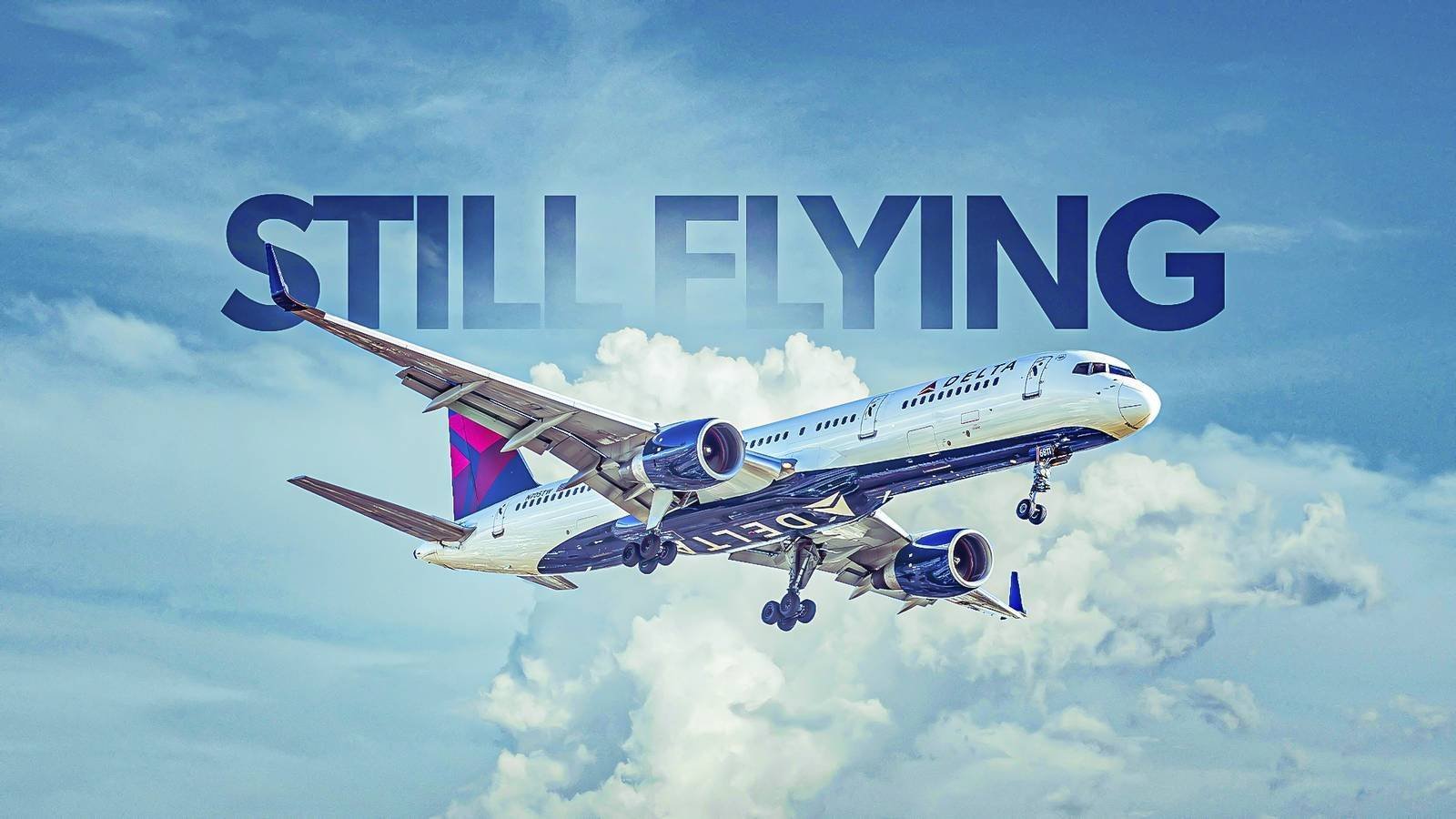
Delta Air Lines is a major operator of the Boeing 757 to this day. A retirement process has undeniably begun. However, more than four decades after the model’s entry into service and Delta’s own initial delivery, two variants of the narrowbody stubbornly remain key to the US major’s operations. The chances are, it will stay that way into the next decade too.
The harsh truth for Delta is that while it may have favored replacing the aging models in its fleet with newer and more efficient alternatives for some time, doing so in practice was always going to be far easier said than done. Not only is the role carried out by the 757 difficult to fill with a like-for-like replacement, but the actual timeline of the retirement process itself is out of Delta’s hands. So why is this, and how come that will leave Delta painstakingly phasing out its 757s gradually for some time yet?
Delta’s Diversified Fleet

At the core of Delta’s operations is a hugely diversified mainline fleet. Not only does it fly jets built by both Boeing and Airbus, but these span eight distinct families and incorporate 17 specific variants, based on Delta’s latest quarterly figures covering the three months to late June. What is more, the carrier has orders for an additional three variants to join its ranks in the years ahead.
Needless to say, Delta boasts a wide array of individual aircraft models that each have a role to play in an intricate network. It was not always this way. Prior to its 2008 merger with Northwest Airlines, Delta had largely stuck by US-built planes from Boeing, for instance. Since then, though, the airline has grown its fleet to include both Airbus and Boeing aircraft of various sizes, capable of serving a range of different needs.
The 757 fits into this by carrying out missions that neither smaller narrowbody jets nor larger widebodies have been capable of serving historically. Only recently, through the Airbus A321 series, have other models emerged that can viably do what the 757 and — to some extent — its larger counterpart, the Boeing 767, have since their own commercial launches in the early eighties.
Delta Left With Vast Number Of Boeing 757s To Replace

All of that means that Delta has faced a lack of choice over a replacement for some time, during which it naturally built a vast fleet of 757s. Having taken delivery of its first 757 back in 1984, the year after its introduction into service with Eastern Air Lines, the Delta name became part and parcel with the series in the years that followed.
Come the end of June, Delta still had 91 757s in its 1,004-aircraft-strong mainline fleet. Some 75 of these were Boeing 757-200 variants and descendants of the original model in the family. The remaining 16 were the stretched Boeing 757-300, which itself first began commercial operations in 1999. All of these were owned outright by Delta, with its 757-200s and 757-300s averaging 28.2 and 23.4 years old, respectively, at the time.
Delta mainline fleet as of June 30
Aircraft | Total | Average age (years) |
Airbus A220-100 | 45 | 6.5 |
Airbus A220-300 | 42 | 2.7 |
Airbus A319-100 | 57 | 24.3 |
Airbus A320-200 | 43 | 29.2 |
Airbus A321-200 | 127 | 7.5 |
Airbus A321-200neo | 99 | 2.2 |
Airbus A330-200 | 11 | 21.2 |
Airbus A330-300 | 31 | 17.4 |
Airbus A330-900neo | 39 | 3.5 |
Airbus A350-900 | 41 | 5.6 |
Boeing 717-200 | 80 | 24.8 |
Boeing 737-800 | 77 | 24.8 |
Boeing 737-900ER | 163 | 10.5 |
Boeing 757-200 | 75 | 28.2 |
Boeing 757-300 | 16 | 23.4 |
Boeing 767-300ER | 37 | 29.5 |
Boeing 767-400ER | 21 | 25.5 |
Total | 1,004 | 15.0 |
While substantial and to this day among the largest 757 fleets in existence, this forms the remnants of a much greater portfolio that saw Delta operate 189 757-200 variants in total over the years. The number of 757-300s within its ranks has always held firm at 16 in the meantime, with these having been inherited through the Northwest Airlines merger back in 2008 and remaining a constant feature since — in spite of the retirements of their smaller counterparts.
Number Of Delta 757s Dropping

Indeed, 757 numbers at Delta have pulled back over the years and continue to do so. But it is only across the 757-200 fleet where this has started to happen, and even then the process appears to have been measured.
Between its latest quarterly results in June and early August, Delta reduced its 757 fleet by eight aircraft, based on its fleet information website. All 16 757-300s remained, with Delta flagging the variant’s usual standard high-density configuration housing Delta First, Delta Comfort, and Delta Main classes and typical missions connecting its core hubs to higher-traffic domestic airports.
Delta Boeing 757 specifications
Specification | Boeing 757-200 | Boeing 757-300 |
Capacity | 168 to 199 passengers | 234 passengers |
Max range | 4,705 miles (7,572 km) | 3,285 miles (5,287 km) |
The 757-200 fleet had been cut to 67 jets in the meantime. Here, per the site, a string of the aircraft that hosted specialized configurations were still among them, with the sub-fleet having historically been used to serve both high-density and premium longer-haul routes. All of that goes to say, Delta’s 757 fleet has previously been and still is spread between various roles, making replacing them more complicated than simply finding a one-shoe-fits-all solution.
Airbus A321neos And Boeing 737-10s On Delta’s Order Book

Instead, Delta looks to have turned to both Airbus and  Boeing for alternatives to pick up the slack as the 757 is phased out. Namely, it had firm orders to buoy its Airbus A321neo fleet, alongside steadfast commitments for Boeing 737-10s, as of the time of its last report.
These amounted to 190 aircraft in total, comprising 90 A321neos and 100 737-10s. Options were also in place for an additional 36 of the Airbus and 30 of the Boeing narrowbodies, potentially taking the total number of jets covered by the combined orders to 256 if need be.
Delta mainline commitments as of June 30
Aircraft | Firm orders | Purchase options |
Airbus A220-300 | 58 | – |
Airbus A321-200neo | 90 | 36 |
Airbus A330-900neo | 16 | 15 |
Airbus A350-900 | 18 | 5 |
Airbus A350-1000 | 20 | 10 |
Boeing 737-10 | 100 | 30 |
Boeing 787-10 | 30 | 30 |
Total | 332 | 126 |
With 99 A321neos already, the first of which arrived with Delta in 2022, future orders of the variant are set to see it eventually make up the single-largest fleet type in the airline’s history. Meanwhile, the 737-10s will be fewer in number and play a complementary role to its new Airbus jets — much like the model it will ultimately replace.
What Will Ultimately Replace Each 757 Variant?

As to how these will be used by Delta in place of the 757, each incoming model is set to fill part of the gap left by the retirements. The A321neo will be the center of Delta’s single-aisle strategy. As the airline wrote in February: “A critical element of Delta’s premium strategy, the A321neo features more Delta First and Delta Comfort seats than any other narrowbody aircraft in Delta’s current fleet. This premium capacity allows Delta to better meet premium demand across domestic and short-haul international markets.”
It is this versatility that has helped to open up the door for the 757-200’s retirement. Delta runs its existing A321neos with either 164 or 194 seats, compared to capacities of between 168 and 199 seen across its remaining 757-200s, according to its online seating plans. The latter’s maximum range of 4,705 miles (7,572 km) does trump the A321neo’s 3,370 miles (5,423 km), though, hence Delta’s difficulties in finding a like-for-like successor. All told, for Delta, those metrics are close enough, meaning the A321neo can pick up various routes, both domestic and international, formerly served by 757-200s.
In terms of the 737-10, this will make out as more of a replacement for the 757-300, but also some of its other aging Airbus narrowbodies. Set to be fitted with 184 seats across three classes by the airline, this will be off the 234 passengers its 757-300s can currently carry. Conversely, a range of approximately 3,800 miles (6,100 km) will be stronger than the 3,285 miles (5,287 km) of the 757-300s in Delta’s fleet today. Again, that is far from a perfect match, but with each of the 737-10 and A321neo boasting better fuel economy, there are other factors for Delta to consider. Unfortunately for the airline, when it can get its hands on these more efficient planes — and, importantly, finally begin phasing out the 757-300 in line with the 757-200 — is up in the air.
Delta 757 Retirements In Part Dependent On Next-Generation Output

This timeline is actually with Boeing and the Federal Aviation Administration. Having originally been expected to roll out commercially in 2020 and Delta itself expecting initial deliveries from 2025, the 737-10 is years overdue and yet to be certified. Similarly, Airbus production bottlenecks mean uncertainty as to when and how quickly the new narrowbodies can arrive and take over from their predecessors. All of that means a cautious and step-by-step retirement process for its 757s in particular — themselves aircraft that are difficult to phase out in favor of a perfect alternative anyway.
This reality is one that Delta, and any airline facing today’s stretched production lines, has been forced to acknowledge. “The timing of these [purchase] commitments is based on our contractual agreements with the aircraft manufacturers,” it wrote in a December Securities and Exchange Commission filing discussing its $15.4 billion order book. The airline added: “[This] remains uncertain due to supply chain, manufacturing and regulatory constraints.”
Catch what other trackers miss
Emergency squawks, holds, NOTAMs — live signals, no signup.
Open tracker
Catch what other trackers miss
Emergency squawks, holds, NOTAMs — live signals, no signup.
Open tracker
