


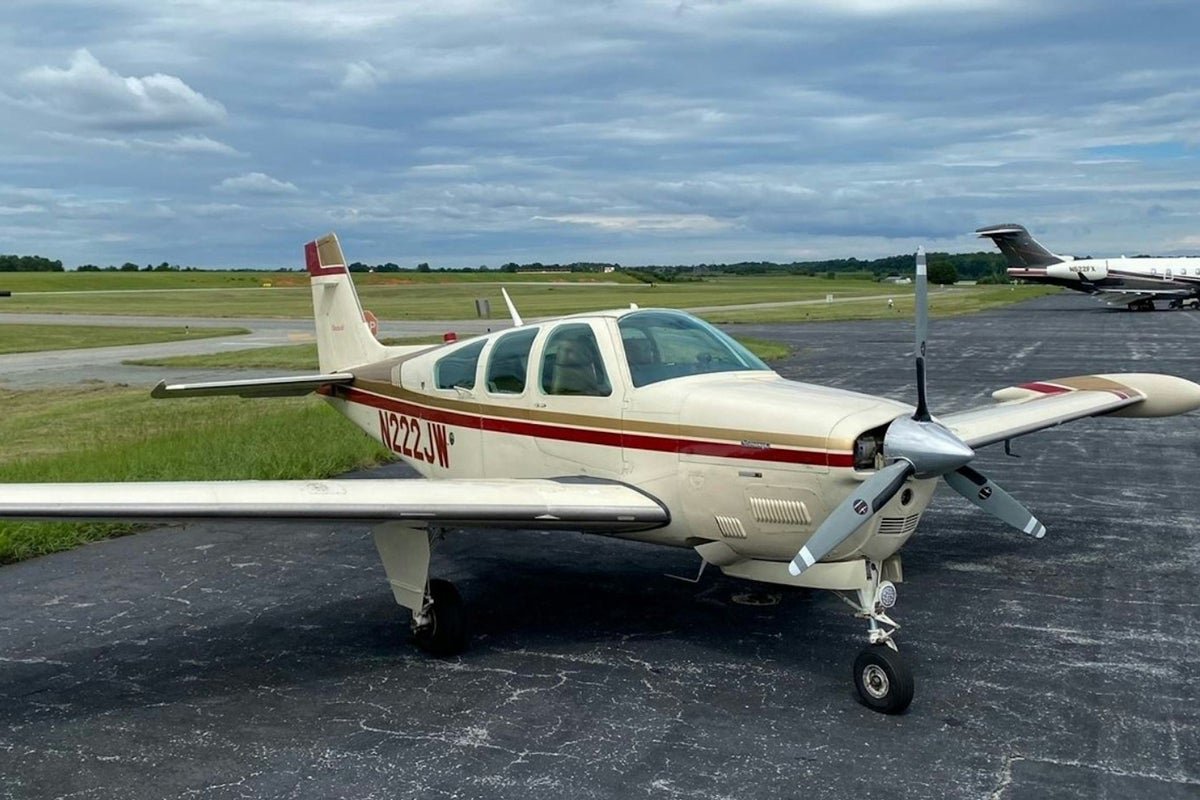
I may be the only pilot on the planet who wasn’t familiar with the saga of Jenny Blalock, known on social media as “TNFlygirl,” that so tragically ended with her 2023 death in an aircraft crash. And it seems odd since I spent a good deal of time in Knoxville, Tennessee, where she based her airplanes and trained.
I often took my Cessna 180 from Cincinnati Lunken (KLUK) to fly required FAA flight checks with Stan Brock and others in the Remote Area Medical DC-3. But time “accelerates,” so it may have been before all this happened.
Blalock, a 44-year-old, successful Knoxville businesswoman, purchased a Piper PA-28-140 Cherokee on June 15, 2021, and took flying lessons at a local airport. She flew often and, about six months later, in October 2020, passed the (written) FAA Airmen Knowledge Test. In May 2022, nearly a year after beginning, she passed the private pilot SEL practical flight test.
Well, nothing especially odd about this except that, by that time, she had accumulated 193.2 hours total flight time in the popular Cherokee with one relatively minor encounter between her nosewheel and a runway light. Who am I to make much of that?
The notable thing is, of nearly all her hours, only the minimum 10 hours were solo in the airplane. She had rigged multiple cameras inside and outside the airplane to make YouTube videos of her flights, posting 149 in total on her channel.
In July 2022, she sold the damaged Cherokee and bought a Beechcraft B33 Debonair. Now she would be flying a far more demanding, high-performance airplane with significantly more power, speed, and technology—an autopilot and sophisticated nav radios. It’s an airplane that demands mastery of basic flying skills.
Blalock accumulated another 200 hours over the next two years, which were filmed and posted online. These were nearly all dual sessions, but occasionally she had her non-pilot father riding along. CFIs who flew with her stated she leaned too much on new technology. In those additional 200 hours, they said she had never mastered manual flying skills.
Now she was working on—and broadcasting—her struggles toward an instrument rating with multiple instructors.
Issues reported were with trim directions, cockpit automation, and navigation. Why all this trouble after hundreds of hours of dual instruction?
One reason could have been that Blalock reportedly was taking a cocktail of several prescription drugs, four of them anti-anxiety medications. These “no-fly” drugs were not listed on her FAA medical. She was, according to one doctor, anxious, impatient, and attention seeking. Could social media be to blame?
Not surprisingly, this story had a tragic but inevitable end.
Here I quote from a FLYING magazine article by Meg Godlewski in February after release of the final National Transportation Safety Board report: “Two weeks before the accident, Blalock, who was training for instrument certification, underwent a phase check and did not do well…The check instructor reported deficiencies on…‘almost all aspects of aircraft control, situational awareness, and risk management.’ He reported he advised her that she was behind the Debonair and had purchased more aircraft than she was ready for.”
Remember, this was after nearly 400 hours of dual instruction in the Cherokee and Debonair.
On December 7, 2023, Blalock and her non-pilot father took off in VFR conditions on a 430 nm flight from Knoxville to Saline County Regional Airport (KSUZ) in Bryant, Arkansas, for some avionics work. She had requested VFR flight following, and her initial headings and ATC-pilot communications were unremarkable.
But as the airplane reached cruising altitude of 6,500 feet, airspeed and altitude began to fluctuate. The oscillations were at first minor but became increasingly more severe in the next 25 minutes. Now the altitude deviations increased to beyond 1,500 feet with significant fluctuations in airspeed. The ATC also advised she was off course, but Blalock replied she was correcting.
Finally, the oscillations increased to a point where the pilot may have been physically unable to control pitch, even with the autopilot disengaged, and ultimately resulted in the total loss of airplane control. Both Blalock and her father, James, were killed in a violent crash from 11,900 feet. The airplane hit the ground at 10,000 fpm and 230 knots and was totally destroyed, buried in a hole 5 feet deep and 8 feet wide.
The loss of Blalock and her father is certainly tragic—more so because it was so unnecessary. But I also have to say it infuriates me. Could it have been that her “plunge” into aviation was more so for public attention than the glorious commitment most of us have for flying?
As an aviation expert famously said: “Aviation is not inherently dangerous. But…is terribly unforgiving of any carelessness, incapacity, or neglect.”
