


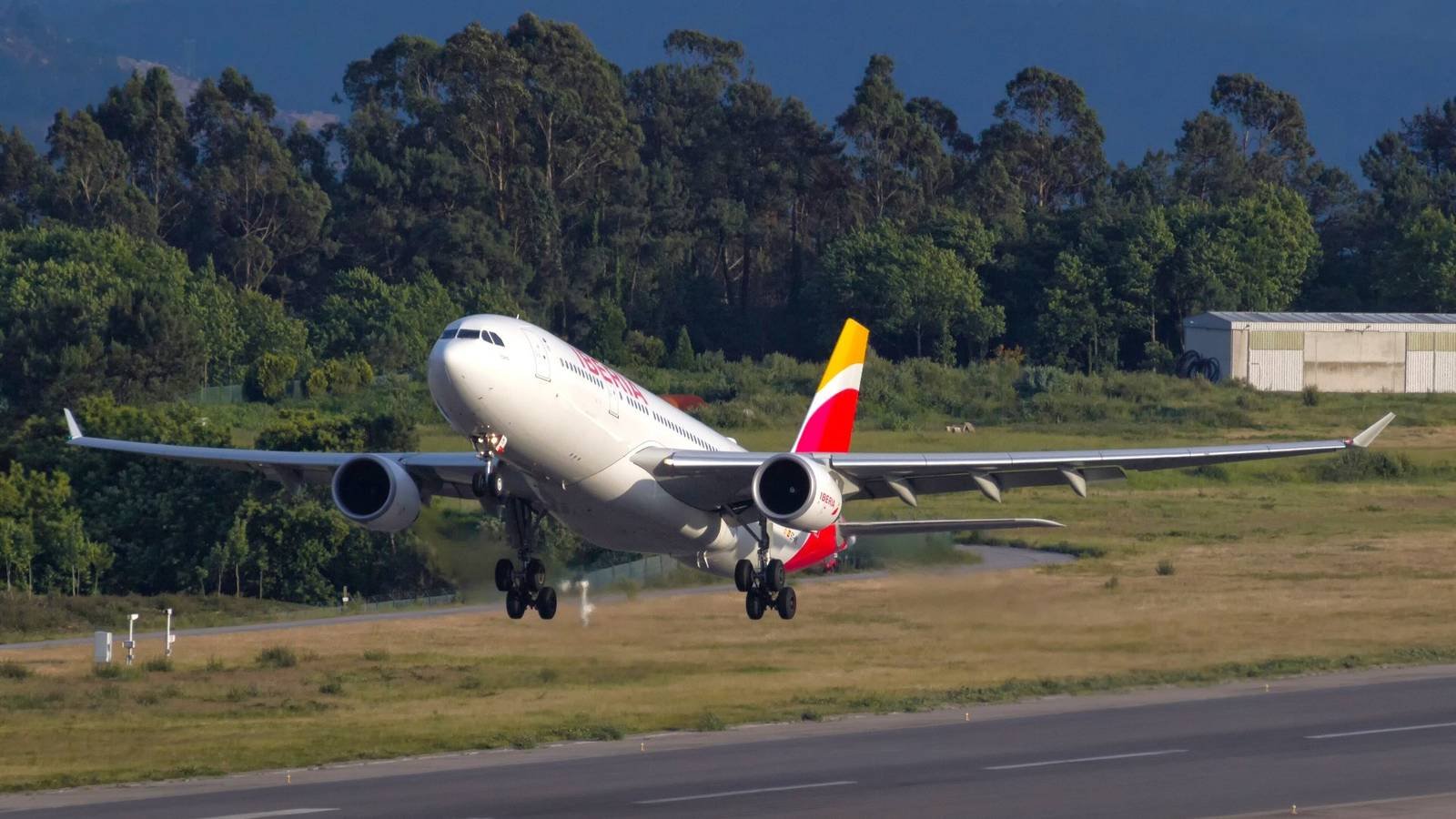
Yesterday marked the start of a lengthy operational hiatus on Iberia’s route between Adolfo Suárez Madrid Barajas Airport (MAD) in Spain and Havana José Martí International Airport (HAV) in Cuba. From then until late October, the national airline of Spain has opted to suspend the operations of its flights between the Spanish and Cuban capital cities, with a view to restarting its coverage in the winter.
The change is a reflection of the difficult conditions that are currently being experienced in Cuba as a result of the impacts of the US fuel blockade on the Latin American country. With supplies dwindling, airlines have been reducing their presence in the nation, resulting in a big hit to the Cuban tourism sector. According to Newsweek,  Iberia saw a drop in demand on its Cuban flights, leading to the hiatus.
Suspended Until The Winter

As initially announced by the Madrid-based  oneworld member and Spanish flag carrier back in April of this year, Iberia has ceased its flights from Madrid to Havana from June 1 until October 24. Before the start of this month, it had been gradually winding down its presence on this route, dropping from three weekly rotations in April to two in June. However, these were not the route’s only operational impacts.
Indeed, a statement released by Iberia in April, when it announced the current suspension, noted that “since February 9, (…) it [had been] necessary to perform a technical stop in Santo Domingo for refueling on return flights to Madrid” due to the situation in Cuba. Passengers with Iberia bookings for June 1 to October 24 are allowed to switch their route to Miami, Mexico City, Panama City, or Santo Domingo:
“Route changes from HAV to MIA, PTY, SDQ, or MEX are permitted on the same or nearby dates to the original booking. Transfers to/from the alternative airports are not covered by the airline.”
What Are The Current Options For Travel Between Europe & Cuba?

The withdrawal of Iberia from the Madrid-Havana route comes as something of a hammer blow for the admittedly dwindling number of passengers looking to travel not just between Spain and Cuba, but from Europe as a whole, given Madrid’s hub status. That isn’t, however, to say that such journeys are now impossible, and the inclusion of the Air China  Boeing 787 photo is not as random as it seems.
Indeed, according to scheduling data made available by Cirium, an aviation analytics company, Air China is one of four airlines flying between Europe and Cuba this June. Specifically, the Chinese airline serves Havana from Madrid as part of a longer one-stop route from Beijing (PEK), with eight rotations planned this month. Air Europa has also scheduled 12 rotations on the Madrid-Havana route in June.
Cuban flag carrier Cubana is set to operate nine flights from Madrid to Havana this month. Of these, four will run on a nonstop basis, while the other five will also serve Santiago de Cuba (SCU) en route. Unlike Air China and Air Europa’s 787-operated flights, these use the Ilyushin Il-96. Elsewhere in Europe, Neos will serve Havana from Milan (MXP) and Rome (FCO) via La Romana (LRM) using 787s.
Summer Travelers Impacted: Iberia Halts Direct Flights To Cuba For Months
Iberia’s abrupt suspension of Madrid-Havana flights in June signals deeper economic and infrastructure woes plaguing Cuba’s tourism sector.
Iberia’s Provisional Return Plans

At face value, the choice of October 24 as the final day of Iberia’s operational hiatus on the route between Madrid and Havana may seem like a somewhat random selection. In reality, however, this is anything but the case. Rather, as the last Saturday in October, this date is the last day of the IATA Summer Schedule. The IATA Winter Schedule will then commence on Sunday, October 25, ushering in big changes.
As such, this is also the point at which Iberia is provisionally planning to restart its Airbus A330-operated flights between the capital cities of Spain and Cuba. Indeed, data from Cirium shows that it has penciled in three rotations on this transatlantic corridor at the end of October, followed by 13 apiece (three a week) in November and December. Of course, these plans remain subject to change amid the blockade.
