


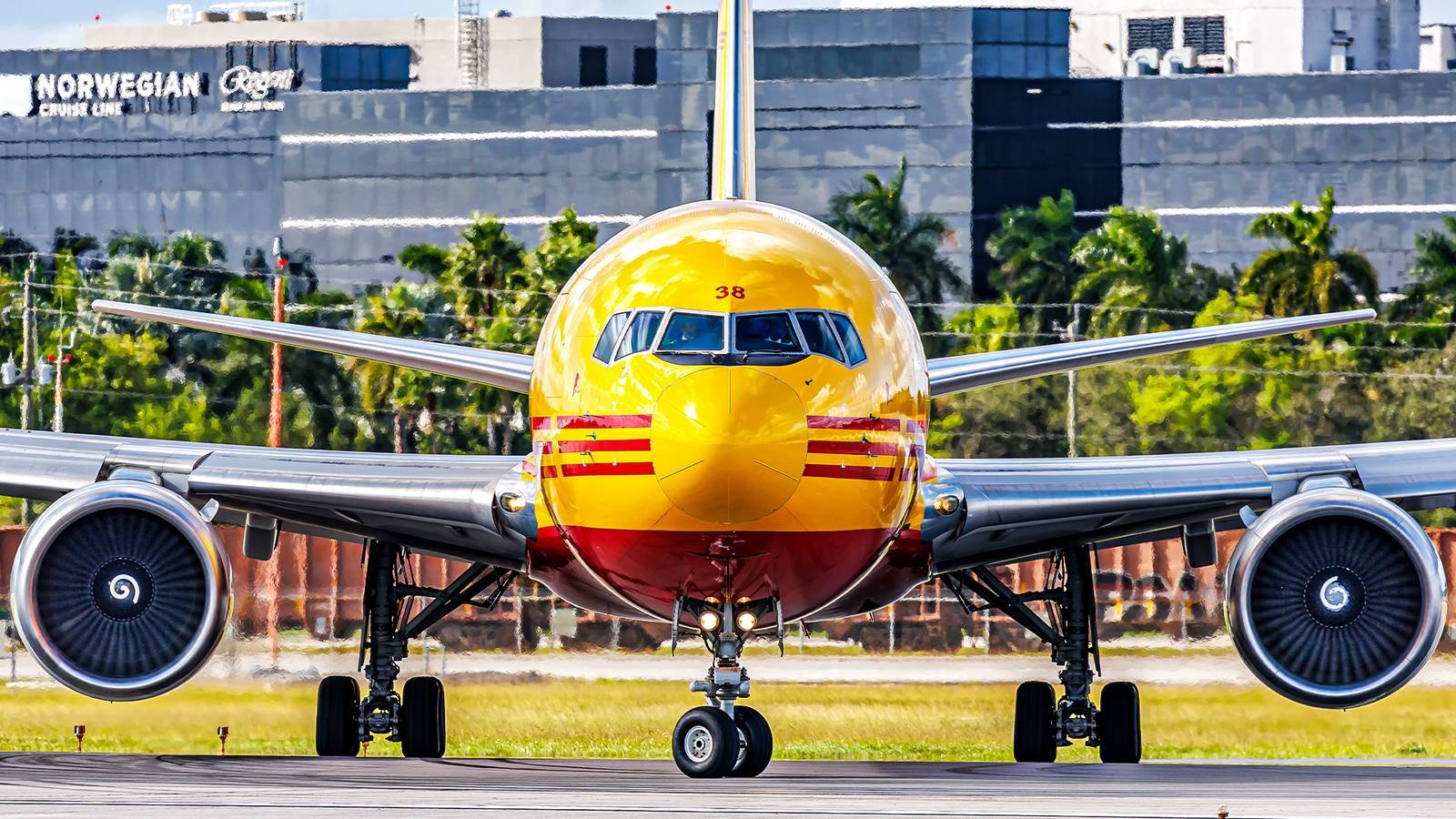
For decades, the Boeing 767 has been one of the defining aircraft of the global air cargo industry. It has become the backbone of fleets operated by dedicated cargo carriers, freight specialists, and airlines that found new life for aging passenger aircraft through passenger-to-freighter conversions. Its combination of payload, range, operating economics, and widespread availability made it the obvious solution for operators seeking a medium-capacity widebody freighter.
Meanwhile, dedicated factory-built variants continued to roll off Boeing’s production line long after passenger demand had shifted toward newer aircraft. It would therefore be easy to assume that the Boeing 767’s eventual replacement would naturally be another Boeing design, particularly with the arrival of the 777X Freighter later this decade.
However, while the Boeing 777-8F (the cargo variant of the upcoming Boeing 777X) undoubtedly represents the future of large dedicated freighters, a quieter transition has already been taking place in the middle of the market. Indeed, the Airbus A330 is increasingly emerging as the aircraft filling the role once dominated almost exclusively by the 767.
The Boeing 767 Created A Unique Cargo Niche

The Boeing 767 freighter succeeded because it occupied an unusually attractive position in the freight market, offering considerably more capacity than narrowbody freighters without the higher operating costs associated with larger aircraft like the Boeing 747F or Boeing 777F. Carriers particularly valued the aircraft because it could serve overnight package networks, while cargo airlines appreciated its flexibility on medium and long-haul sectors where demand did not justify larger aircraft.
Passenger-to-freighter conversions only strengthened that position. Hundreds of passenger 767s entered the secondary market after years of airline service, providing relatively inexpensive feedstock for conversion companies. The resulting aircraft could remain commercially viable for many additional years, allowing operators to acquire capable freighters at a fraction of the price of a new-build aircraft.
Ranking | Airline | Boeing 767-200F | Boeing 767-300F | Total |
|---|---|---|---|---|
1 | FedEx Express | – | 145 | 145 |
2 | UPS Airlines | – | 99 | 99 |
3 | Air Transport International | 7 | 38 | 45 |
4 | ABX Air | 8 | 25 | 33 |
5 | Atlas Airlines | – | 25 | 25 |
Even today, the Boeing 767 remains one of the world’s most recognizable freighters, operating for companies ranging from  UPS Airlines and Fedex Express to numerous independent cargo operators, demonstrating just how successful the aircraft has been across multiple generations of freight operations. The latest data from ch-aviation shows that FedEx Express currently has 145 767-300ERs in its fleet, as detailed in the table above.
Finding A Successor Has Become Increasingly Important

Although the Boeing 767 continues to perform well operationally at many cargo airlines, several market trends have made airlines look toward alternatives for future fleet growth. Production of the new-build Boeing 767 freighter is set to come to an end in 2027, while the supply of suitable passenger aircraft for conversion is gradually becoming more limited as older examples leave service permanently.
At the same time, global cargo demand has changed substantially over the past decade. E-commerce continues to drive sustained demand for dedicated freight capacity. Meanwhile, supply chains increasingly require flexible aircraft capable of operating both regional cargo sectors and intercontinental routes without the economics associated with much larger freighters.
The Boeing 777-8F is widely expected to become one of the industry’s premier widebody cargo aircraft once deliveries begin. However, it occupies an entirely different category, carrying significantly greater payloads than the 767 ever could. For many operators, replacing every 767 with a substantially larger aircraft simply does not make commercial sense, creating an opportunity for another platform to step into that middle segment.
The Airbus A330 Has Quietly Become The Leading Alternative

Rather than another Boeing aircraft taking over the 767’s traditional role, the Airbus A330 freighter has steadily established itself as perhaps the strongest long-term successor in the medium widebody cargo market. This development has not happened through headline-grabbing orders but instead through a growing number of passenger-to-freighter conversion programs and expanding operator interest.
Major operators of the Airbus A330-200F and A330-300P2F include  Turkish Airlines, Hawaiian Airlines, and Amazon Air. The Airbus A330 offers several characteristics that naturally lend themselves to cargo operations. Its wide fuselage provides excellent freight volume, while its modern design, long production run, and large global fleet ensure that suitable aircraft remain available for conversion as passenger operators retire earlier examples.
Catch what other flight trackers miss
Emergency squawks, holds, NOTAMs — live signals, no signup.
Open tracker
Catch what other flight trackers miss
Emergency squawks, holds, NOTAMs — live signals, no signup.
Open tracker
Rolls-Royce has been particularly vocal in highlighting this transition, describing the A330 passenger-to-freighter program as the logical successor to the Boeing 767. The company notes that the declining availability of 767 conversion candidates, combined with the approaching end of new-build production, creates a significant opportunity for the A330 platform.
Unlike entirely new aircraft programs, the Airbus A330 benefits from an already mature worldwide support network. Maintenance infrastructure, spare parts availability, pilot familiarity, and extensive operational experience all reduce barriers for operators considering fleet expansion.
Passenger-To-Freighter Conversions Are Driving The Change

One of the biggest reasons behind the Airbus A330 freighter’s rise has been the rapid growth of passenger-to-freighter conversion programs. Rather than purchasing expensive factory-built freighters, operators can acquire used passenger aircraft and convert them into dedicated cargo aircraft capable of decades of additional service.
This model has already proven extremely successful with the Boeing 767, and many of the same economic advantages now apply to the A330. Following the COVID-19 pandemic, a significant number of relatively young A330 passenger aircraft became available as airlines reshaped their long-haul fleets, creating an unusually attractive supply of aircraft suitable for conversion.
Several major conversion programs have expanded rapidly in response. Airbus subsidiary Elbe Flugzeugwerke, commonly known as EFW, has developed multiple A330 passenger-to-freighter variants. Elsewhere, Rolls-Royce has noted that declared conversion capacity expanded dramatically, with the overwhelming majority of available conversion slots involving Trent 700-powered A330s.
Cargo operators have responded accordingly. Airlines including MNG Airlines, DHL, and Mexican cargo carrier MAS have all introduced or committed to A330 freighters as part of broader fleet expansion strategies, demonstrating growing confidence in the aircraft’s long-term economics.
Operational Advantages Beyond Simple Replacement

The Airbus A330 freighter is not merely serving as a direct substitute for the Boeing 767 freighter but also providing operators with additional flexibility that suits today’s cargo market. Depending on the variant selected, the aircraft offers greater internal cargo volume than the 767 while maintaining operating costs that remain competitive for medium and long-haul freight services.
The aircraft’s continued popularity in passenger service also benefits freight operators. A large worldwide fleet means maintenance expertise remains readily available, while airlines retiring older Airbus A330ceo aircraft continue to provide future conversion candidates for years to come.
Rolls-Royce has repeatedly emphasized that the Trent 700-powered Airbus A330 combines reliability, long maintenance intervals, and mature aftermarket support, making it especially attractive for freight operators seeking predictable operating costs. The company also argues that the aircraft’s combination of widebody capability and favorable economics makes it well suited to changing cargo networks increasingly driven by e-commerce and express freight.
Importantly, this transition is occurring without forcing operators into substantially larger aircraft categories. Instead of jumping directly from a 767-sized freighter to something approaching the capabilities of a Boeing 777-8F or other future 777X freighter variants, airlines can continue operating aircraft that fit many existing route structures while benefiting from a newer generation of available aircraft.
The Boeing 777X Remains The Future, But The Airbus A330 Is Reshaping Today’s Market

There is little doubt that Boeing’s 777-8F will become one of the industry’s flagship cargo aircraft once it enters widespread service. With exceptional payload capability and impressive range, it is designed for airlines operating high-volume international freight corridors where maximum capacity is essential. So far, 80 examples of the aircraft have been ordered from carriers including  Qatar Airways and
  Lufthansa. The current largest orders are outlined in the table below.
However, that future should not overshadow what is already happening throughout the medium-widebody cargo sector. Many operators simply do not require aircraft the size of the Boeing 777X for every route, nor can they always justify the investment associated with the largest available freighters.
Ranking | Airline | Boeing 777-8F |
|---|---|---|
1 | Qatar Airways | 34 |
2 | Cargolux | 10 |
3 | China Airlines | 8 |
4 | Lufthansa | 7 |
5 | MSC Air Cargo | 5 |
Instead, the Airbus A330 is steadily assuming cargo responsibilities once almost automatically assigned to the Boeing 767. The combination of abundant passenger aircraft available for conversion, expanding conversion capacity, strong manufacturer and engine support, and cargo-friendly operating characteristics has allowed the aircraft to establish itself as an increasingly important part of the global freight landscape.
While the  Boeing 777-8F will undoubtedly attract attention as aviation’s next major freighter, the more significant shift may already be underway, with the Airbus A330 quietly becoming the widebody that is replacing the Boeing 767 across cargo networks around the world.
