


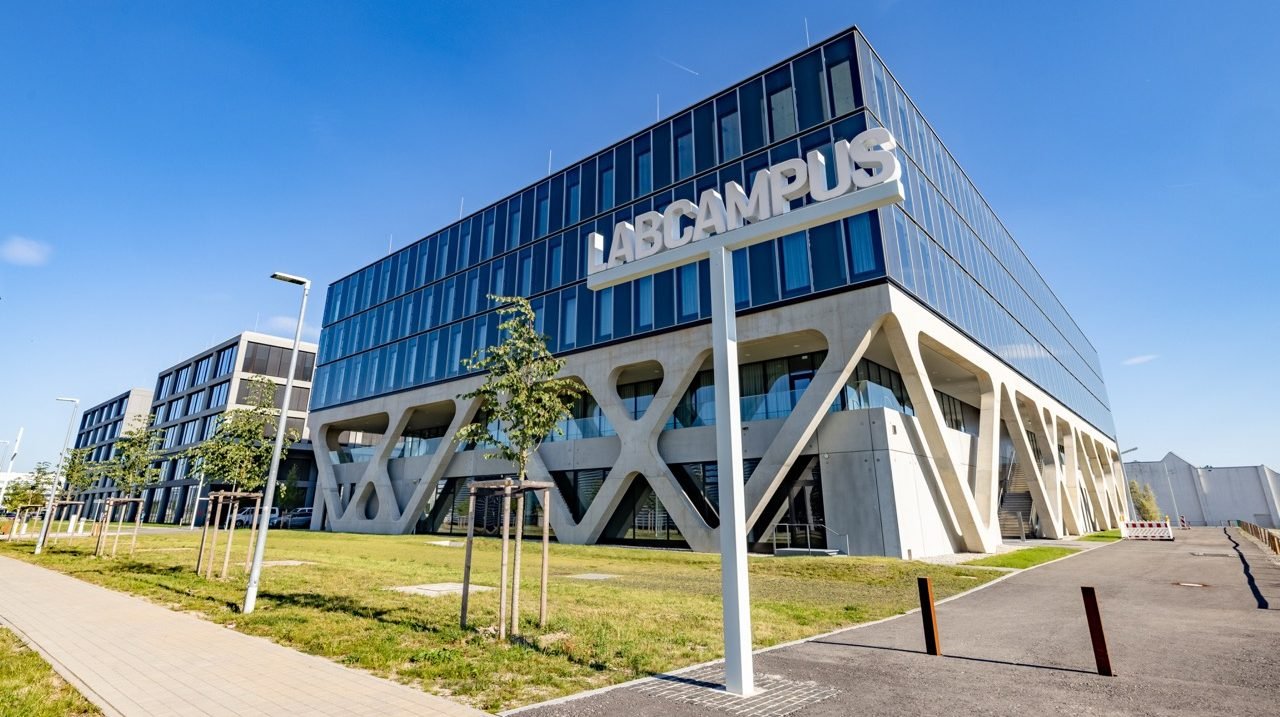
The Technical University of Munich (TUM) has opened the TUM Convergence Center at LabCampus, the innovation hub at Munich Airport. The center brings together students, researchers and partners from industry and society, with a focus on robotics, artificial intelligence (AI) and mobility.
A key component is the TUM RoboGym powered by Neura, developed by the TUM Munich Institute of Robotics and Machine Intelligence (TUM MIRMI) and Neura Robotics. TUM said it is a training environment for physical AI and humanoid robotics where robots learn and refine skills under realistic conditions, and the first location in the global Neura Gym network.
Physical AI refers to intelligent systems that can perceive, learn and act in the physical world through robotic platforms. At the RoboGym, researchers investigate how robots acquire new capabilities, interact safely with people and their environment, and transfer learning from one scenario to another.
Initially, around 100 humanoid and service robots will train in 48 training cells, performing tasks such as folding boxes, assembling components and operating tools. The resulting data will be collected in a cloud-based data lake. To coincide with the opening, Neura Robotics is unveiling the next generation of its 4NE1 humanoid robot, which will also join the RoboGym.
Alongside the RoboGym, the center includes the KI.Fabrik, the TUM Future Work LivingLab and the TUMorrow Hub for student innovation projects. LabCampus offers flexible workspaces, prototyping facilities and showroom areas.
“With the TUM Convergence Center, we are creating a place at LabCampus where scientific excellence translates into tangible impact. Here, students, researchers, and partners do not meet only at the end of a development process. They work together on responsible technologies from the very beginning,” said Thomas F Hofmann, president of TUM.
“Together with TUM, we are strengthening Munich Airport as a world-class hub for innovation. At LabCampus, scientific excellence and entrepreneurial practice come together directly to turn future technologies into reality more quickly. In this way, Munich Airport will not only send passengers on their way in the future, but also ideas for the future,” said Jost Lammers, CEO of Munich Airport.
“Even robots need training before they can help us in everyday life – and here at LabCampus, we are building their gym,” said Bavarian science minister Markus Blume. “We have critical mass here – a concentration of talent and technology that few other locations in Europe can match.”
Related news, Birmingham Airport’s AI assistant BABS answers thousands of passenger inquiries in first year
