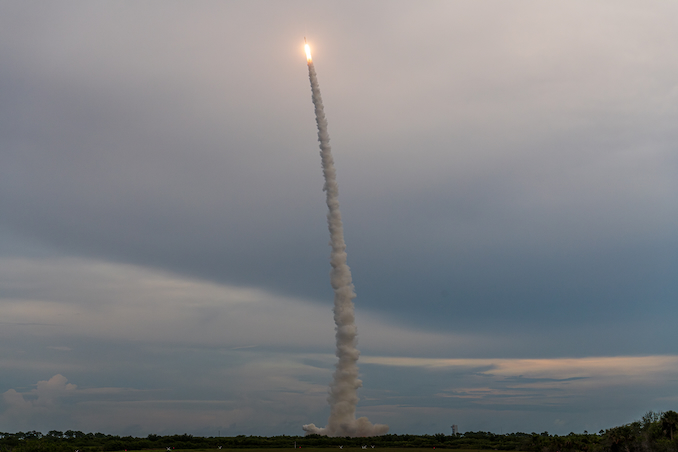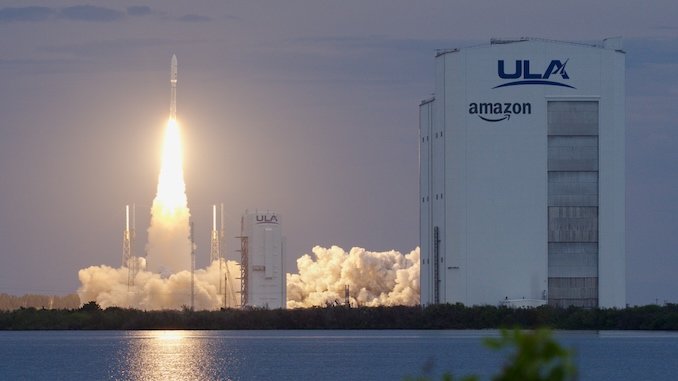
United Launch Alliance overcame adverse weather conditions to launch a batch of Amazon Leo’s broadband internet satellites on its Atlas 5 rocket from Cape Canaveral Space Force Station on Friday evening.
The countdown for the mission dubbed Amazon Leo 7 by ULA and Leo Atlas 07 (LA-07) by Amazon began at 12:13:30 p.m. EDT (1613:30 UTC) at T-minus 6 hours, 20 minutes. There countdown featured two planed, 30-minute holds with the first coming before fueling begins at T-minus 2 hours.
The second hold at T-minus four minutes had to be extended to allow for teams to get past a spot of unacceptable weather. Liftoff from Space Launch Complex 41 happened at 7:53 p.m. EDT (2353 UTC), shortly after sunset.
This was the seventh batch of production satellites that ULA launched on behalf of Amazon and the penultimate mission for the tech giant using an Atlas 5 rocket. The rocket flew on a north-easterly trajectory upon leaving the launch pad.
The 45th Weather Squadron forecast a dismal outlook for the Atlas 5 flight, stating that there was just a 30 percent chance for acceptable weather conditions during the window.
“For the next several days, an influx of moisture and westerly-to-southwesterly low-level winds will bring prime conditions for afternoon showers and thunderstorms along the east coast of Florida,” launch weather officers wrote. “For both the primary and backup launch days, there is high likelihood of weather violations. Almost every rule will have a chance to violate but the Cumulus Cloud Rule, Anvil Cloud Rules, and Surface Electric Fields Rule are the most likely.”
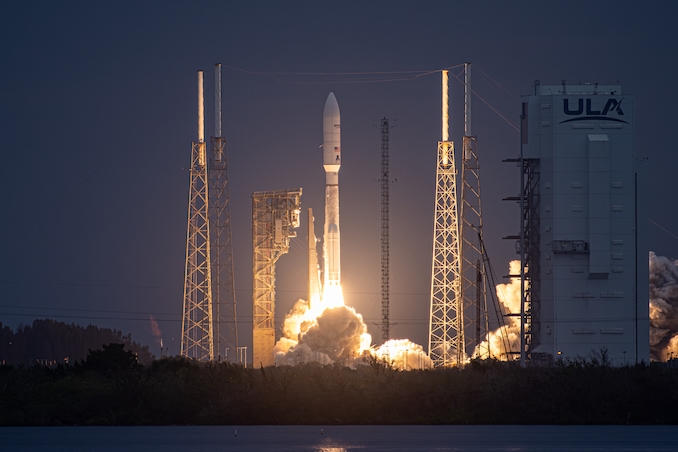
The rocket that launched on Friday was designated AV-113 and was the 109th launch of an Atlas 5 rocket to date. This was the 22nd launch of the rocket in the Atlas 5 551 configuration, which featured five solid rocket boosters.
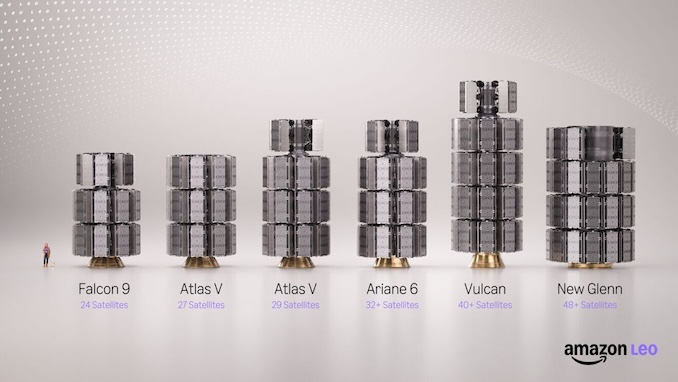
Amazon purchased a total of 47 launches from ULA: 38 Vulcan rockets and nine Atlas 5 rockets. However, because the debut of Vulcan was delayed, Amazon moved its two prototype satellites (branded as Project Kuiper at the time) and flew them in 2023 on one of its nine Atlas 5 rockets one a dedicated mission called Protoflight.
After the LA-07 mission launches, Amazon Leo will have just one Atlas 5 rocket remaining. The Vulcan rocket remains grounded since the USSF-87 mission in February suffered an SRB nozzle burn through.
Amazon purchased more than 108 rockets in order to launch its first-generation constellation, which will consist of more than 3,200 satellites in low Earth orbit.
The Federal Communications Commission requires Amazon to have half its constellation in operation by the end of July 2026, but as of Friday afternoon, the company only has about 300 satellites in orbit. The company filed a request to relax that requirement and that is still being evaluated.
Amazon was counting on flying its satellites aboard Blue Origin’s New Glenn rockets starting as soon as June 4, but the May 28 explosion of the New Glenn rocket dashed those hopes. With the rocket’s launch pad seriously damaged, it wasn’t immediately clear when New Glenn would fly again.
Amazon Leo confirmed on Friday that its satellites were at the company’s payload processing facility at NASA’s Kennedy Space Center at the time of the explosion and were not harmed. Separately, ULA said that its launch pad infrastructure was not affected by the explosion.
“Teams are supporting the Cape Canaveral Space Force Station Emergency Operations Center (EOC) and assessing ULA Atlas facilities for any crossover items. The team has completed an initial assessment, and the facility power and purges all appear nominal at SLC-41,” ULA said in a statement.
“The rocket remains safely on the pad. The rocket and spacecraft are healthy. The team will continue to monitor the launch vehicle and ground systems and provide updates when available.”
ULA said its final launch of an Atlas 5 551 rocket supporting the Amazon Leo constellation will launch in July 2026.