


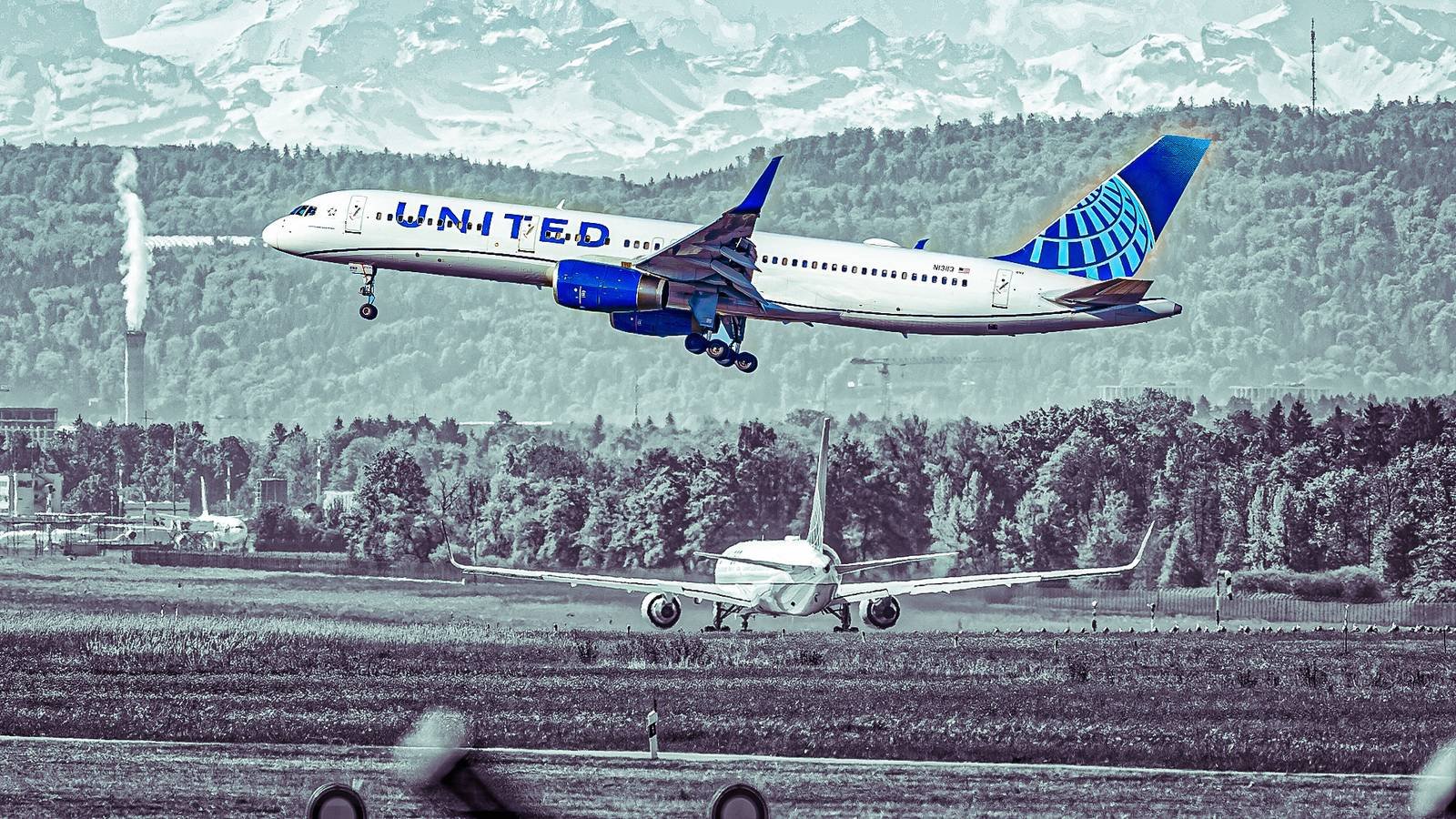
In a recent interview with CNBC, United Airlines CEO Scott Kirby said the carrier is looking to purchase slots at  New York JFK Airport (JFK) as part of its next phase of expansion. During the discussion over United’s future strategy, he said that United may buy out slots from carriers that are currently flying unprofitable routes as a means to reenter the JFK market.
Kirby went on to say that United is looking to begin flying out of the busy NYC hub as early as next year through a partnership with JetBlue Airways. United’s drive toward continued international expansion indicates a strong possibility that its return to JFK would accompany growth in the airline’s overseas network.
The Advantage Of United’s Premium-Heavy International Portfolio

United currently holds second place for most profitable American carrier but first place for international flights. That has been fueled by strong demand from US flyers who are not only eager to fly to foreign destinations, but willing to pay for premium airfare to get there. Kirby has steered the ‘premiumization’ fleet transformation taking place to capitalize on that change in demographics while targeting opportunities where rivals are struggling.
In the past few years, United has been steadily diverting more traffic from mega-hubs, like London Heathrow (LHR) or Frankfurt Airport (FRA), entirely to fly directly to secondary leisure spots. Among the most notable destinations that have seen new, nonstop service from the US are Mallorca in Spain, Palermo in Italy, and Ulaanbaatar in Mongolia. At the same time United added these routes to the schedule at its Newark (EWR) hub, it rolled out new ‘Elevated’ cabin interiors to entice premium airfare demand.
These two themes have delivered success through strong profit returns under the United Next campaign, which launched in 2021, one year after Kirby was promoted from President to CEO. Kirby gave this comment to CNBC on the strong potential to return to JFK:
“We [have] got a bunch of irons in the fire to try to find ways to do it.”
United Takes Another Bite Out Of The Big Apple

Because JFK is a strictly slot-controlled airport, United is actively seeking to acquire additional landing slots from carriers operating unprofitable routes there. Smaller domestic carriers or ultra-low-cost airlines that use JFK slots for low-fare, price-sensitive leisure routes face the slimmest margins.
United can buy out the lowest-performing ones to deploy premium-heavy aircraft for three to four times the revenue potential. If an airline is losing money on a JFK route, United can approach them with a lucrative long-term slot lease or outright cash purchase agreement.
This gives the struggling carrier an immediate cash injection or steady leasing revenue, while United absorbs the premium real estate. If United buys a pair of slots previously used by an airline flying a standard 150-seat Airbus A320 or Boeing 737 narrowbody, it can substitute its new Airbus A321neo ‘Coastliners’ or even a Boeing 787-9 ‘Elevated’ twin-aisle jets for higher capacity and even longer range.
The Pacific Is The Next Battleground For American Carriers

As United bolsters its position in NYC, a new rivalry is beginning to emerge on the other side of the globe. As owner of the world’s largest airliner fleet, United has leveraged its vast armada of widebody jets to become the dominant carrier across the Pacific. However, Delta Air Lines remains ahead of United in profits and is aiming to reclaim market share from United’s dominant reign over the Pacific.
Delta is using Los Angeles (LAX) as its primary offensive platform, recently launching daily nonstop service between LAX and Hong Kong (HKG). Meanwhile, United recently launched direct services to Bangkok (BKK) and Ho Chi Minh City (SGN) via Hong Kong. United also announced a major winter expansion to Japan, including the first-ever continental US nonstop flight to Sapporo (CTS) launching in late 2026.
Earlier this year, Delta President Peter Carter publicly announced that Delta intends to aggressively overtake United as the leading US transpacific carrier. Carter described the move as a “pretty audacious goal” in an interview with CNBC, but affirmed the goal as a necessity for Delta’s global ambitions. So far, DAL’s 8% capacity growth has only returned a 7% higher yield compared to United’s steady 4% capacity and 10% yield increases, showing that the Atlanta-based carrier has a steep challenge ahead of it.
