



United Airlines CEO Scott Kirby no longer expects Boom Supersonic‘s Overture airliner to enter service before the end of the decade, casting doubt on a timeline that has already changed significantly since the airline became one of the project’s first major customers.
“It’s not going to happen in ’29 — it’s going to take longer,” Kirby said in an interview with the Office Hours: Business Edition podcast.
His assessment is significant because United was the first US airline to commit to the Overture. In 2021, the carrier announced an agreement for 15 aircraft, subject to safety, operating and sustainability requirements, with options for another 35.
Kirby did not dismiss the program and praised Boom founder and CEO Blake Scholl and the company’s ability to adapt. But he acknowledged the scale of the challenge still ahead.
Follow Air Data News: WhatsApp | Instagram | LinkedIn | Twitter | Facebook
“They’ve got a lot of hurdles to overcome,” he said, adding that there is no guarantee Boom will overcome all of them. In March, Kirby had already estimated the chances of the Overture reaching commercial service at “50-50.”
Timeline keeps moving
When United announced its agreement in June 2021, Boom expected the Overture to roll out in 2025, make its first flight in 2026 and carry passengers by 2029.
The schedule changed after the aircraft itself underwent a major redesign and Boom decided to develop a new engine specifically for the program. In December 2022, when the company unveiled the Symphony engine, it projected production would begin in 2024, followed by rollout in 2026, first flight in 2027 and certification in 2029.
Nearly four years later, no Overture prototype has been completed.
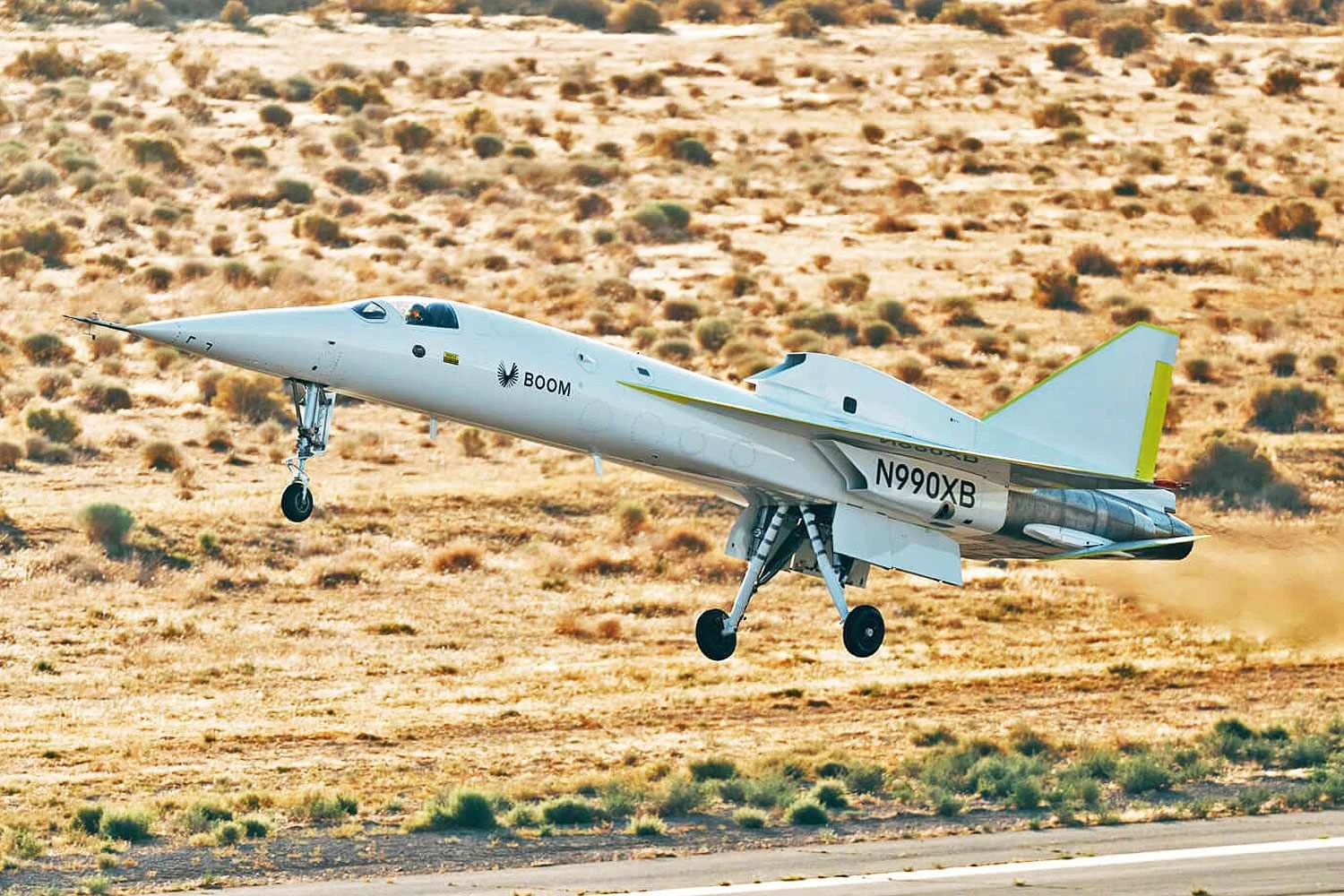
Boom did achieve an important milestone with the XB-1 demonstrator. The aircraft first flew in March 2024 and exceeded the speed of sound for the first time in January 2025, demonstrating that the company could design, build and fly a supersonic aircraft.
But the XB-1 is not a prototype of the Overture. The commercial aircraft is considerably larger, has a different configuration and will require certification for airline service.
One of its biggest challenges remains propulsion. After Rolls-Royce ended its involvement with Boom, the company announced the purpose-built Symphony turbofan in 2022. Boom now has to develop and certify a new commercial aircraft and a new engine before the Overture can enter service.
Engine becomes another business
That challenge has also created an unexpected business opportunity.
Boom is adapting technology developed for Symphony to produce Superpower, a 42 MW natural gas turbine aimed at supplying electricity to AI data centers. In October, the company unveiled a nearly 200,000-square-foot factory in Centennial, Colorado, dedicated to turbine production.
Boom has also completed Sprint Core, its first experimental turbine core. The hardware incorporates the compressor, combustor and high-pressure turbine and will provide technology for both Superpower and Symphony. Its first firing is planned before Thanksgiving.
The company expects the first Superpower customer deliveries in mid-2027 and plans to reach production of 25 turbines annually in 2028 and 50 in 2029.
Rather than presenting the energy business as a diversion from Overture, Scholl says revenue and profits from Superpower can help finance development of the supersonic aircraft. The two programs also share technology and manufacturing capabilities.
Kirby highlighted the move as an example of Boom’s ability to pivot, specifically mentioning the company’s decision to produce turbines for data centers.
Factory waiting for an airplane
The contrast with the Overture production infrastructure is notable.
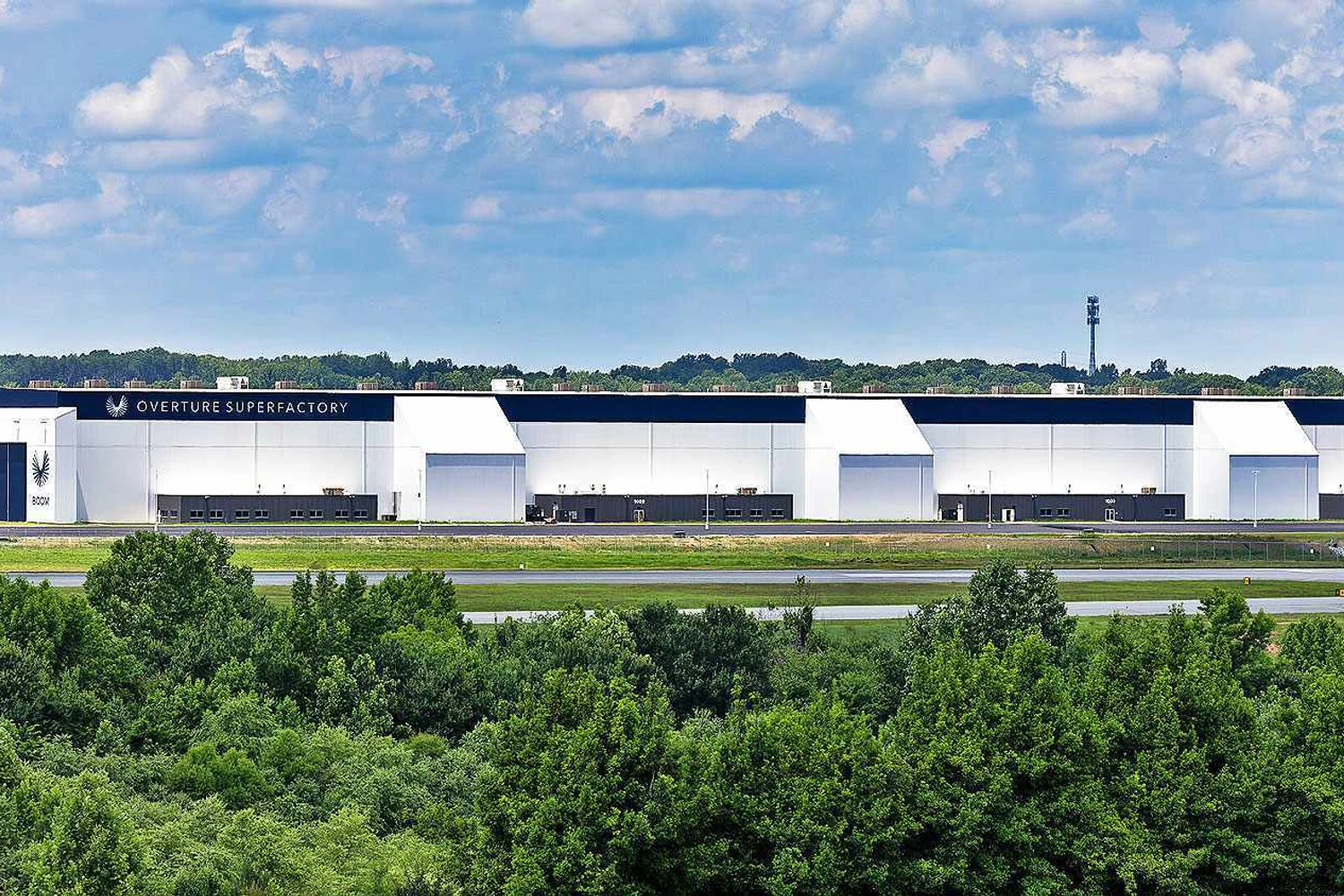
Boom completed its Overture Superfactory at Piedmont Triad International Airport in Greensboro, North Carolina, in 2024. The facility was designed to assemble as many as 33 aircraft per year, with plans for a second line that could eventually double capacity.
At the time, the company expected aircraft production to begin that year. More than two years after the building was completed, however, there is still no Overture prototype to assemble.
The early construction reflected the aggressive schedule Boom was pursuing at the time. The company now has to complete development of the aircraft, mature Symphony from its current core-testing stage, conduct flight testing and obtain certification before airline operations can begin.
Boom continues to officially target 2029 for Overture certification and passenger service. United’s CEO, however, no longer considers that date realistic.
Whether the delay extends only a few years or becomes something more fundamental remains uncertain. Kirby’s position is not that Overture cannot succeed, but that the remaining technical and certification work makes the original timetable increasingly difficult to reconcile with the program’s current stage.
