


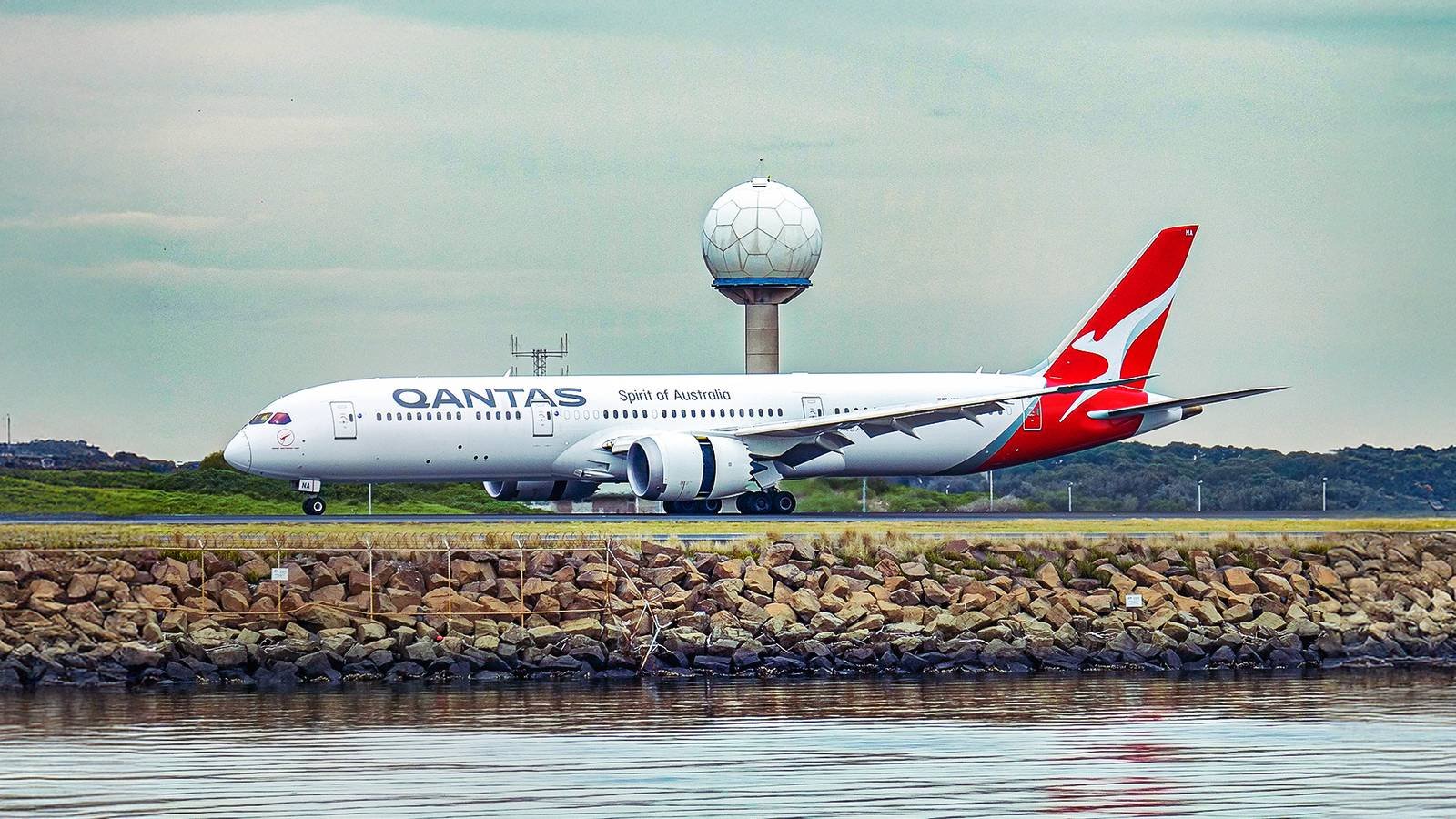
On March 25 2018, the Australian flag carrier Qantas wrote aviation history by becoming the first airline to commence direct non-stop flights between Australia and Europe with a route from Perth International Airport(PER) to London Heathrow Airport (LHR). This historic event marked the first time travelers between Europe and Oceania could fly without a stopover or transfer, and that all the world’s inhabited continents were connected by a non-stop flight in one form or another.
On the roughly 17-hour flights, which are operated under the flight numbers QF9 and QF10, Qantas deploys a 236-seat Boeing 787-9. Since the route stretches over 9,000 miles (14.484 km), the aircraft type’s capabilities are pushed to an extreme as  Boeing officially lists the 787-9s range at 8,705 miles (14.010 km). Unsurprisingly, this comes with necessary weight restrictions, explaining why Qantas seats only 236 passengers on board an aircraft marketed to seat 290 guests.
Why Qantas Stopped Non-Stop Flights Between Perth & London

The 236 seats installed on Qantas’ Boeing 787-9 aircraft are divided over three cabin classes, with 42 seats in business, 28 in premium economy, and 166 in economy class. For comparison,  Qatar Airways seats 311 passengers on the same aircraft, having installed 30 in business class and 281 in economy, while
  Turkish Airlines seats a total of 300 passengers on the -9 with 30 seats in business and another 270 in economy.
American Airlines and United Airlines have between 222 and 285 seats installed in their respective 787-9 fleet, with the majority of aircraft having over 250 seats installed. Although Qantas has already limited the total number of seats on board compared to its peers, the extent to which the 787-9 is pushed to its limits often requires even further capacity restrictions.
According to Analytic Flying, which used data from the Australian Bureau of Infrastructure and Transport Research Economics (BITRE), the westbound seat capacity between Perth and London averaged 219 seats per flight between October 2024 and September 2025, suggesting 16 seats on average needed to remain empty. On the eastbound return flight from London, only one seat remained empty on average.
Origin | Via | Destination | Distance | Block Time |
|---|---|---|---|---|
Perth (PER) | Singapore (SIN) | London (LHR) | 9,186 miles (14,783 km) | 22 hours 05 minutes |
London (LHR) | Perth (PER) | 9,009 miles (14,499 km) | 16 hours 50 minutes |
The exact number of empty seats varied throughout the year, with restrictions appearing most severe during the Australian spring and summer, thus fall and winter in the Northern Hemisphere. This clearly illustrates that there is a very small margin for operating these long direct flights economically and safely. Logically, the additional distance that was added to the flight due to airspace closures in the Middle East following the 2026 Iran Crisisexceeded this margin.
The new routing, which added up to 45 minutes to the flight, made it impossible for Qantas to continue operating the Europe-bound leg non-stop without compromising on revenue payload. That’s why the flight was rerouted as QF209 with a stop in Singapore Changi Airport (SIN), pushing the total journey upwards of 20 hours.
According to the Australian flag-carrier, the alternative route via Singapore allows for carrying more than 60 additional passengers per flight due to fewer weight restrictions. Interesting to note is that it is not the first time Qantas has opted to do this, having done so twice for a short period in 2024 for similar reasons.
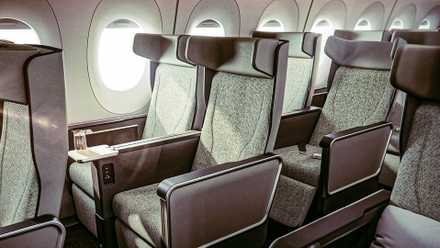
Here’s How Qantas Plans To Charge 30% More Per Seat On The World’s Longest Flights
A key factor the airline can capitalize on is that Qantas will be the only carrier to offer non-stop services on these competitive routes.
Flights To Rome Remain Non-Stop

Following London in 2018, Qantas launched a seasonal route between Perth and Rome Fiumicino Airport (FCO), in June 2022. Qantas had last served Rome back in 2003, with the first flight touching down at the Italian airport decades before in 1948. At the time, the airport was an important stopover on the original 5-day Kangaroo Route between  Sydney Kingsford Smith Airport(SYD) and London.
The direct route between Western Australia and the Italian capital covers a distance of 8,298 miles (13,354 km), putting the route well within the listed range of the 787-9. As a result, Rome continues to operate as a direct non-stop connection, without the need for any technical stop. In fact, the route appears to be performing quite well and, according to sources, the flight has operated with load factors exceeding 90% since its commencement.
Over 50% of passengers traveling on the route are reported to have originated in Eastern Australia, transferring via Perth. Given Rome’s strong performance, Qantas has now decided to nearly double its capacity on the route by extending the seasonal service by eight weeks and adding a fourth frequency for the peak holiday period in Europe between the end of June and the end of September, adding almost 10,000 additional seats.
Qantas Perth–Rome capacity comparison, 2025 vs 2026 | |||
|---|---|---|---|
Season | Operating dates | Peak frequency | Total services |
2025 | Jun–early Sep | Three weekly | ~36 services |
2026 | 3 May–23 Oct | Four weekly (peak) | ~80 services |
Change | +8 weeks | +33% | +122% |
Source: Air Traveler Club | |||
The additional capacity increases the total number of available seats between Perth and Europe to 300,000 seats. An important reason for Qantas to increase overall capacity despite the ongoing conflict is partly due to the weakened competition from Middle Eastern hubs, with around 50% of passengers between Europe and Australia typically flying via the Middle East. Qantas International & Freight CEO Cam Wallace said:
“Our long-haul flights from Perth have been game-changing for Western Australia and next year will be our biggest yet, with nearly 300,000 seats connecting the major European capitals of London, Paris and Rome nonstop with Perth.”
In 2024, two years after flights to Rome commenced, Qantas also introduced non-stop flights from Perth to Paris Charles de Gaulle (CDG) ahead of the Olympic Games. However, earlier this year, in March 2026, the Australian airline announced it was ending direct services to Paris and instead rerouting the flight to Sydney via Singapore.
This decision was arguably made for similar reasons to the rerouting of flights to London. Despite this, the airline did increase capacity to Paris, with frequency increasing from three weekly flights to five weekly. To feed into the revised route, Qantas increased its Perth to Singapore schedule from seven flights to ten flights per week. The temporary network adjustment is expected to remain in place through August 2026.
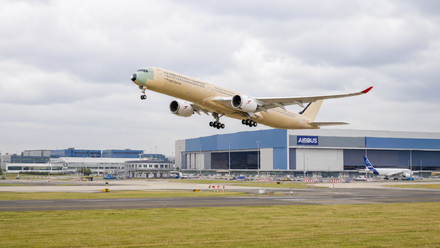
Project Sunrise Nears Reality As Qantas’ First Airbus A350-1000ULR Makes Maiden Flight
Airbus’ A350-1000ULR begins testing as Project Sunrise moves closer to reality.
What Does This Mean For Qantas’ Project Sunrise?

For Qantas, Perth currently functions as a strategic hub for its longest routes to Europe, routes that wouldn’t have been possible to serve from Sydney or Melbourne Airport (MEL), with all departures and arrivals in Perth optimized for seamless eastbound connections. While not part of the prestigious Qantas Project Sunrise, the three current Europe routes are helping the airline prove its thesis that a highly profitable and massive market exists for ultra-long-haul travel between Australia and Europe.
Additionally, the flights have also helped gather real-world operational data to support the development of Project Sunrise. This project is an initiative by Qantas to launch the world’s longest commercial flight connecting both Sydney and Melbourne on Australia’s East Coast with London and New York. The name of the project honors a World War II-era Qantas service where passengers witnessed two sunrises on a single journey.
To make these extremely long-haul flights feasible, Qantas has ordered 12 modified Airbus Airbus A350-1000ULRs from Airbus. For these special A350s to remain in the air for almost a day, the jets feature a massive 20,000-liter rear center fuel tank and a modified fuel-management system.
Simple Flying Quiz
Think you really know Qantas?
Answer 10 questions and put your knowledge to the test
Think you really know Qantas?
Answer 10 questions and put your knowledge to the test
Easy (15s)Medium (10s)Hard (5s)
Because of the massive initial fuel load at take-off, the aircraft also requires an increase in Maximum Take-off Weight (MTOW). Similar to the regular A350-900 and A350-1000, the ULR is also powered by a pair of Trent XWB-97 high-bypass turbofan engines. Onboard the aircraft, Qantas is opting for a highly spacious, low-density layout containing only 238 seats, far fewer than the 350-plus passengers the A350-1000 typically seats.
The cabin will feature six ultra-premium first-class suites, 52 business-class suites, 40 premium economy seats, and 140 standard-economy seats, engineered with extended legroom and a generous 33-inch pitch. Since the lack of movement for such an extended period of time comes with health risks, the airline is also planning on installing a dedicated ‘Wellbeing Zone’ open to all cabin classes, where travelers can stand, stretch, and perform tailored exercise routines.
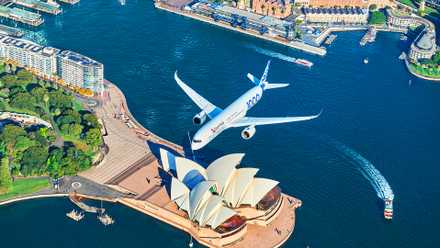
Why The Airbus A350-1000 Is The Only Jet That Can Fly Sydney To London Nonstop
At 10,573 miles (17,015 km), the journey is no mean feat.
The Latest On Project Sunrise

While the project has faced a number of delays due to supply chain issues, the first test aircraft (MSN707) completed its initial 3-hour and 43-minute test flight from Toulouse on June 2, 2026. This also marked the start of a two-month certification process for the aircraft’s maximum takeoff weight increase. The second aircraft, which will be the first formally delivered to Qantas, is currently in final assembly, with the first delivery planned for April 2027. The first commercial route launches are expected to follow shortly after.
Elsewhere, in a recent interview with Simple Flying, Turkish Airlines’ Chairperson of the Board and the Executive Committee, Prof. Dr. Murat Şeker, said the Turkish carrier is also planning to use the A350-1000ULR for flights between Istanbul and Sydney from next summer. The Chairperson admitted that an IST-SYD launch faces “a challenge on the business side,” but the airline’s ambitions remain unchanged.
Catch what other trackers miss
Emergency squawks, holds, NOTAMs — live signals, no signup.
Open tracker
Catch what other trackers miss
Emergency squawks, holds, NOTAMs — live signals, no signup.
Open tracker
