


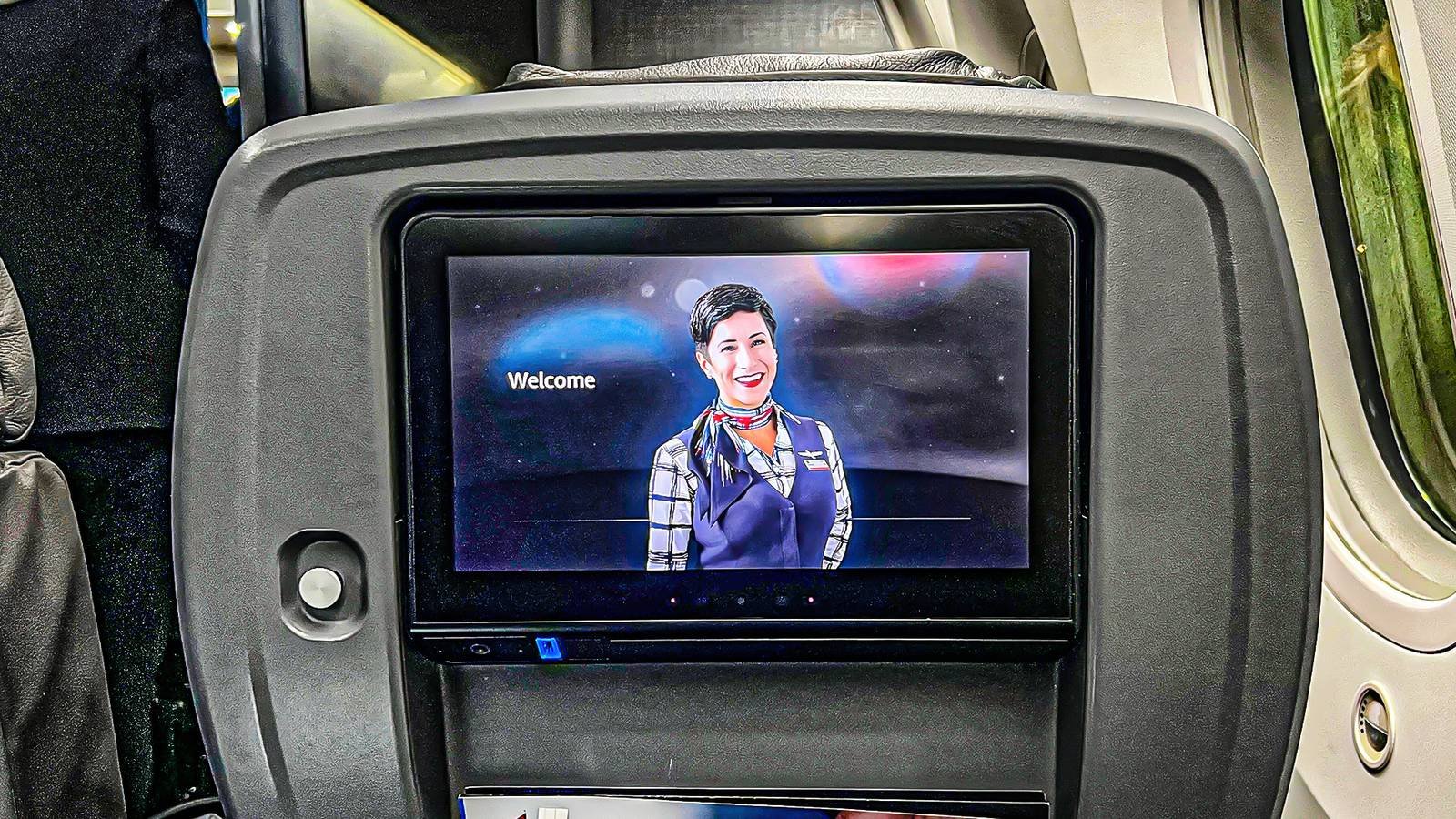
American Airlines’ decision to remove seatback screens from its narrowbody fleet is facing renewed scrutiny in 2026 as the carrier struggles to compete with Delta and United, US rivals that have increased their push to offer industry-leading technology onboard their aircraft. By 2024, American had removed all seatback displays from the vast majority of its narrowbody fleet, a project that wrapped up late last year. However, despite that, American is now evaluating new inflight entertainment platforms and investing in new WiFi programs.
For US travelers, those who are most impacted by American’s narrowbody operations, the carrier’s possible move to bring back inflight entertainment screens would be widely welcomed by passengers. Seatback entertainment provides additional flexibility for travelers, offering dozens of movie and TV options onboard in case a personal device dies or WiFi is unavailable for streaming. In the coming years, it is very possible that American will reverse course on its inflight entertainment strategy, with executives “strongly considering” bringing back seatback displays.
The History Of Seatback Inflight Entertainment

The origin of inflight entertainment stretches back over a century to 1921 when Aeromarine Airways screened a short promotional film onboard one of their flights, making it the first moving-picture entertainment in the air. More recently, seatback entertainment screens became standard across US airlines during the 1990s and early 2000s, especially on long-haul aircraft. Early systems relied on overhead monitors that showed a common film to all passengers. Technological advances eventually enabled individual seatback displays, allowing passengers to select movies and TV shows independently. By the mid-2000s, these systems were increasingly installed on narrowbody aircraft and found on most US routes.
The competitive dynamics around seatback entertainment sharpened considerably in the 2000s when JetBlue emerged as an unlikely disruptor. The low-cost carrier became the first US airline to offer live satellite television on every seatback, a move that punched well above the airline’s size and forced legacy carriers to treat entertainment as a real differentiator rather than a simple box to check. Delta, United, and American all began to accelerate their own IFE investments, upgrading aging overhead systems to individual touchscreens, as well as expanding content libraries to offer passengers more options onboard.
The Decision To Remove Seatback Screens From Narrowbody Aircraft

In the late 2010s,  American Airlines made a deliberate move to eliminate setback entertainment screens from the vast majority of its narrowbody fleet. Accelerated during the COVID-19 shutdown, American argued that its passengers increasingly preferred to stream content from their personal devices rather than watch inflight options loaded into the aircraft’s entertainment system. By 2021, American’s final Boeing 737 aircraft, of which the airline operates 300 examples, were retrofitted with the carrier’s new interior, thus eliminating seatback screens. Last year, American fully removed all inflight entertainment screens from its narrowbody aircraft, with its last legacy Airbus A319 retrofitted with American’s new cabin.
By transitioning to a bring-your-own-device model, one of American’s goals was to reduce its operational costs. Each seatback screen adds complexity and weight to each aircraft, up to thousands of pounds on each aircraft. Eliminating these systems led to direct reductions in American’s fuel consumption, reducing emissions and costs. The elimination also reduced maintenance costs for the airline, eliminating the need for tedious repairs to frequent malfunctions of these systems. Today, American’s narrowbody fleet has small personal device holders on the back of each seat, allowing passengers to mount their device to the seatback and stream either personal entertainment or options from American’s online streaming portal.
However, the decision to remove inflight entertainment screens was not popular amongst passengers and represented a visible contrast from American’s widebody fleet. Rather than remove seatback displays from its entire fleet, American left these systems on its widebody fleet, which continues to serve international routes where embedded entertainment is widely considered a must. The gap between American’s domestic and international cabin products, as well as that between American and competitors, slowly grew wider with each year.

American Airlines Strongly Considers Bringing Back Seatback Screens, Eyes Starlink
American Airlines may bring back seatback screens while exploring Starlink WiFi, signaling a shift toward enhanced inflight connectivity.
Signs American Airlines Is Reconsidering Its Entertainment Strategy

Recently, American has signaled that it is seriously considering whether to reintroduce seatback screens on its narrowbody fleet, coming just a few months after its A319 fleet finished retrofits to remove inflight displays. Until now, American has strongly committed to its Project Oasis cabin refresh program, insisting that passengers do not prefer inflight screens. However, over the past few years, as American’s profits have shrunk, fellow U.S. carriers  United Airlines and
  Delta Air Lines have begun to invest heavily in the passenger experience. United especially has deemed inflight technology as a major selling point for passengers, putting millions of dollars into its “United Next” initiative, part of which is to bring large, high-quality screens to every seat onboard.
With these developments outside the airline, internal reports suggest that American’s executives are “seriously considering” bringing seatback screens back to its narrowbody aircraft, with a decision possible as early as later this month, according to CNBC reporting. This move would be a massive reversal of American’s multi-year and costly process to strip all seats of inflight screens. Planes would have to be grounded for at least a day as maintenance crews removed all old seats from the aircraft and installed new ones with entertainment systems onboard.
Airline | Seatback Screens? |
|---|---|
American Airlines | No |
Delta Air Lines | Yes |
United Airlines | Yes |
Southwest Airlines | No |
Alaska Airlines | No |
JetBlue | Yes |
It’s also worth noting that American’s new Chief Commercial Officer, Nat Pieper, was in charge of Delta’s fleet when the Atlanta-based airline made the decision to add seatback screens across its narrowbody fleet, including the Boeing 757s, A319s, A320s and 737s. Pieper’s arrival at American, combined with United and Delta’s moves, might shift American’s philosophy surrounding inflight entertainment, although it is certainly not a guarantee. Additionally, seatback screens are not the only possible inflight improvement coming to American Airlines. The carrier is also reportedly considering upgrading its inflight WiFi offering, in addition to the airline making its WiFi free for all AAdvantage members earlier this year.
Why Passenger Behavior Still Favors Built-In Screens

The core motivator behind American’s screen-less strategy was the belief that passengers would prefer to stream content on their own phones, tablets, and laptops like they would already at home or work. In practice, however, that model introduces a lot of friction points that built-in screens help avoid. For starters, passengers have to remember to download content before departure, maintain enough battery life on their device, and stay connected to potentially spotty inflight WiFi. Families traveling with children also often benefit from dedicated seatback screens, reducing the need to manage multiple devices, especially for younger children who do not have their own devices.
Data from Delta and United, in fact, suggest that large high-definition displays have become a key part of the passenger experience and increasingly a motivator for which airline consumers choose to fly. Delta, for example, noted that consumption of seatback content actually increased from 2023 to 2024, the same time when Delta began its wide rollout of free WiFi for SkyMiles members. Delta VP of inflight entertainment and connectivity strategy Julieta McCurry said that “customers increasingly want a multi-device experience like they’re used to at home,” one that allows them to work on one device while enjoying a background movie on another, according to an interview with Runway Girl Network. United, too, has seen a 4.5 point improvement in customer satisfaction with inflight entertainment, suggesting that passengers do place a high amount of value on seatback screens.

Too Early? American & United Airlines’ Free T-Mobile Inflight WiFi Disappears From Flights
The unexpected disappearance of free T-Mobile inflight WiFi on American and United Airlines raises questions about the future of onboard connectivity.
Starlink WiFi? American Looks To Improve Onboard Connectivity

In addition to the possibility of seatback entertainment making a return at American Airlines, the Dallas-based carrier is also considering connecting passengers with Starlink or Amazon Leo WiFi service, a similar product to Starlink. This potential move comes after American has committed to making onboard connectivity more accessible, announcing last year a plan to offer free high-speed WiFi for AAdvantage loyalty members starting early this year. Currently, the rollout is mostly complete, with about 90% of aircraft already offering free WiFi. This step forward actually makes American the largest airline provider of free inflight WiFi, although once United finishes installing Starlink on its fleet of over 1,000 aircraft, they will claim the title.
For American, the choice of Amazon Leo as their potential satellite partner would bring implications beyond simply high-speed WiFi. A potential deal for Amazon’s Leo service could bring more Amazon products to American’s fleet, including Amazon Prime Video and music on American planes, as well as a partnership allowing AAdvantage program members to spend and earn frequent flyer miles on Amazon purchases. Notably, if American goes ahead with both its plan to reintroduce inflight displays and partner with Amazon, Prime video would be available at each seat to stream, in addition to hundreds of other content options.
Overall, many of American’s decisions are largely impacted by what its fellow US carriers do. Seatback entertainment isn’t the only major decision where American diverged from Delta and United. During the pandemic, American was the only one out of the three to retire all of its 767s, 757s, and A330s, dramatically reducing its long-haul capacity. Critics argue that the complexity American now faces is largely self-inflicted, both on the entertainment and fleet capacity fronts. At the end of the day, it looks likely that a world in which American’s mainline narrowbody fleet is reinstalled with inflight screens is coming soon.
