


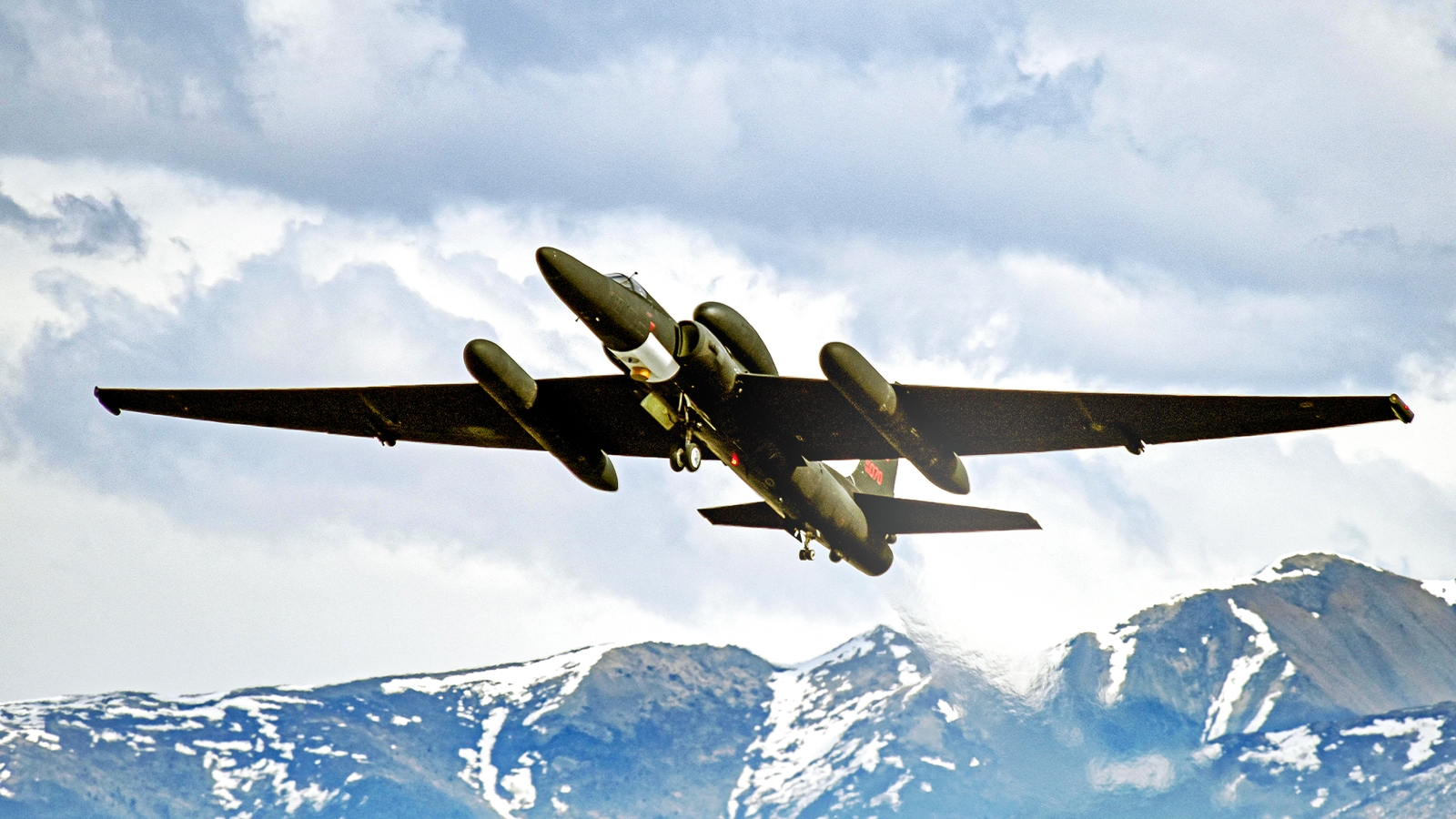
The Lockheed U-2 Dragon Lady continues to operate routine intelligence, surveillance, and reconnaissance missions that, in many ways, seem more like spaceflight than conventional aviation. A pilot taking off from Beale Air Force Base must spend a full hour breathing pure oxygen before spending nine to eleven hours in the cockpit. Sustained exposure to a 29,000-foot cabin altitude creates the same physics that afflicts scuba divers surfacing too quickly.
At these extreme altitudes, the ambient atmospheric pressure is entirely hostile to human life. At the U-2’s operating altitudes, the cockpit itself cannot keep pace with the outside environment. The aircraft’s environmental control system maintains cabin pressure at roughly the same altitude as a passenger jet cruises. That is about the same elevation as the summit of Everest rather than the sea-level-like pressurization found in an airliner cabin.
Nitrogen, which makes up about 78% of the air a pilot breathes at ground level, dissolves into the blood and body tissues during the extreme profile of a U-2 flight. The nitrogen can come out of the blood as bubbles, producing decompression sickness, or ‘the bends.’ To prevent this, US Air Force pilots lie in a recliner for at least an hour before every flight, breathing 100% oxygen, a procedure known as pre-breathing that flushes nitrogen out of the bloodstream before the aircraft ever leaves the ground.
Keeping The Dragon Lady’s Pilots’ Blood From Boiling
Any sudden loss of cabin pressure above the Armstrong Line, or 62,000 feet, would cause bodily fluids to boil and induce fatal decompression sickness. Pilots must undergo a meticulous preparation cycle managed by specialized Physiological Support Personnel. This process begins with sixty minutes of continuous pre-breathing pure oxygen to purge nitrogen from the bloodstream, followed by integration into a ninety-pound full-pressure suit that serves as a self-contained life-support capsule.
On the tarmac, the oxygen supply is not interrupted for the walk to the jet or during suit-up. A portable liquid-oxygen unit keeps the pilot breathing pure oxygen continuously from the pre-breathing chamber to the cockpit connection, and pilots continue breathing 100% oxygen. The oxygen never mixes with ambient air for the full duration of missions that regularly run eight to twelve hours. The suit pilots wear, the David Clark SS1034, also functions as a literal backup cockpit, with built-in emergency pressure and oxygen.
Air Force flight surgeons at Beale have spent two decades documenting every minute detail of human performance on the Dragon Lady’s grueling missions. A retrospective Air Force study covering 1994 through 2010 documented 73 confirmed cases of decompression sickness among U-2 pilots. In response, the Air Force ran a Cockpit Altitude Reduction Effort, or CARE, beginning in 2013 to lower the U-2’s effective cabin altitude and reduce hypobaric exposure.
Flying On The Edge Of The Atmosphere And Aerodynamics

Once established at operational altitude, the technical challenge shifts from physiological survival to extreme aerodynamic precision due to a phenomenon known as the ‘coffin corner.’ In the thin air of the upper stratosphere, the margin between the aircraft’s stall speed and its maximum structural Mach limit narrows to a critical window of approximately five knots.
Operating within this restricted envelope means a minor deceleration will cause the wings to lose lift and enter an unrecoverable stall, while a slight overspeed will subject the airframe to catastrophic shockwaves that can tear the wings from the fuselage. Pilots must maintain this precise velocity profile for hours at a time, relying on detailed telemetry and manual stick-and-rudder skills while consuming liquid nutrition through a dedicated helmet port.
These rigorous operational rituals were established during the inception of the U-2 program in the mid-1950s, predating the high-altitude routines later popularized by the SR-71 Blackbird. While other strategic reconnaissance assets have been retired in favor of unmanned systems or satellites, the U-2 fleet has maintained this continuous operational tempo for seven decades.
Its hourly operating cost is a fraction of Blackbird’s multi-million-dollar mission profile. Additionally, newer unmanned aerial vehicles rely heavily on continuous satellite data links that are highly vulnerable to electronic warfare, cyber disruption, or anti-satellite weapons. Thus, the presence of a human pilot in the U-2 is still valued as a guarantee that the mission will succeed even in a heavily contested EW battlespace.
The Dragon Lady’s Dwell Time Advantage

The Dragon Lady’s ability to hover over a target and continuously gather intelligence is one of the primary distinctions between a U-2 espionage plane and a spy satellite. This is especially helpful when there is a chance to obtain more information by staying in the region as long as feasible, or when the precise timing of a target of opportunity is unknown. A satellite’s ability to do this is limited by the physics of its orbital route, which sets a time limit for ISR over any specific location on Earth.
In July 2025, Lt. Col. John ‘Jester’ Mattson, 1st Reconnaissance Squadron commander, described the purpose of continuous improvement after one of his squadron’s U-2s completed a historic mission. Demonstrating the plane’s incredible endurance, the squadron flew one of its jets on a tour of all 48 contiguous US states in a single flight, according to Jester.
“We continue to hone our combat competencies, showcasing Beale’s capacity as a power projection platform to rapidly respond to adversary actions anywhere in the world.”
Satellites follow strict, predictable orbits. Enemy forces use software to track exactly when a spy satellite will pass overhead. The moment the satellite is inbound, the enemy stops moving convoys, covers up weapons, and goes silent. Once the 10 minutes are up, they uncover everything and resume operations. Once that satellite leaves, it might take 12 to 24 hours, or more, for its orbit to bring it back over the same spot.
The Air Force’s Highest Eye in the Sky

The U-2 doesn’t fly by its targets; it stares at them, thanks to a flight endurance of 12 to 14 hours. It creates an image of each target rather than taking a picture because it can park itself outside or directly over the target area. Throughout the day, the U-2 stays in the air, watching who shows up, which doors open, when guards switch shifts, and where supplies are transported. It creates an ongoing story.
When an enemy moves its ballistic missile truck, it doesn’t follow a satellite’s timetable. A U-2 can detect the exact instant a garage door opens, track a vehicle as it goes down a highway, see its setup, and pinpoint its location in real time. The U-2 can stay focused on a single target for hours on end, tracking it through cities and roads without ever breaking the visual link. When the plane hits its limit, instead of returning to base each time, it can pause briefly for aerial refueling before continuing to essential missions.
Flexibility And Adaptability: The U-2’s Modular Payload

The Dragon Lady’s capacity to land and replace sensor devices in between sorties is another significant advantage over a space-based vehicle. The aircraft’s modular open systems architecture lets it remove equipment that isn’t needed for the mission and replace it with a new package designed for the target or situation. A satellite might not have the gear to intercept signals if an adversary uses a new kind of radar jammer or communication frequency, but the U-2 can be quickly upgraded to meet threats as they arise.
For instance, the U-2 can continue its mission by launching a radar pod the next day if it takes off on a clear day with a camera package, but the weather turns bad overnight. It instantly adjusts to evolving combat technology. When a sensor breaks, it lands, replaces its component, and then rises again. A spy satellite’s hardware design is set in stone at launch. Often, there is nothing you can do if a wire fries, a sensor deteriorates, or a component becomes outdated six months into a fifteen-year lifespan.
Future-Proof ISR With Lockheed’s Vintage Spyplane

The latest U-2S variant has a modular nose cone, a huge fuselage bay, and detachable wing pods. Because it has an open design with standardized physical mounting, power connections, and data buses, ground technicians can hot-swap completely different sensors in under an hour. It has even been modernized with open mission systems, making its digital backbone universally interoperable with new equipment rather than being limited by proprietary software bottlenecks.
Where the adaptable qualities of the Dragon Lady shine the most are on missions to conduct electronic warfare and signals intelligence. Space-based EW assets are geared toward long-term strategic mapping. They map an enemy’s national air defense grid over months and years, identifying permanent radar installations.
If an enemy suddenly activates a mobile surface-to-air missile radar or steps up tactical radio communication ahead of an assault, the commander can re-task the U-2 instantly. It can hunt down the specific source of that emission in real-time and relay those coordinates directly to friendly units within minutes.
Catch what other trackers miss
Emergency squawks, holds, NOTAMs — live signals, no signup.
Open tracker
Catch what other trackers miss
Emergency squawks, holds, NOTAMs — live signals, no signup.
Open tracker
