


Follow us
Add us as a preferred source on Google
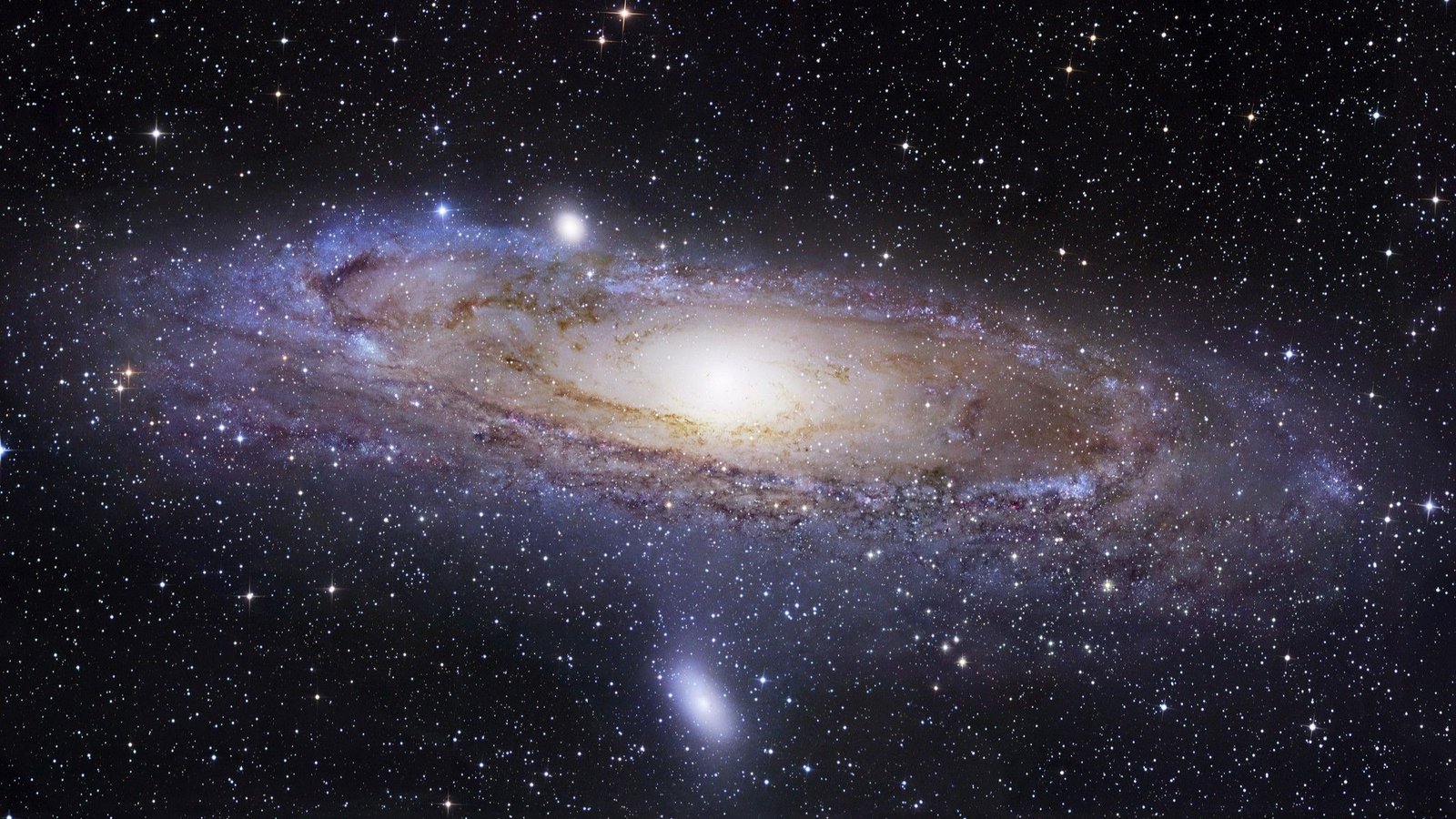
The first time I showed someone the Andromeda galaxy (M31), our conversation did not go quite as planned.
I’d carefully worked my way across the sky, starting from the Great Square of Pegasus and hopping from star to star until I was confident I had the right patch. I pointed the telescope, got M31 in its crosshairs and proudly announced to my wife that I had found the closest giant galaxy to the Milky Way. Would she like to see it?
She then stayed quiet for a little too long as she looked through the eyepiece. Then came an unexpected question. “Is it near that little smudge?” Hmmm. “Err, no. It is that little smudge,” I replied.
There was a pause. Of course, I knew exactly what had happened. We’d both seen photographs of M31 — a vast spiral galaxy with a brilliant center, sweeping dust lanes and hundreds of billions of stars. What we were actually looking at was a grayish blur that could easily have been mistaken for a mark on the eyepiece.
That apparent disappointment is now my favorite part of finding Andromeda because the unimpressive smudge is real. The light entering your eyes has been traveling across space for about 2.5 million years. No screen, photograph or telescope is necessary. You are intercepting ancient light in your backyard. Technically, the Triangulum Galaxy (M33), about 2.7 million light-years away, can be seen with the naked eye, so it is therefore the most distant object the naked eye can see. But not mine — I’ve never seen it. M31 is a much more realistic naked-eye target.
What’s happening and when to look
Early November is an excellent time to find M31 from the Northern Hemisphere. It’s high and well placed during the evening, and this week the moon is becoming particularly cooperative. New Moon falls around Nov. 9, giving us several evenings with little or no moonlight to wash out faint deep-sky objects.
I usually begin with the star Alpheratz, one of the corner stars of the Great Square of Pegasus. You go two stars left, two stars up, and you arrive at M31. Another route — and a good way to check you’re in the right place — starts in Cassiopeia, the distinctive W-shaped constellation high in the northeastern sky on autumn evenings. You can use its second V-shape as an arrow pointing straight at M31.
You can do that star-hop with the naked eye or a pair of binoculars, but M31 is visible to the naked eye only under a very dark sky. However, don’t look for a miniature version of the photographs. Expect a faint, elongated patch with a slightly brighter middle.
There’s another beginner trap to avoid. Images make Andromeda look compact, but its full apparent extent is enormous — several times the width of the full moon — and our eyes usually pick up only the much brighter central region. Once you know that, the smudge starts making more sense.
How and when I’m watching it
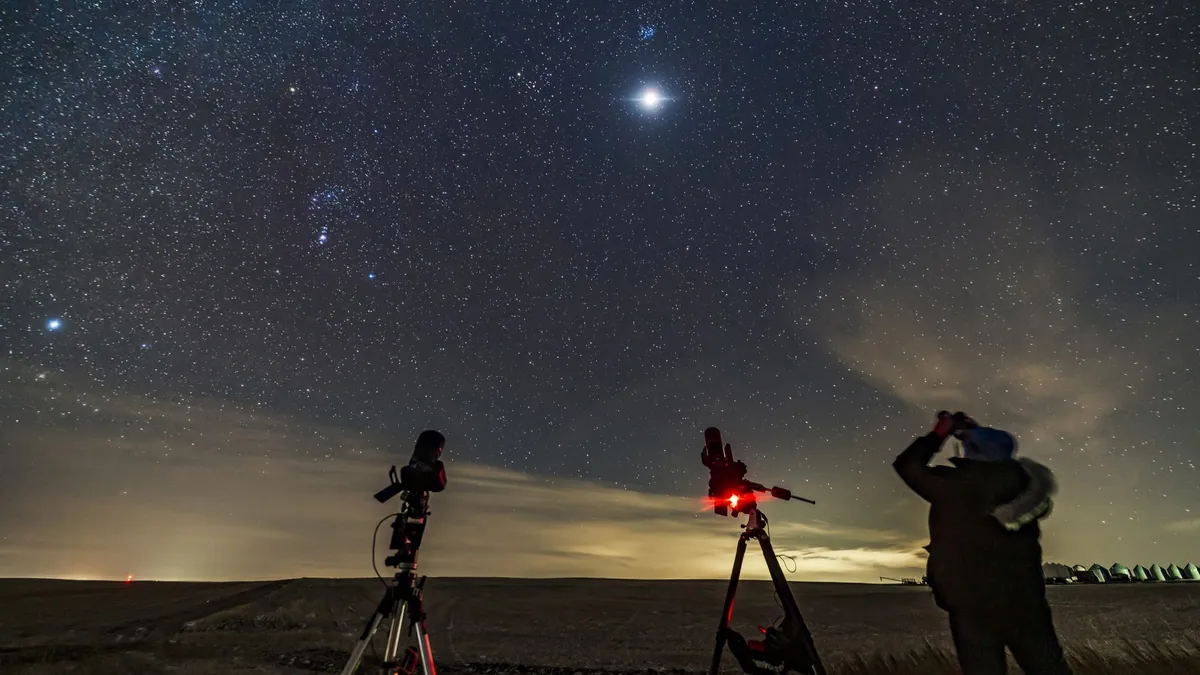
I’m going to look for Andromeda this week in the least heroic way possible. No expedition. No mountain-top observing location. No elaborate equipment. I’ll wait until it is properly dark, step outside and then use Cassiopeia and the stars of Andromeda to work my way toward M31. I’ll then reach for my 10×50 binoculars, which are rarely far from my side after dark, whether I’m at home or traveling. They gather enough light to make the galaxy’s bright central region much more obvious without turning the exercise into a technical one.
A really useful skill here — whether looking unaided or through binoculars — is averted vision. Instead of staring directly at the galaxy, look slightly beside it. The more light-sensitive parts of the retina away from the center of our vision can make faint objects easier to detect. It feels slightly ridiculous the first time you do it — deliberately not looking at the thing you’re trying to see — but it works.
If light pollution means you need binoculars, that still counts. No one gets a prize for detecting Andromeda unaided. After all, the extraordinary part isn’t how you see it. It’s what the light has done before reaching you. When those photons began their journey, modern humans did not exist. They crossed intergalactic space for roughly 2.5 million years and ended their trip in your retina. Stargazing is often described as looking back in time. With Andromeda, that phrase stops being a metaphor.
Stargazer’s corner: November 6-12, 2026
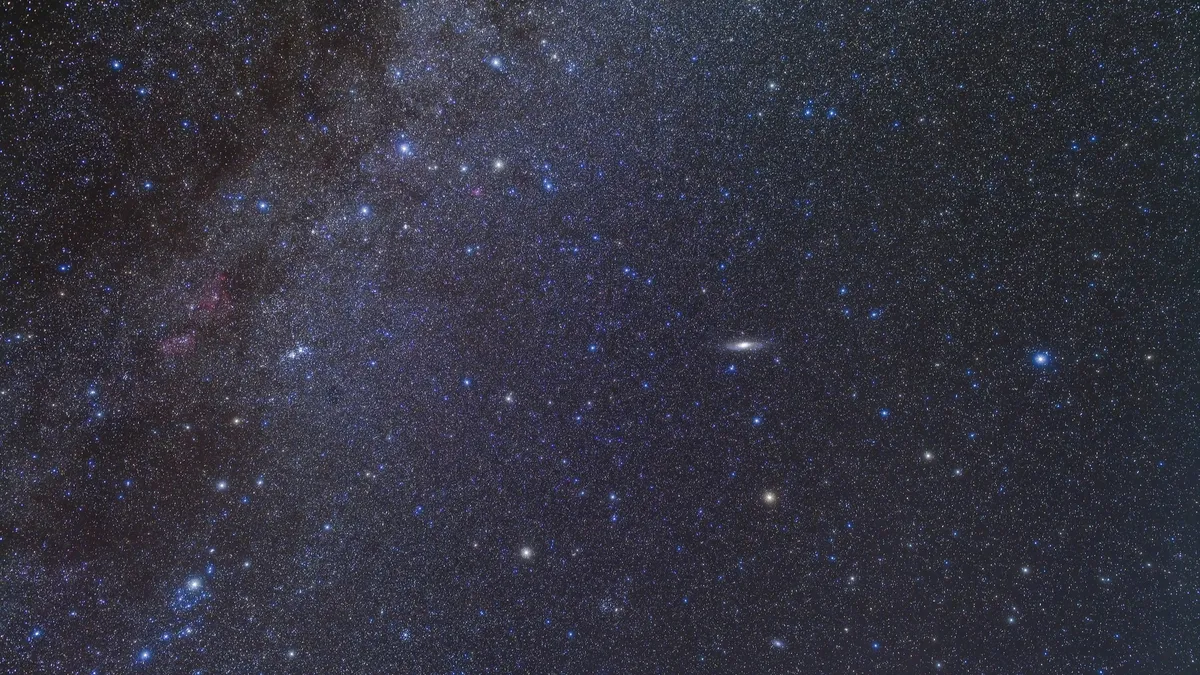
This is the week you’ve been waiting for if you want to spend time on faint objects rather than fighting moonlight. Without a bright moon overhead, spend some time on Andromeda, but revisit the Double Cluster in Perseus (NGC 869 and NGC 884). Binoculars show it beautifully, and unlike M31, it becomes more obviously crowded with stars as you increase magnification. Two other large, bright open star clusters in this region that look great in 10×50 binoculars are the glittering stars of NGC 752 in Andromeda and M34, a bright, hazy patch in Perseus.
Also keep an eye out for “shooting stars” because the Northern Taurid meteor shower peaks overnight on Nov. 11-12. Rates are low — around five meteors per hour under ideal conditions — so don’t expect them to “light up the night sky”. But they can produce bright, long-lasting ‘fireballs’ that can add a bit of pizzazz to a stargazing session.
Constellation of the week: Andromeda
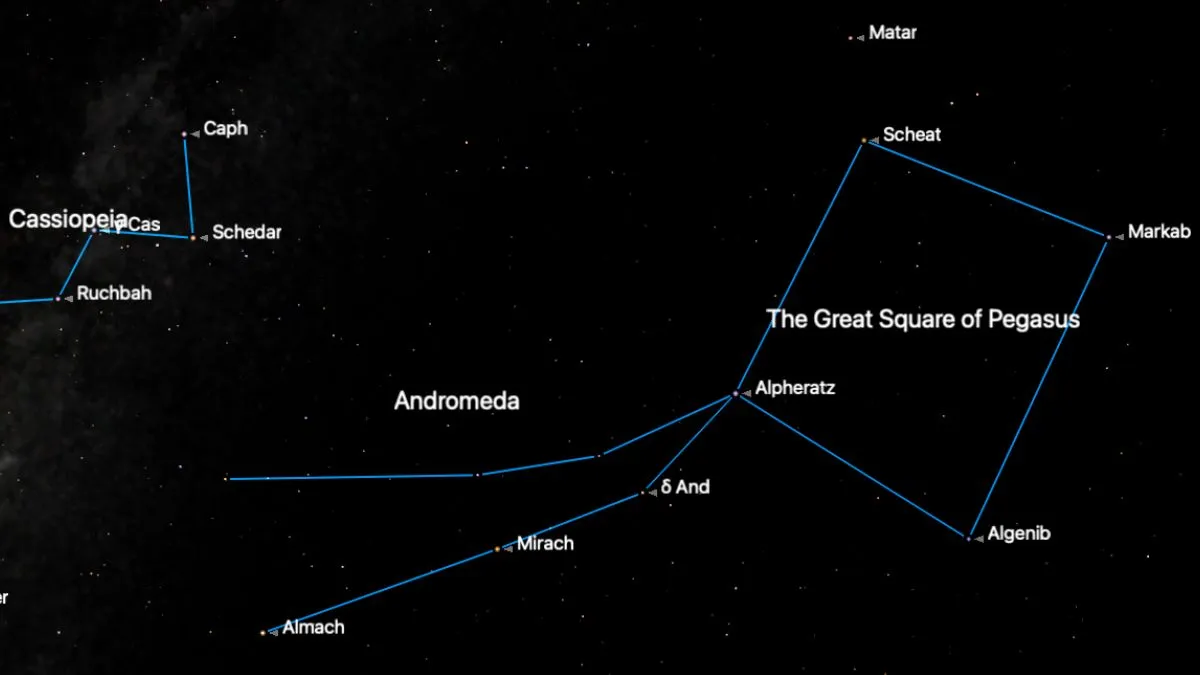
Now that you’ve found its jewel, the Andromeda galaxy, it’s worth trying to construct the constellation itself. As with M31, start with the Great Square of Pegasus and Alpheratz at its northeastern corner. Although it looks like part of the square, Alpheratz actually belongs to Andromeda. From Alpheratz, follow a curving line of stars away from the square through Mirach and on toward Almach. That gives you the basic shape of Andromeda — not the easiest constellation to imagine as a mythological princess, but a useful chain of stars to learn.
