


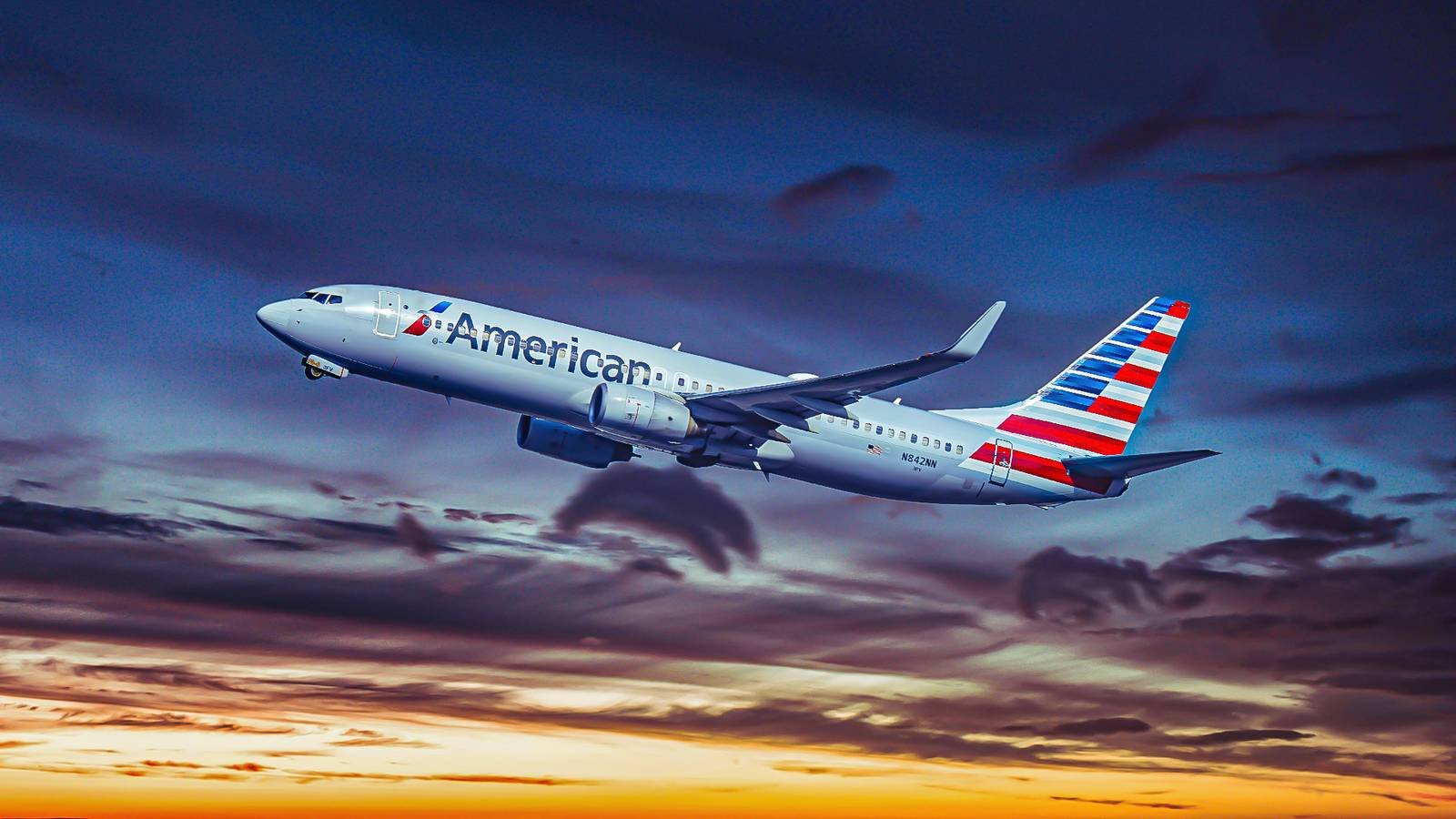
Three passengers on an American Airlines flight from Dallas to Newark restrained a fellow traveler with zip ties and duct-taped him to his seat after he bit one of the men trying to hold him down. The 67-year-old man turned violent during a racist and homophobic tirade in the Domestic First Class cabin, assaulting two passengers and shouting slurs at a flight attendant.
A retired police officer and two other passengers intervened and were given the restraints by a flight attendant. After they secured his wrists with the zip ties, the man bit one of them on the hand, so they resorted to duct-taping his body and head to the seat. They held him in his seat for the remainder of the flight while the aircraft diverted to Baltimore.
Unruly American Airlines Passenger Subdued With Duct Tape

The incident occurred on Thursday, September 3, roughly two hours into American Flight 618 from  Dallas/Fort Worth International Airport (DFW) to
  Newark Liberty International Airport (EWR). As reported by CBS, Richard Olenick and Juan Mejia, a retired New Jersey police officer, were seated two rows ahead of the passenger when he began shouting and assaulting the man next to him.
The man — named as Arthur Lundeen, 67, of Arizona — then aimed racial slurs at a flight attendant before striking a female passenger who tried to intervene. By this point, Olenick and Mejia got up from their seats and, along with a third unnamed passenger, were given zip ties by a flight attendant to secure the man’s wrists. Lundeen reportedly then bit Mejia’s hand and attempted to bite Olenick, prompting the use of duct tape.
Images of the aftermath show Lundeen covered in duct tape, including several layers across his forehead to restrain his head. On Mejia’s advice, they left his mouth clear, so his breathing would not be obstructed. The flight then diverted to Baltimore/Washington International Thurgood Marshall Airport (BWI) and landed safely, where it was met by Baltimore police. Lundeen was arrested and hauled off the flight before all remaining passengers flew onward to Newark. An American Airlines spokesperson confirmed the incident, stating:
“American Airlines flight 618 diverted to Baltimore (BWI) due to a disruptive customer. Upon arrival, law enforcement met the aircraft and assisted with deplaning the customer before the flight continued to its destination.”
How Crews Restrain Violent Passengers At Altitude

Duct tape and zip ties are carried on many commercial aircraft in the United States for precisely this scenario, and cabin crew are trained to use them on passengers who pose a physical threat. Using duct tape to pin down a passenger to their seat is not unusual either, with the same technique used successfully on an American flight in September 2025.
Violent incidents onboard flights often involve the intervention of fellow passengers, as the cabin crew on a domestic flight in the US can be as small as just one person. In Thursday’s incident, the flight was operated by a Boeing 737-800, which requires a minimum of four flight attendants.
In November 2024, a group of American passengers duct-taped the wrists and ankles of a disruptive passenger after he tried to open the aircraft doors mid-flight. During the incident, an American flight attendant sustained injuries to her wrists and neck and would later require treatment in the hospital.
Unruly Passenger Incidents In 2026

The Federal Aviation Administration (FAA) has recorded more than 1,160 unruly passenger reports so far in 2026, which averages out to several incidents every day. While the FAA has no authority to bring criminal charges itself, it passes serious cases to the FBI, as happened with Thursday’s incident.
Unruly passengers also have a significant impact on airlines, which typically bear most of the costs. A diversion means additional fuel and airport charges, as well as the possible expiration of crew duty limits and covering costs for delayed passengers. However, the latter will no longer be applicable from October, after the DOT finalized a new rule changing what constitutes an “airline-controlled” disruption, one of which is the removal of an unruly passenger.
