


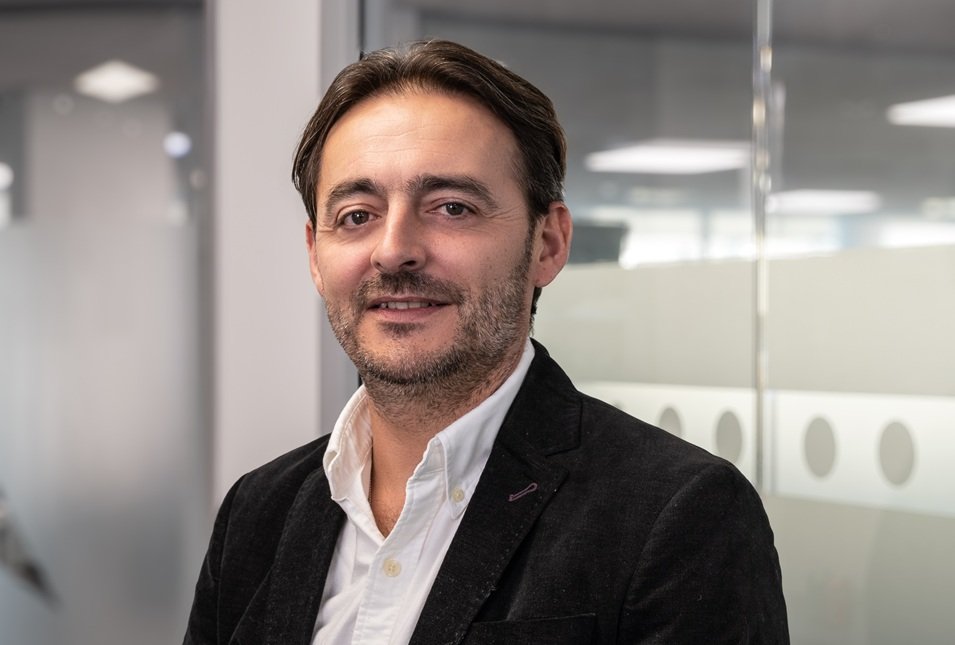
Hard work and a can-do attitude are what makes for a successful air charter broker, says Dan Morgan-Evans, head of cargo at broker Air Charter Service.
Why on earth should a job for an aviation graduate trainee be advertised in Farmers Weekly magazine? Morgan-Evans spotted the position while looking for a position after completing his agricultural degree, the idea being that he would eventually work in the family business.
The young Morgan-Evans asked the question of chairman of Coventry-based Air Atlantique, after successfully securing his first job, back in 1999. “That’s easy,” said the chairman. “Farming children are hard working and well-rounded.”
Whether that premise about farming folk is true, we’ll leave others to judge, but those two qualities are certainly essential in the tough and fast-moving world of air charter consultancy.
At Air Atlantique, Morgan-Evans worked in all aspects of the business for two years. Then came a move to London, to a company called AFX which operated two 747 freighter aircraft based at Heathrow Airport.
The day he moved there was 11 September, 2001, not an auspicious time in the air industry and the company went out of business not long afterwards.
But there was a silver lining; he joined Air Charter Service (ACS) on 2002 as a trainee broker, and has been there ever since.
At the time, ACS was a much smaller company. It employed just 20 people at two offices, one of them in London and the other in Moscow. (There was a brisk trade in charters to Russia at that time; ACS closed its operations in the country following the invasion of Ukraine.)
Since then, ACS has opened an average of two offices a year, bringing the total to around 40 worldwide and ACS employs the lion’s share of the 1,000-strong workforce employed by parent company the Mountfitchet aviation and travel group.
From 2011, Morgan-Evans headed the London cargo department for six years until 2017, when he became head of global cargo, essentially the post he holds today. His full titles are deputy chief commercial officer at ACS and global cargo director and he also oversees the company’s Time Critical Services arm.
“It’s always interesting in airfreight,” he says. “It has ups and downs, like any other industry, but there has been a general upward trajectory. As a company hits a global critical mass, things tend to get ironed out between the different regions and sectors; you’re not relying on a boom in any one sector, any more.”
While the company has become much bigger, the formula for its success has remained the same, though: “The secret to its success is replicating what it does well – its ethos and dedication to training – around the globe. And it seems to work.”
Airfreight broking is, at heart, a knowledge business. “We have to add value for our customers. When I started at ACS, the Internet was still quite rudimentary and the traditional unique selling point of brokers was their knowledge of aircraft and airlines,” says Morgan-Evans.
“Today, anyone can find much of that information online. Now, it’s about knowing the right aircraft, and the right airport for the task; we have to be customer-focussed. It’s why our training programme for brokers lasts for six or seven months.”
Air charter brokers need to be able to think fast, and think on their feet. They need to be attuned to what the market, and the wider world is doing, says Morgan-Evans.
“There will always be natural disasters, geopolitical situations. And in a lot of the things that happen in the world, our industry will always be at the forefront. However, you can put things in place, to be prepared, or as prepared as you can be.”
Modern communications means that the flow of information is faster, and in that respect at least, new technology has made the broker’s job easier. However, rules and regulations remain an important part of the air broker’s task and these are not getting any simpler.
ACS needs to work in all corners of the world, and disasters don’t always conveniently take place in places where the trading and commercial environment is straightforward.
Take the recent earthquake in Venezuela; the country is subject to severe international sanctions and just because a disaster has occurred, these are not automatically eased. “That’s why we have a compliance team to make sure that we’re not breaking any rules,” says Morgan-Evans.
Ben Dinsdale is now heading up humanitarian operations at ACS which takes some of the immediate day-to-day pressure off Morgan-Evans’ shoulders. In fact, while flying aid to earthquake and war zones may capture the headlines, “if you break down the figures, ‘special events’ are only a very small fraction of the work that we do at ACS. The mainstay of our business has always been automotive, oil and gas and so on.”
Costs are currently one of the main headaches in the industry. “Demand for aircraft has been high at times, and availability can be tough, so prices can go up. We need to try to manage customer expectations, and that is where our specialist knowledge comes in.”
While there have been ‘needs must’ situations, notably during the Covid pandemic, all customers have a price point and there rates that customers – even in sectors like oil and gas – will just not accept.
The supply side of the equation – availability of aircraft, or lack thereof – varies of course. It tightened during the latest Middle East crisis, but now, during the traditional low season, that has since eased somewhat. But no one is prediction that that will continue into the later part of the year.
“But overall, we have had a very good year,” Morgan-Evans enthuses. “Last July, we had a very big ongoing project, so I wasn’t expecting to beat that figure this year, but we have.”
One hardy perennial that he is always quizzed on is the future of the Antonov An-124 fleet and what, if anything, will replace it. “I was asked about that 15 years ago, and while pricing is way higher than it used to be, there’s still availability of aircraft. It’s not a part of the market that we’re struggling in.”
As for the replacement for the An-124, he suspects that the existing aircraft will still be soldiering on long after he retires. “After all, in my first job at Air Atlantique, we were operating DC6s, Lockheed Electras and DC3s – one of which had taken part in the Berlin Airlift.” In aircraft, as with people, age is just a number, it would seem.
ACS will continue to expand its office network, he predicts, following this year’s opening of new outlets in Brussels and Monaco, and Perth last year. Expansion of the Time Critical division is also on the agenda, following the opening of bases in Frankfurt and Houston; Asia-Pacific could well be the next target, he says.
The need to find the right people to work in the business remains a constant issue, meanwhile. Is it easy to get suitable people?
“Yes and no. People do want to work in this industry, but it’s harder to find the right people with the right attitude as well as aptitude. This is a business that you’ve got to live and breathe. It’s 24-hour, it’s global and to be one of our consultants, you’ve got to love what you do, to be available when your customers need you, and not everyone is cut out to work here. It’s not an easy job, but it is one in which you can really make a difference.”
