


The National Additive Manufacturing and Innovation Company (NAMI), a Saudi Arabian joint venture between 3D Systems, Dussur, and Saudi Energy, has been granted a Military Manufacturing License by the Kingdom’s General Authority for Military Industries (GAMI). The license places NAMI among a limited group of Saudi firms cleared to carry out regulated military manufacturing activity domestically, and it authorizes the company to qualify and produce additively manufactured components for defense programs inside the Kingdom.
3D Systems President and CEO Dr. Jeffrey Graves framed the license as validation of the joint venture structure itself: “The GAMI license further demonstrates the strategic value of our joint venture in Saudi Arabia. It strengthens our ability to support leading defense OEMs as they pursue localization and supply-chain resilience in the Kingdom, reinforcing 3D Systems’ position in the aerospace and defense markets.”
What the License Changes
A military manufacturing license from GAMI is not a symbolic designation. Saudi Arabia regulates who may qualify materials, printing parameters, post-processing routes, and testing procedures for parts destined for defense programs, and for safety-critical hardware a digital design file alone does not clear a component for use.
The authorization effectively lets NAMI take on that qualification and production role directly inside the Kingdom rather than routing it through a third party, which the companies say will make it faster for international defense original equipment manufacturers to localize production of aerospace and defense components on Saudi soil.
Vision 2030 and a Growing Market
The license is framed explicitly around Saudi Arabia’s Vision 2030 target of localizing more than 50 percent of military spending by 2030, and it builds on a string of NAMI milestones over the past two years. In 2024, NAMI partnered with Saudi Electricity Company (SEC) to build a digital spare-parts inventory, using 3D Systems’ DMP Factory 500, DMP Flex 350 Dual, and SLS 380 printers to accelerate replacement-part production and cut inventory costs across the energy sector.
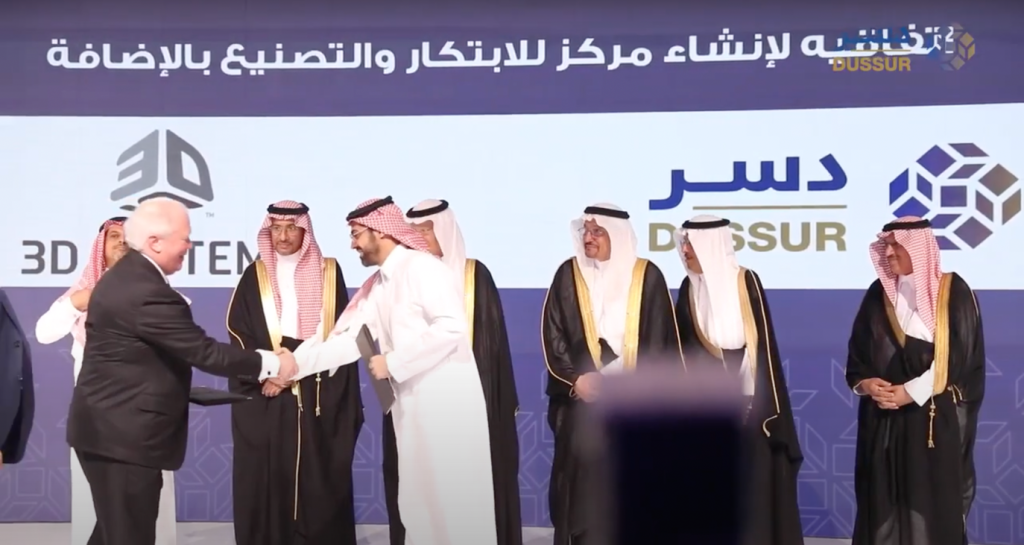
That relationship deepened in October 2025, when SEC took a strategic stake in NAMI alongside existing shareholders Dussur and 3D Systems, a move NAMI Chairman Faisal Al-Tubayyeb said cements the venture’s status as Saudi Arabia’s “Additive Manufacturing National Champion.” With SEC now both shareholder and core customer, NAMI has moved to expand its supply chain across energy and other industrial sectors.
On the defense side, NAMI partnered with U.S. contractor Lockheed Martin in September 2025 to begin producing 3D printed aerospace and defense components within the Kingdom, with an initial phase focused on aluminum parts undergoing qualification testing before potential integration into Lockheed Martin’s global supply chain, the kind of work the new GAMI license is designed to formalize and scale.
Saudi Arabia’s additive manufacturing sector remains small in absolute terms but is expanding quickly. The market is currently valued at more than $300 million and is projected to approach $2 billion by 2034, according to IMARC Group figures. Defense, energy, and industrial localization priorities under Vision 2030 are the primary drivers cited for that growth curve, and NAMI’s aim is to rank among the top five additive manufacturing service providers in the region by 2030.
3D Printing Industry is inviting speakers for its 2026 Additive Manufacturing Applications (AMA) series, covering Energy, Healthcare, Automotive and Mobility, Aerospace, Space and Defense, and Software. Each online event focuses on real production deployments, qualification, and supply chain integration. Practitioners interested in contributing can complete the call for speakers form here.
To stay up to date with the latest 3D printing news, don’t forget to subscribe to the 3D Printing Industry newsletter or follow us on LinkedIn.
Explore the full Future of 3D Printing and Executive Survey series from 3D Printing Industry, featuring perspectives from CEOs, engineers, and industry leaders on the industrialization of additive manufacturing, 3D printing industry trends 2026, qualification, supply chains, and additive manufacturing industry analysis.
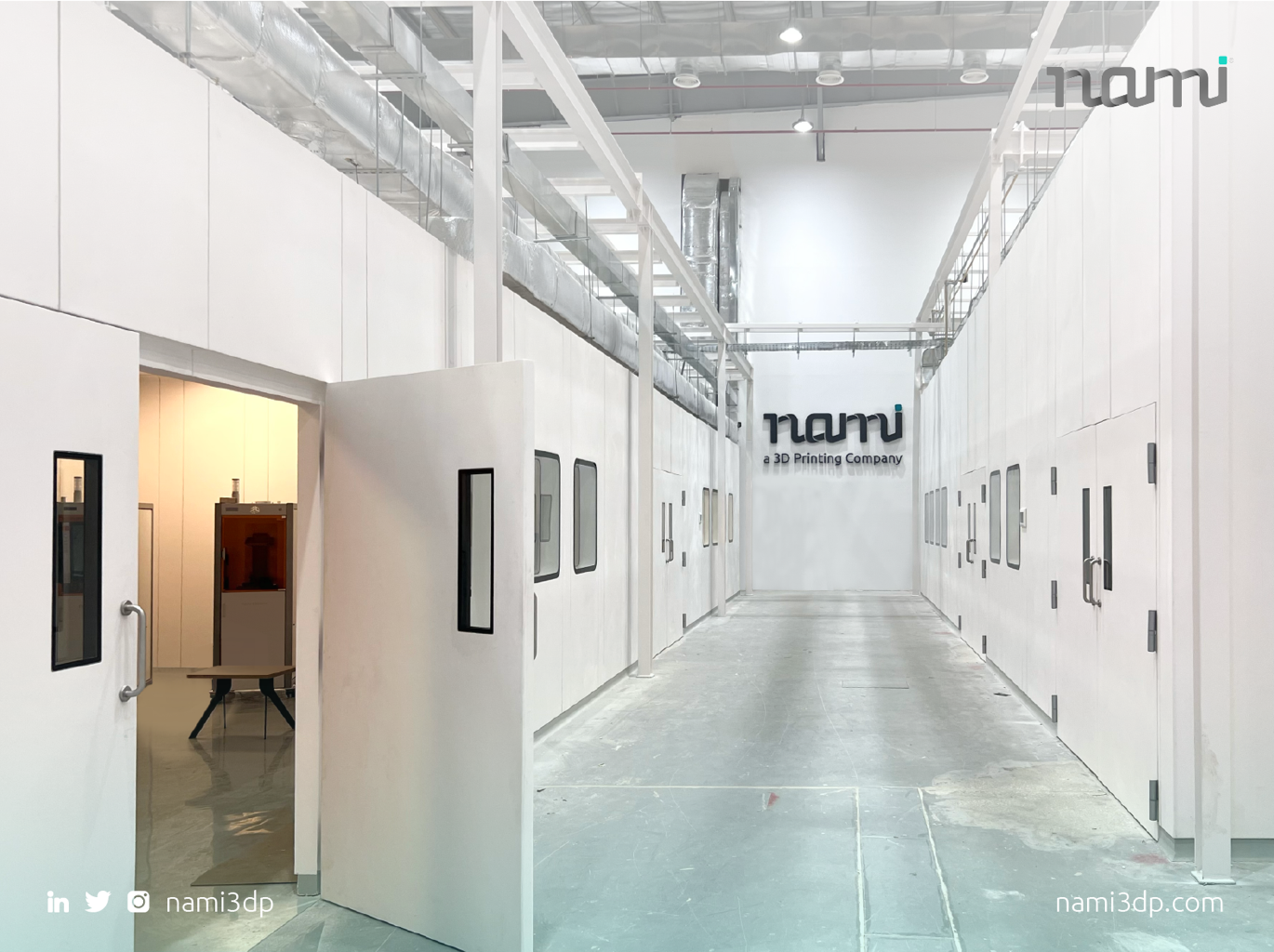
Featured image shows NAMI facilities in Saudi Arabia. Photo via NAMI.
