


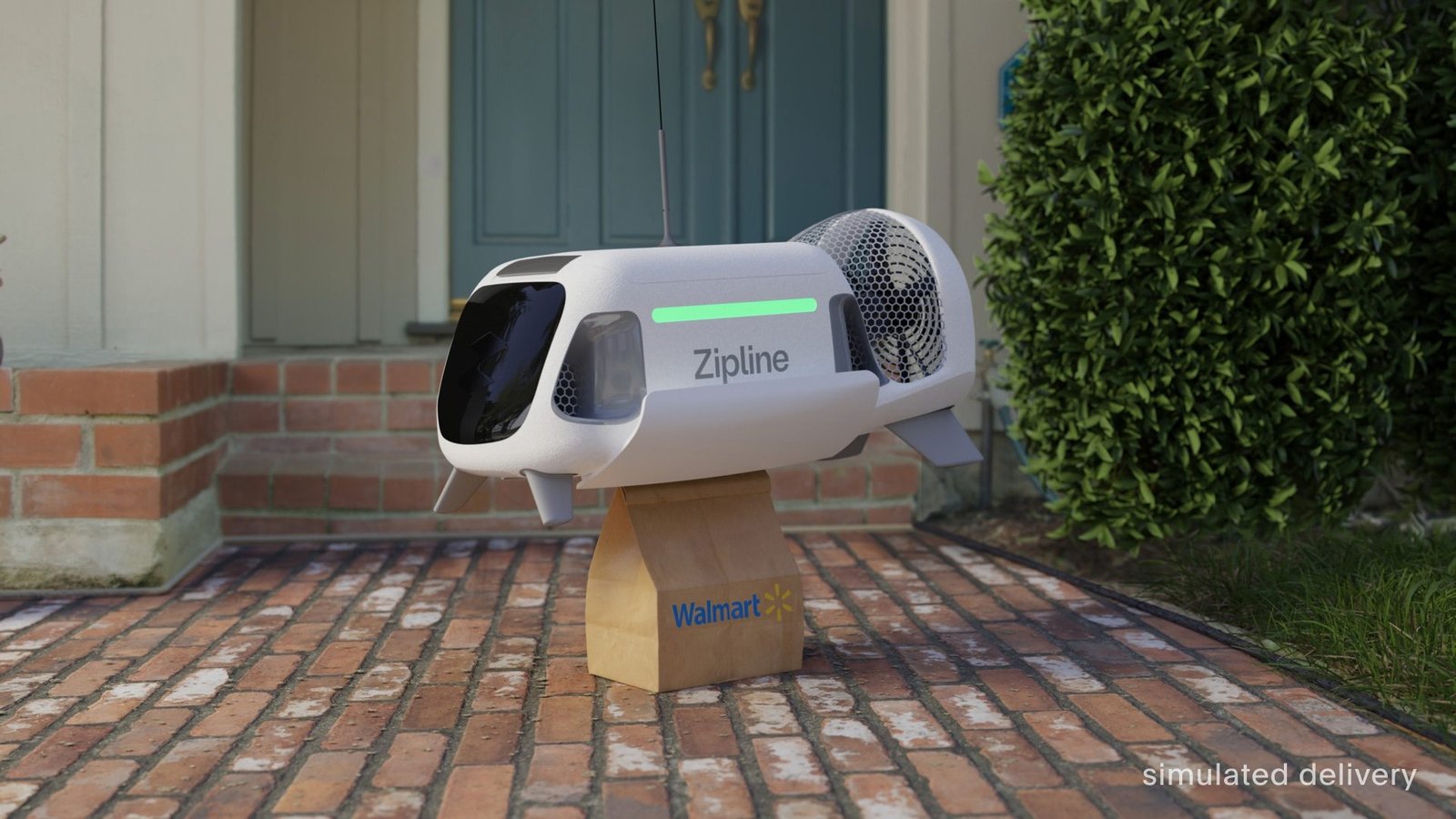
After millions of deliveries and years of testing, companies like Zipline are scaling operations into new U.S. markets with a focus on safety, consistency, and suburban reach
Zipline Expands Drone Delivery to Phoenix
Zipline is preparing to launch autonomous drone delivery services in the Phoenix area later this year, expanding into another major U.S. metro. The company’s drones operate by hovering at roughly 300 feet and lowering packages via a tethered system, enabling contactless delivery of items such as food, retail goods, and prescriptions.

The Phoenix rollout follows earlier deployments in the Dallas area and northwest Arkansas, with additional expansion planned for Houston.
A Shift Happening in Plain Sight
For many Americans, drone delivery still feels like a future concept. In reality, it is already operating at scale in select regions.
Companies like Zipline have moved beyond pilot programs into repeatable logistics systems. With expansion into new markets like Phoenix, those systems are spreading, but largely outside of public view.
From Pilot Programs to Proven Operations
Zipline’s global delivery count now exceeds 2.3 million, with no reported injury or property damage incidents.
That safety record supports a delivery model designed to reduce complexity. Aircraft remain at altitude while lowering packages by tether, avoiding the need to land in tight or unpredictable environments.
This approach simplifies operations and supports expansion into suburban service areas. It also aligns with regulatory pathways that prioritize predictable, low-risk operations.
A Different Kind of Growth
This next phase of drone delivery reflects a shift in strategy. Early efforts sometimes emphasized rapid disruption and dense urban deployment. Today’s expansion is more measured.
Operators are building networks route by route, focusing on repeatable performance rather than visibility. Suburban environments offer fewer obstacles and more consistent operating conditions, making them a practical starting point for scaling.
Why Most People Haven’t Noticed
Outside of the industry, most people still think of drone delivery as theoretical. That’s because drone delivery is expanding within defined service areas, often tied to specific partners such as healthcare providers or retailers. Because these networks are localized, most Americans have not encountered them directly.
The result is a gap between perception and reality: limited public awareness despite ongoing operational growth.
Instead of proving the concept, companies are refining how and where it works best. Safety data is accumulating, and operational models are becoming more consistent.
The key question is no longer whether drone delivery is viable, but how it will scale across different environments.
A Measured Path Forward
Since the early days of medical drone delivery in far off continents or hyped up demonstrations of burrito delivery across a parking lot, much has changed – and the evolution of drone delivery is being shaped by operational discipline rather than visibility. Expansion is happening in controlled, repeatable ways, with a focus on safety and reliability.
While much of the country still sees drone delivery as emerging technology, it is increasingly becoming part of the logistics network, one suburb at a time.
Read more:

Miriam McNabb is the Editor-in-Chief of DRONELIFE and CEO of JobForDrones, a professional drone services marketplace, and a fascinated observer of the emerging drone industry and the regulatory environment for drones. Miriam has penned over 3,000 articles focused on the commercial drone space and is an international speaker and recognized figure in the industry. Miriam has a degree from the University of Chicago and over 20 years of experience in high tech sales and marketing for new technologies.
For drone industry consulting or writing, Email Miriam.
TWITTER:@spaldingbarker
Subscribe to DroneLife here.
