


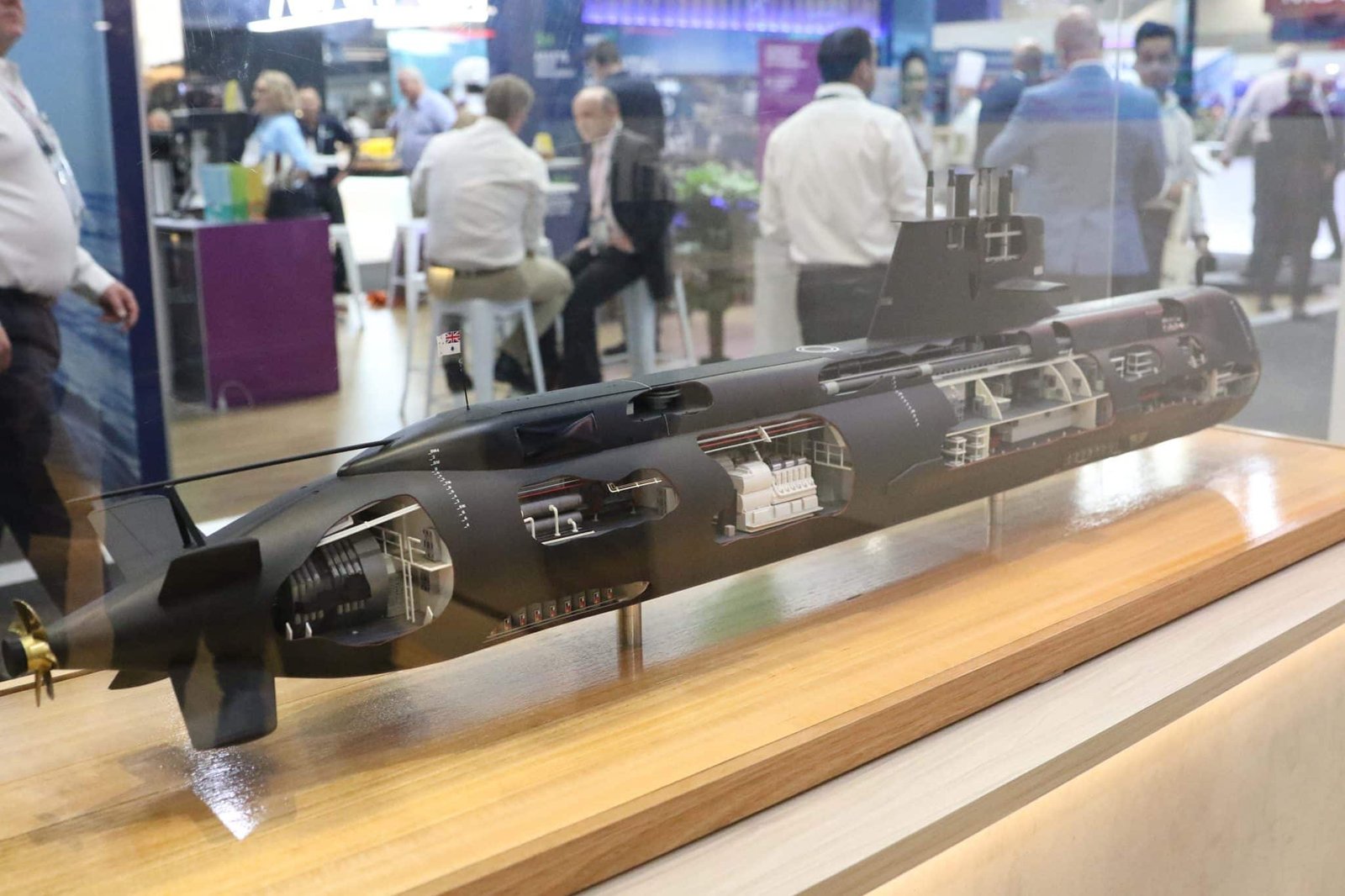
Even as Australia eyes the heady prospect of operating nuclear-powered attack submarines in the future, it is facing the challenge of keeping six ageing Collins-class diesel-electric submarines in service for many more years.
This is to be tackled through the Collins Life-of-Type Extension (LOTE) programme, known as Project Sea 1450, which hopes to keep them operationally viable into the 2040s.
Rear Admiral Stephen Hughes, Australia’s Head of Navy Capability, speaking to Naval News at the Indo-Pacific 2025 naval exhibition in Sydney last November, acknowledged the challenge of maintaining one submarine fleet whilst preparing to induct another. He said it is “a really complicated equation,” for, “At the moment, we’ve about 160-200 people in the US and UK nuclear pipelines. If you think about that, that’s like two or three Collins’ worth of people in that system. But at the same time, we’re delivering Collins capability.”
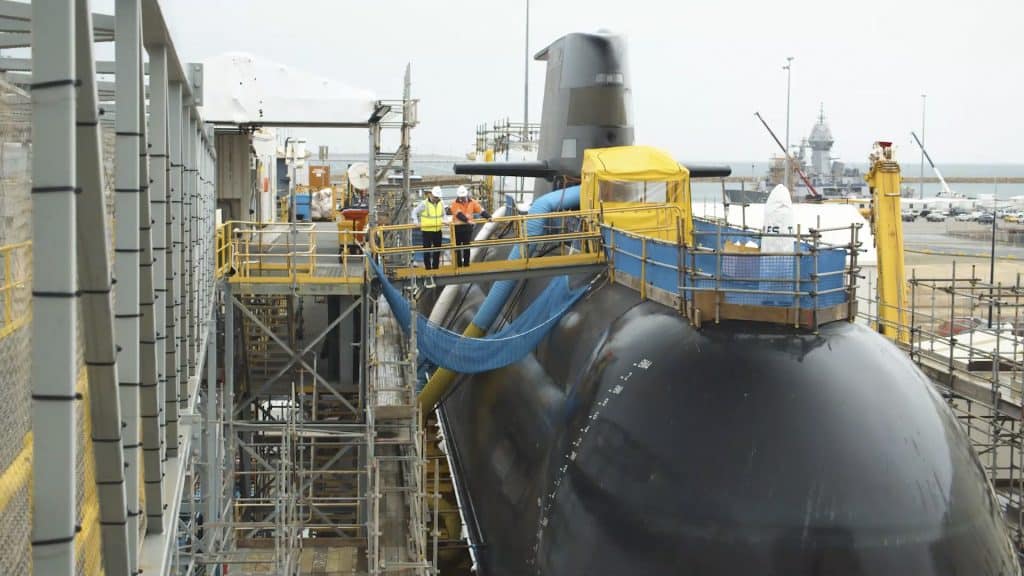
In mid-2024, the ABC reported that half of Australia’s submarine fleet would remain out of the water for the rest of that year due to “unprecedented corrosion problems”. Engineers discovered significant corrosion damage on HMAS Sheean during a routine full-cycle docking, and the LOTE was listed as a product of concern on 13 December 2024.
Hughes acknowledged “it’s going to be tough” managing the two submarine lines of effort. However, he praised the alignment from the highest levels of government and the Department of Defence down. “It’s going to be a big job, but we’re eating the elephant one bite at a time.”
Naval News asked about the risks for the Royal Australian Navy (RAN). Hughes noted there will always be naysayers, “But you’ve got to remember, we’re pretty focused on delivering both outcomes. Are they high risk? Sure – schedule is demanding, technologies are demanding, workforce is demanding. I could list all the things that could go wrong, but one thing we’re really good at in Defence – despite maybe some other commentators’ views – is risk management.”
Hughes shared that the RAN is coming out of a dip in Collins-class availability, with four out of six submarines now operational. “Now all eyes are on Collins moving forward and the transitioning. The LOTE is an important part of that, and that’s technically complex. It’s not beyond the wit of man to be able to do it, but it requires that balance between workforce and industry, building capability for the nuclear submarines, and at the same time keeping Collins going.”
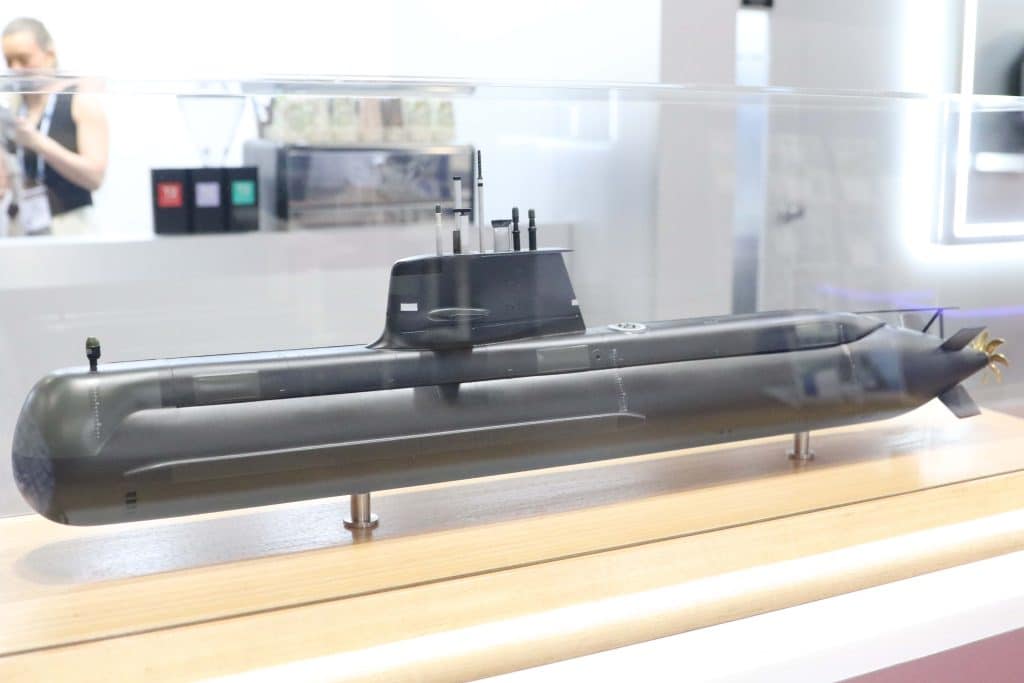
As for the LOTE, Defence told Naval News, “The life extension of the Collins-class submarines will involve a combination of effective ongoing sustainment, selected capability enhancements and an LOTE extension project.” It added, “Defence’s approach to the Collins-class submarine Life-of-Type Extension will optimise submarine availability and capability, without compromising safety.”
The primary industry partner for the fleet’s revitalisation is state-owned ASC, and the first boat – HMAS Farncomb – is scheduled to commence its LOTE in mid-2026.
In an October 2025 Senate Estimates hearing, Chief of Navy Vice Admiral Mark Hammond confirmed each submarine’s work will nominally take around two years, although “the exact duration of each sustainment activity will be subject to the bespoke condition of each boat”.
Typically, a full cycle docking takes two years to complete on each boat, and gives them an extra ten years of life. Is a two-year LOTE achievable? Defence Minister Richard Marles believes so. “I do think it’s doable. I think we’re going to be really smart and really clever in the way in which we do it.”
Hughes also added last November: “We’ve given some options to government which provide a number of ways forward, and it’s all around availability of the submarine. So government is going to have to take some choices around what they’re willing to compromise or take risk on, and what they’re not going to … From a technical perspective, we have two courses of action and a whole bunch of subsets of that.”
He said the government received a schedule for when decisions need to be made, and, “I think you’ll find that the path that we’re recommending will deliver them the capability effect they need.”
Hughes added, “The point to take is, each submarine we’ll look at the risk, the issue in the submarine, and we’ll have a tailored, purpose solution for that submarine, and that option set we’re taking to government is around how you might want to treat some of those risks. So I wouldn’t say what’s good for Collins or Rankin and Dechaineux would be the same.”
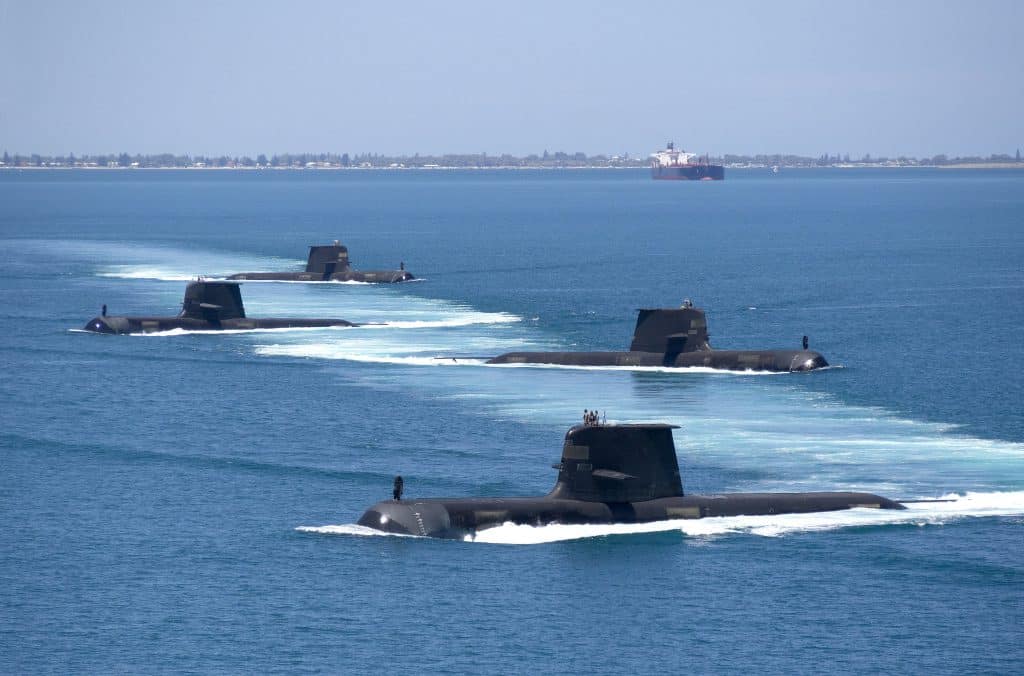
The Integrated Investment Program announced a budget of A$4-5 billion (US$2.7-3.4 billion) to keep the submarines “potent and credible”, although the Australian Submarine Agency is currently quoting a LOTE figure of A$4.3-6.4 billion.
There will also be competition for skilled labour and resources. There will be ten major lines of industrial effort relating to Australian submarines and infrastructure over the course of transitioning from Collins to nuclear-powered submarines, which will inevitably cause strain on Australia’s workforce, budget and resources.
Obviously it has not been revealed what exactly will be done under the LOTE, for the government is yet to announce its decision. However, it has already been decided not to arm Collins boats with Tomahawk cruise missiles, nor for Safran non-hull-penetrating optronic systems to be fitted. Naval News understands the French company is still under contract and is still expected to deliver the masts but these will go into storage.
At Indo-Pacific 2025, Raytheon Australia announced it had been awarded an A$277 million contract extension to manage the Collins-class combat systems. Raytheon has been involved with these submarines and their AN/BYG-1 system for 25 years.
