


WASHINGTON — Orbit Fab and Thales Alenia Space will work on a project backed by the U.K. Space Agency to study whether satellites using electric propulsion systems can be refueled in orbit, part of a broader push in Europe toward satellite servicing and reusable spacecraft infrastructure.
Orbit Fab, based in Colorado and the United Kingdom, is developing a commercial in-space refueling service. Thales Alenia Space is one of Europe’s largest satellite manufacturers, with operations across seven countries.
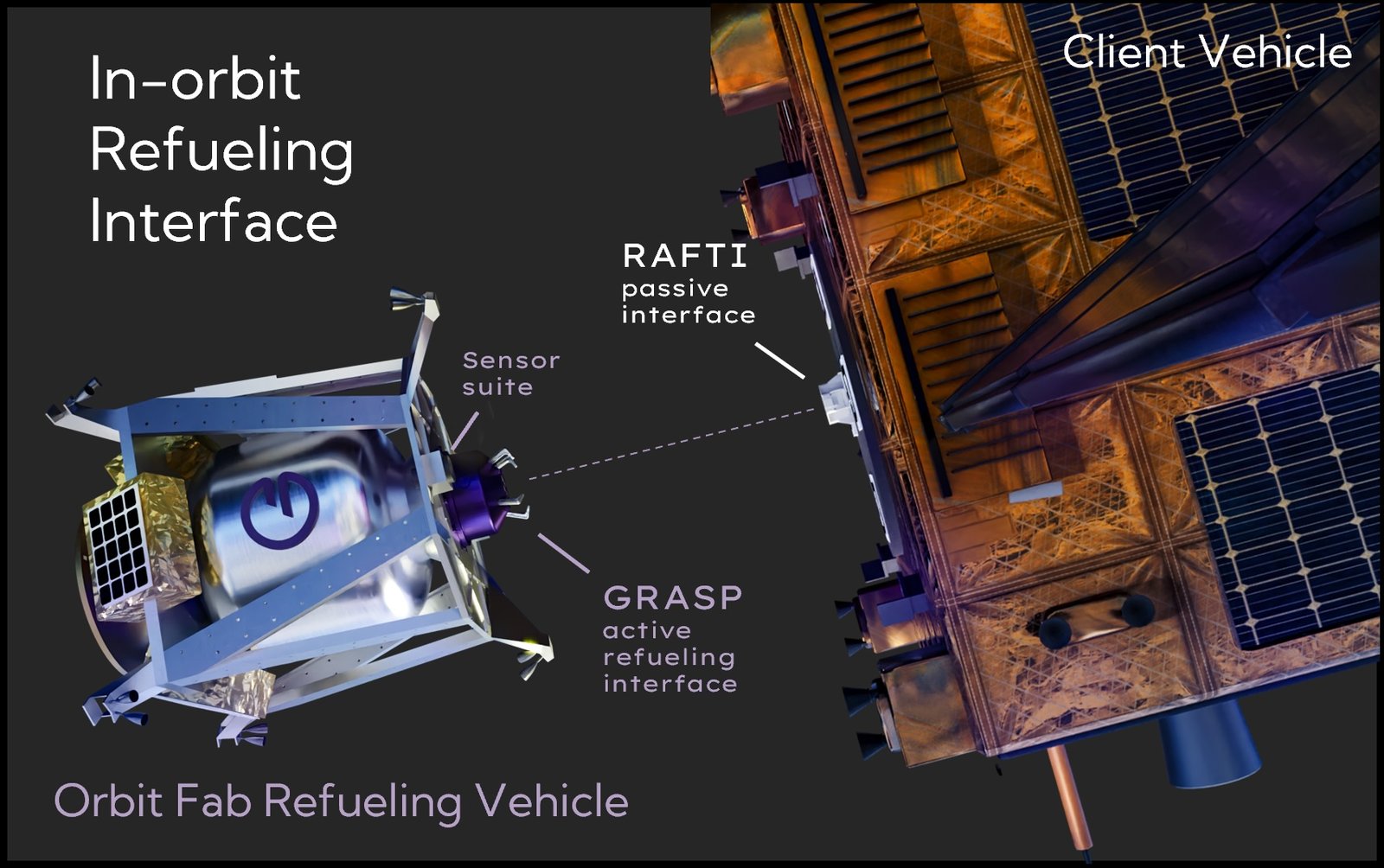
The companies said May 26 they will explore integrating Orbit Fab’s RAFTI refueling interface with electric propulsion systems developed by Thales Alenia Space, such as xenon-fueled Hall-effect thrusters.
RAFTI, short for Rapidly Attachable Fluid Transfer Interface, is a docking and fuel-transfer port designed to allow satellites to connect with orbital fuel depots or servicing spacecraft for propellant replenishment. Orbit Fab has promoted the interface as a standard refueling connection for orbital servicing missions.
The U.S. Space Force approved RAFTI as an accepted refueling interface for military satellites and plans to use it in demonstrations of hydrazine fuel transfers for chemical-propulsion spacecraft in geostationary orbit.
Orbit Fab said the collaboration with Thales Alenia Space focuses on adapting the interface for electric propulsion systems, an area of growing interest in Europe as operators seek ways to extend satellite lifetimes and support more maneuverable spacecraft.
“With electric propulsion becoming an increasingly significant area of development across the European space sector, the project represents an important step towards enabling refuellable spacecraft architectures for future missions,” the company said.
The work will be carried out by Orbit Fab and Thales Alenia Space teams in the United Kingdom under a project called Refuelable Electric Engine Flatsat.
A flatsat is a ground-based spacecraft testbed used to validate satellite subsystems and operational concepts before flight hardware is built. In this case, the flatsat will be used to test fluid-transfer interfaces, operational procedures and refueling concepts for electric-propulsion spacecraft.
