


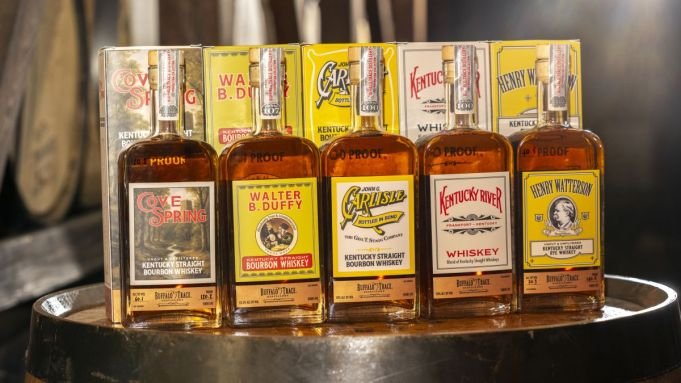
It’s hard to find a distillery with more unicorn whiskeys in its lineup than Buffalo Trace, like the Antique Collection, Blanton’s, Pappy Van Winkle, Eagle Rare 30, and E.H. Taylor, Jr. Tornado Survivor, to name just a few. A more recent addition to this pantheon is the Prohibition Collection, a set of five whiskeys that has just returned for 2026, and this time it includes one of the distillery’s strongest rye whiskeys to date.
The Prohibition Collection was first released in 2023 as a set of limited-edition whiskeys that were meant to commemorate the bourbon and rye that the distillery produced during the Noble Experiment. Buffalo Trace was known as the George T. Stagg Distillery at the time, and operated under the control of its president, Albert B. Blanton. During Prohibition, the Stagg Distillery was one of just six that were granted licenses to produce and bottle medicinal whiskey, which could only be obtained with a prescription. Yes, the history of people believing that spirits have health benefits is a long one, something that has pretty much been disproven in recent years (although there are certain brands that still try to say otherwise).
The names and styles of the Prohibition Collection whiskeys change with each release, so what you’ll find in the third edition are new and unique. “The Prohibition Collection gives us the opportunity to bring important chapters of our distillery’s history back to life,” said master distiller Harlen Wheatley in a statement. “Each year, we uncover stories, brands, and whiskey traditions that might otherwise have been lost to time. By reimagining these historic whiskeys, we honor the resilience, ingenuity and determination that carried this distillery through one of the most challenging periods in American whiskey history and helped shape the legacy we continue today.”
The first whiskey in the 2026 Prohibition Collection, Henry Watterson, was named after a congressman and Pulitzer Prize-winning journalist whose support for the whiskey industry during Prohibition resulted in his name and image appearing on bottles from a few distilleries, including George T. Stagg. This is the hazmat Kentucky straight rye whiskey mentioned before, bottled at a very hefty 140.6 proof with notes of rye spice, citrus peel, and fresh green herbs (we were not provided samples, so these are official tasting notes). Next up is Kentucky River, named after a distillery that Albert Blanton would head up and help grow. This is a 100-proof blend of Kentucky straight whiskeys with notes of baked apple, oak, and warm pastry.
The third whiskey is called John G. Carlisle, another expression named after a congressman who also happened to be instrumental in passing the Bottled in Bond Act of 1897, which was spearheaded by Colonel E.H. Taylor, Jr. Taylor would build a distillery named after Carlisle next to the O.F.C. Distillery in 1879, and today the distillery’s café is named after him. This is a 100-proof Kentucky straight bourbon with notes of orchard and tropical fruit, oak, vanilla, and rye spice. The Walter B. Duffy expression was named after the man who took over the O.F.C. Distillery after Stagg’s death and appointed Blanton as its president. This is a blend of 10- and 14-year-old bourbon bottled at 107 proof with notes of graham cracker, toasted corn, and oak. Cove Spring rounds out the collection, a whiskey named after the water source for the O.F.C. Distillery. This is a 120.2-proof wheated bourbon with notes of sweet corn, red fruit, and spice on the palate.
The Prohibition Collection consists of small 375-ml bottles that come in a wooden case, each housed in a paper carton with a replication of the prescription cutout a doctor would have used to prescribe medicinal whiskey at the time. The list price for the entire collection is $1,000, but these are highly allocated bottles so be prepared to pay more than that when they show up on the secondary market.
Authors

Jonah Flicker

