


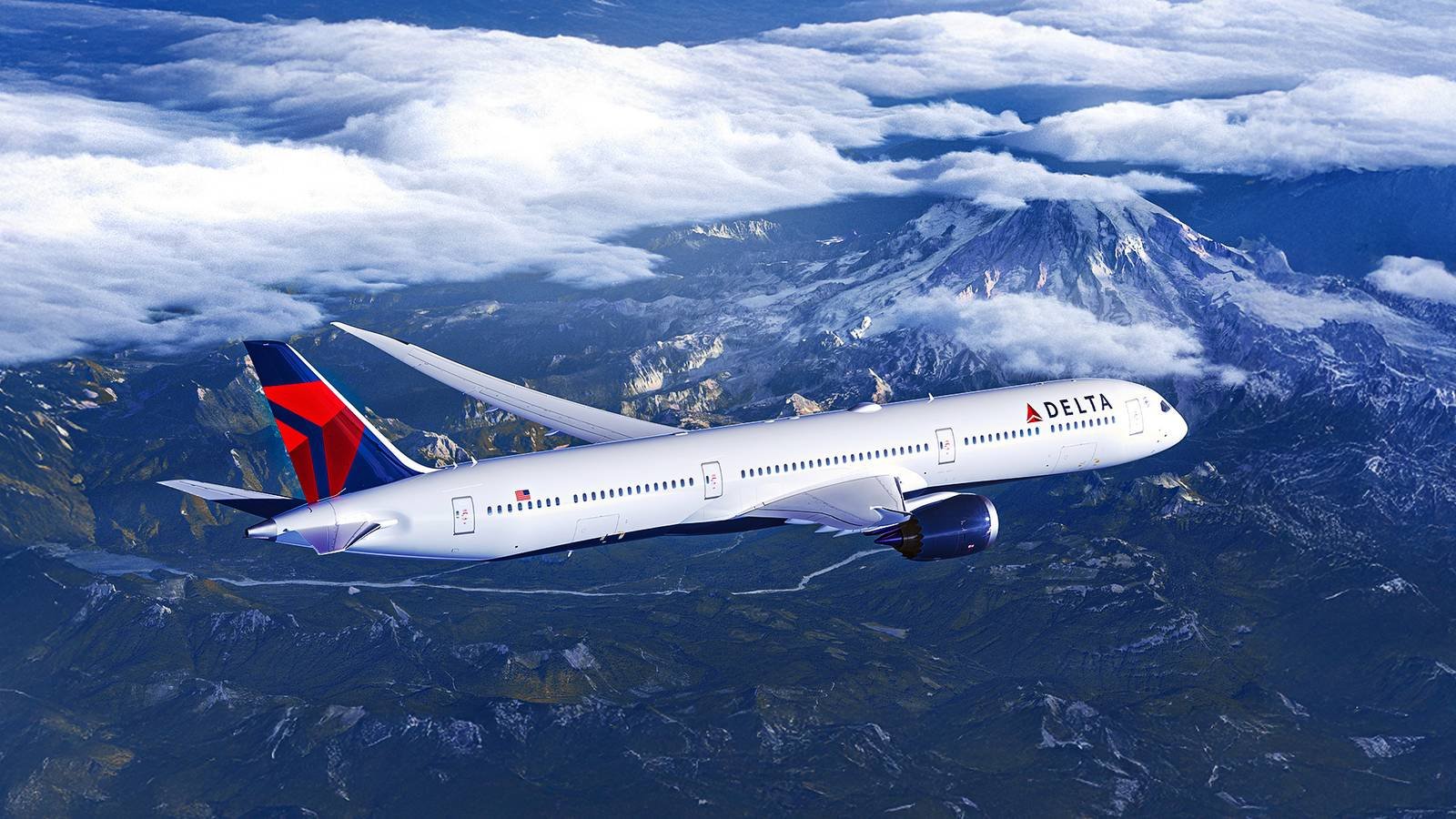
For much of the past decade, Delta Air Lines stood apart from many of its global competitors by committing almost entirely to Airbus for its future widebody fleet. While other major carriers continued investing in both Airbus and Boeing long-haul aircraft, Delta Air Lines focused on expanding its Airbus A330neo and A350 fleets, arguing that the benefits of commonality outweighed the advantages of operating multiple aircraft families. It was a strategy that appeared settled, particularly after the airline canceled an inherited Boeing 787 order in 2016.
That perception changed dramatically in January 2026 when Delta Air Lines announced an order for 30 Boeing 787-10, with options for another 30 aircraft. The decision immediately prompted questions about whether the airline had reconsidered its earlier position. The  SkyTeam carrier has never suggested that canceling its original 787 order was a mistake, but its return to Boeing widebodies inevitably raises the question of whether ordering the 787-10 years earlier would have delivered advantages that the airline is only now beginning to realize. Let’s take a closer look…
An Order Inherited From Northwest Airlines

Delta Air Lines’ relationship with the Boeing 787 began long before its recent order. When the airline merged with Northwest Airlines in 2008, it inherited an existing order for 18 Boeing 787s. At the time, the aircraft represented Boeing’s newest generation of long-haul efficiency, promising lower fuel burn, improved passenger comfort, and reduced maintenance costs compared with older widebody types.
However, the years following the merger saw Delta Air Lines reshape its long-term fleet strategy. Rather than maintaining Northwest Airlines’ original fleet plans, the airline evaluated how every aircraft type fit within its own operational philosophy. As newer Airbus widebodies became available, Delta Air Lines increasingly viewed the Airbus A330neo and Airbus A350 as better suited to its future requirements.
That eventually led to a significant decision in 2016, when Delta Air Lines canceled the inherited Boeing 787 order altogether. Instead of introducing another aircraft family into the fleet, the airline doubled down on Airbus, becoming one of the manufacturer’s most loyal widebody customers. At the time, executives emphasized that operating a largely single-manufacturer widebody fleet would simplify pilot training, maintenance planning, spare parts inventories, and long-term operational costs.
Rather than spreading investment across multiple aircraft families, the carrier believed concentrating on Airbus would improve efficiency while supporting stronger financial performance. From Delta Air Lines’ perspective, the cancellation was not presented as a rejection of the Boeing 787 itself. Instead, it reflected a broader fleet philosophy that prioritized simplicity above maintaining access to every possible aircraft type.
Why The All-Airbus Strategy Made Sense

Looking back at the decision with the benefit of hindsight can make it seem surprising, but Delta Air Lines’ reasoning was entirely understandable in the context of the mid-2010s. The airline had already committed to substantial Airbus investments, including the Airbus A350 for its largest long-haul markets and the A330neo for medium-capacity international routes.
Maintaining fleet commonality has long been one of the industry’s most effective methods of reducing operating costs. Pilots can transition between related aircraft more efficiently, maintenance teams require fewer specialized qualifications, airlines need smaller spare parts inventories, and operational planning becomes considerably simpler. Every additional aircraft family increases complexity throughout the organization, particularly at a carrier with the scale of Delta Air Lines.
The airline also continued operating large fleets of Boeing 767 and older Airbus A330 aircraft, giving it flexibility without immediately requiring another new aircraft type. Many of those aircraft had been acquired at attractive prices and continued generating solid returns despite their age.
As a result, Delta Air Lines spent almost a decade with a long-haul fleet strategy that differed from many competitors. While airlines including  United Airlines and
  American Airlines continued balancing Airbus and Boeing widebody purchases, Delta Air Lines remained firmly committed to Airbus for future fleet growth. That consistency became one of the defining characteristics of the airline’s long-haul planning throughout the late 2010s and early 2020s.
The Surprise Return To Boeing

The announcement in January 2026 therefore represented one of the biggest strategic shifts in Delta Air Lines’ recent fleet history. Rather than ordering additional Airbus aircraft, the airline selected the Boeing 787-10 as its next-generation medium-capacity widebody.
The order included 30 firm aircraft alongside options for another 30, making it Delta Air Lines’ first direct Boeing widebody purchase after years of relying almost exclusively on Airbus for long-haul fleet renewal. Although the decision surprised many observers, the carrier explained that the 787-10 occupied an ideal position within its fleet.
The aircraft effectively bridges the gap between the Airbus A330neo and the larger A350. That gives Delta Air Lines greater flexibility when matching aircraft capacity to market demand, particularly on routes where an A350 may provide too many seats while an A330neo may not offer the same combination of capacity and operating economics.
Equally important is the timing of Delta Air Lines’ fleet replacement cycle. Many of its Boeing 767-300ER aircraft remain reliable workhorses but are approaching retirement age after decades of service. Some of the airline’s earlier Airbus A330s are also nearing 30 years old. Replacing those aircraft will require significant numbers of new widebodies over the coming decade, and the 787-10 provides another tool to manage that transition efficiently.
Catch what other flight trackers miss
Emergency squawks, holds, NOTAMs — live signals, no signup.
Open tracker
Catch what other flight trackers miss
Emergency squawks, holds, NOTAMs — live signals, no signup.
Open tracker
Delta Air Lines also expects the aircraft to support continued expansion across busy transatlantic markets and selected South American routes, where demand has remained strong while operational efficiency has become increasingly important.
Does The New Order Validate The Old Aircraft?

This is where the debate over regret becomes more nuanced. Delta Air Lines has consistently described the Boeing 787-10 order as the right decision for today’s fleet rather than an admission that the 2016 cancellation was incorrect. From the airline’s perspective, circumstances have changed considerably over the past decade.
Fleet planning is never static – fuel prices fluctuate, passenger demand evolves, aircraft manufacturers develop improved variants, and airlines periodically reassess their long-term requirements. A decision that appears optimal in one decade may legitimately change as market conditions evolve.
Nevertheless, it is difficult to ignore the symbolic significance of Delta Air Lines ultimately choosing the same aircraft family that it once decided not to introduce. While the Boeing 787-10 differs from the earlier 787 variants included in Northwest Airlines’ inherited order, the decision still represents a return to the US manufacturer’s highly successful widebody program after years of complete absence.
Some industry observers therefore view the latest announcement as an implicit endorsement of an aircraft family that Delta Air Lines once believed it could comfortably live without. The airline may not describe the order as correcting an earlier mistake, but the purchase inevitably suggests that the Boeing 787 now offers capabilities the carrier considers sufficiently valuable to justify abandoning its long-standing all-Airbus approach. That does not necessarily mean the earlier decision was wrong, but rather it illustrates how long-term fleet strategies can evolve as airlines balance changing operational requirements against financial considerations.
The Price Of Waiting

Perhaps the strongest argument supporting the idea that Delta Air Lines wishes it had ordered the aircraft sooner concerns timing rather than aircraft selection. Because global demand for new widebody aircraft remains exceptionally strong, production slots are heavily committed for years into the future.
As a result, Delta Air Lines reportedly does not expect to begin receiving its new Boeing 787-10 fleet until around 2031. That creates a lengthy gap between placing the order and introducing the aircraft into commercial service. Had the carrier maintained its earlier 787 commitment or placed a new order several years sooner, it could potentially have begun replacing older 767s much earlier. Instead, many aging aircraft will continue operating while the airline waits for deliveries to begin.
This situation highlights one of the realities facing airlines today. Modern aircraft are no longer available on short notice, particularly highly desirable models such as the Boeing 787. Once production backlogs extend for several years, carriers that delay ordering may ultimately wait the better part of a decade before receiving their aircraft.
That long lead time has fueled speculation that Delta Air Lines’ previous reluctance to order the Boeing 787 may now be carrying an opportunity cost. While the airline remains confident in its existing fleet, having earlier access to additional fuel-efficient aircraft might have offered greater flexibility during a period of strong international demand. As per the latest data from ch-aviation, Delta Air Lines’ current widebody fleet is made up of the following aircraft:
Aircraft | Number In Fleet | Number On Order |
|---|---|---|
Airbus A330-200 | 11 | – |
Airbus A330-300 | 31 | – |
Airbus A330-900neo | 39 | 16 |
Airbus A350-900 | 41 | 18 |
Airbus A350-1000 | – | 20 |
Boeing 767-300ER | 37 | – |
Boeing 767-400ER | 21 | – |
Boeing 787-10 Dreamliner | – | 30 |
A Decision Driven By Changing Priorities

Ultimately, the available evidence suggests that Delta Air Lines does not officially regret canceling its original 787 order or delaying its return to Boeing. Throughout its public announcements surrounding the 2026 purchase, the airline has consistently framed the 787-10 as the right aircraft for the current stage of its evolution rather than presenting the order as a reversal of an earlier mistake.
That distinction is important because airline fleet planning is measured over decades rather than years. Decisions are based not only on aircraft performance but also on financing, manufacturer relationships, maintenance capabilities, market forecasts, and expected passenger demand across hundreds of routes. What made perfect strategic sense in 2016 may no longer represent the best solution in 2026.
At the same time, the optics are difficult to ignore. Delta Air Lines spent years defending an all-Airbus Widebody strategy before ultimately selecting the Boeing aircraft family it had previously declined. The fact that the airline now considers the 787-10 an essential addition to its future fleet inevitably encourages questions about whether earlier access would have been beneficial.
While the carrier avoids characterizing the decision in those terms, outside observers are likely to continue debating whether the airline’s latest order represents simply the right aircraft at the right time, or a quiet acknowledgment that the 787 had a place in its fleet all along.
