


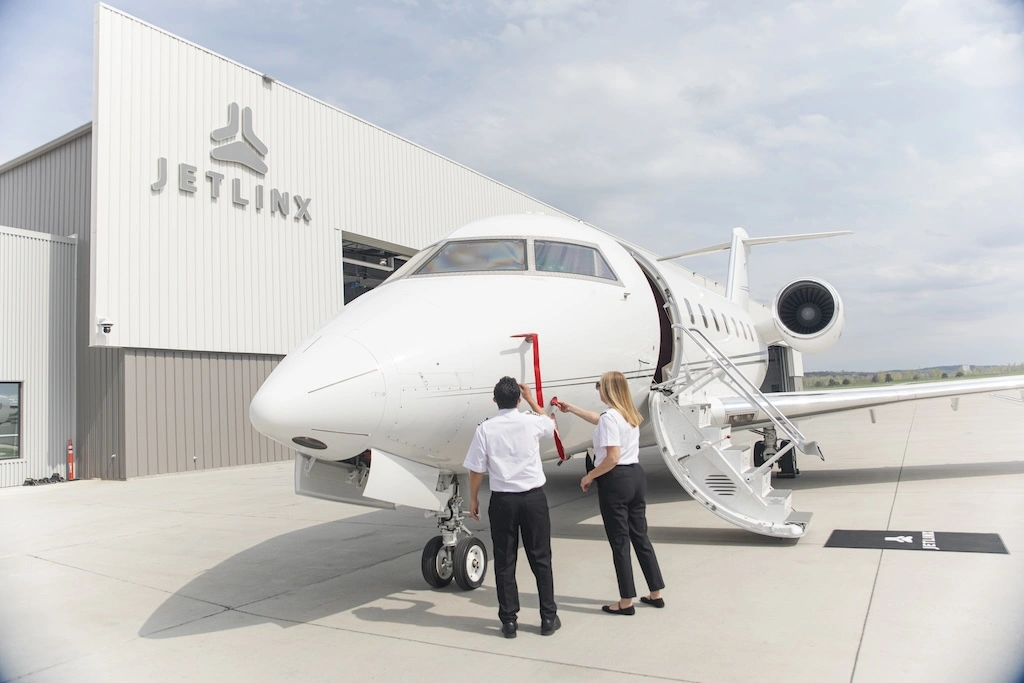
Are private jets safe? They can be, and the operator behind the flight has a lot to do with it. As a group, airlines have had lower accident rates than charter operators, according to the NTSB. Within private aviation, results vary widely by operator and type of flight.
Private aviation is not one system. A scheduled airline, an on-demand charter operator, a corporate flight department, and an owner-flown aircraft each work under different rules and resources.
That is why the more useful question is who operates the flight, which standards apply, and how that operator manages risk in practice. This guide covers what the data shows, the safety protocols that matter most, and what to check before you book.
How Safe Are Private Jets?
On-demand charter flights run by a well-managed operator can be very safe, though charter flying as a whole has a higher accident rate than scheduled airlines. The NTSB reported in 2024 that accident rates for Part 135 operations, which include on-demand charter, stayed higher than airline rates from 2010 through 2022.
That finding covers a whole category, from single-pilot air taxis to larger, more complex charter operations. It does not show how a single operator runs its flights.
The most reliable signs of safety are the systems behind each flight. Look for:
- Pilot qualification, aircraft-specific training, and recurrent evaluation
- Maintenance planning, inspections, and accurate aircraft records
- Weather review, route planning, and flight-specific risk assessment
- Operational control and support when conditions change
- A Safety Management System that identifies and addresses risk early
- Emergency response planning and clear communication
- Independent audits or certifications that evaluate the operator’s practices
In April 2024, the FAA issued a rule that requires every Part 135 operator to have a Safety Management System in place by May 2027. Compliance sets the floor. Two providers can meet the same minimum and still differ in training depth, maintenance oversight, reporting culture, and day-to-day consistency.
At Jet Linx, centralized flight coordination teams provide oversight, proactive flight risk assessments, and 24/7 flight following. Our in-house safety team oversees our Safety Management System.
Private Jets vs. Commercial Airlines: Why the Operator Matters
Are private jets safer than commercial airlines? NTSB data shows airline accident rates stayed below Part 135 rates from 2010 through 2022. Airlines benefit from standardized procedures, large-scale infrastructure, and several layers of regulatory and company oversight. Private aviation can offer strong safety when professionally operated, but results vary more by operator and type of flight.
A useful private jet vs. commercial safety comparison looks at the type of operation:
| Type of operation | What shapes the safety environment | What travelers should evaluate |
| Scheduled commercial airline | Standardized airline procedures, structured crew systems, centralized dispatch, and extensive regulatory oversight | Airline operating record, aircraft type, weather, and normal airline procedures |
| On-demand private charter (FAA Part 135) | A commercial charter framework, operator-controlled flights, approved procedures, crew requirements, and maintenance programs | The operator’s certificate, operational control, pilot training, aircraft maintenance, and independent audits |
| Corporate or managed private aircraft | Company-specific standards, professional crew programs, aircraft management, and internal safety oversight | Who controls the flight, how crews are trained, maintenance documentation, and the operator’s Safety Management System |
| Owner-flown private aircraft | Standards and resources can vary widely based on the owner, crew, aircraft, and operation | Pilot experience, aircraft condition, maintenance records, operating rules, and risk-management practices |
This is why the question “Are private jets more dangerous than commercial?” needs context. A professionally operated charter flight should not be grouped with every form of general aviation. A private flight also should not be assumed to match a major airline’s standardization because both use turbine aircraft.
For travelers, the practical takeaway is to evaluate the operator and the operation along with the aircraft.
The Private Jet Safety Protocols That Matter Most
Safety protocols are the documented procedures, training programs, oversight systems, and decision-making practices behind every flight, before departure and through arrival. The strongest programs use several layers. No single credential or person carries the whole load.
1. Operational Control and Flight Planning
Operational control answers a basic question: who has the authority and responsibility to decide whether a flight should go, change, delay, or cancel?
Handoffs are where that answer can get lost. When one company books the trip, another operates it, and a third supports it on the ground, ask who owns the decision when something changes. When something matters, there should be someone who owns it.
A well-managed operation reviews weather, runway conditions, aircraft status, crew duty limits, airport conditions, route requirements, and passenger needs before departure. The team should also be able to reassess the flight when conditions change.
Travelers should ask:
- Who makes the final go or no-go decision?
- Is there a centralized operations or flight coordination team?
- How are weather and maintenance changes communicated?
- Is flight following available during the trip?
Our local and national teams monitor flights, conditions, and decisions in real time, with support before, during, and after each trip.
2. Pilot Quality and Recurrent Training
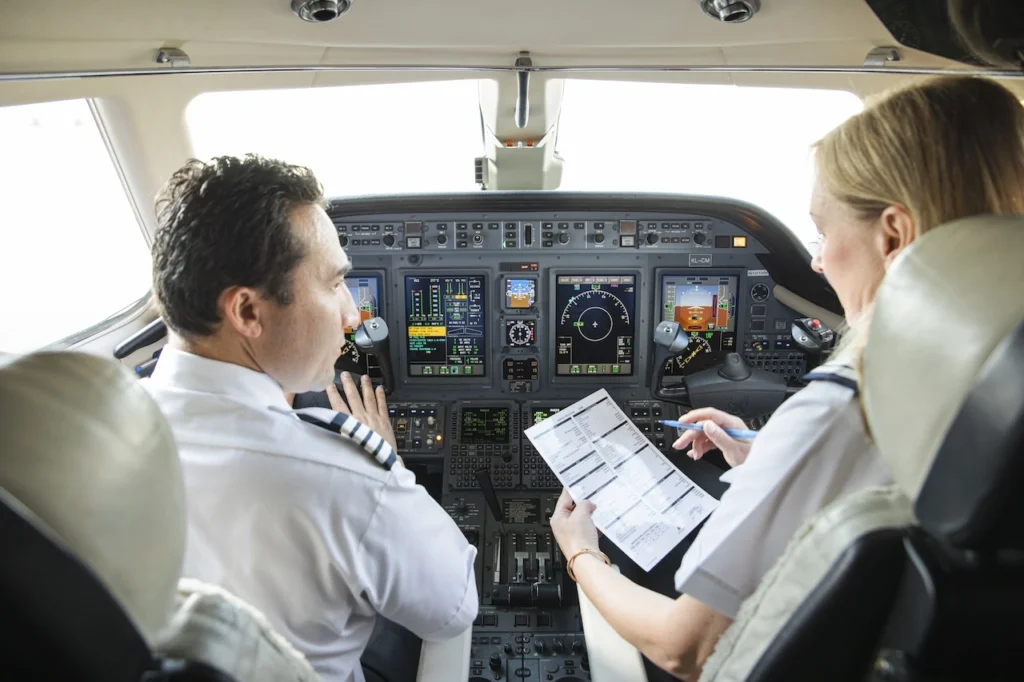
Pilot credentials include more than total flight hours. Consider experience in the aircraft type, current qualifications, simulator training, crew coordination, emergency procedures, and how the operator evaluates performance over time.
Proficiency has to be maintained. Strong programs revisit abnormal situations, weather decisions, communication, workload management, and other scenarios pilots may face under pressure.
Our pilots meet experience and training standards above FAA requirements. Crews complete recurrent simulator training through FlightSafety International and CAE. They also work through scenario-based decision-making exercises and ongoing evaluations tied to real-world operations.
3. Aircraft Maintenance and Airworthiness
Maintenance is one of the most important factors when asking whether private planes are safe. Aircraft should follow an approved maintenance program, with inspections and repairs documented and completed by qualified personnel. Business jets are built with redundant systems. That redundancy only helps when engines, avionics, and backup systems are inspected on schedule.
Ask how the operator handles:
- Scheduled inspections and manufacturer requirements
- Airworthiness directives and required repairs
- Deferred maintenance items
- Maintenance records and tracking
- Return-to-service decisions
- Aircraft substitutions when a safety issue affects a trip
A well-managed operation builds aircraft status into flight planning. It is ready to change the schedule when an aircraft is not the right choice for the mission.
4. Safety Management Systems and Reporting
A Safety Management System, or SMS, gives an operator a structured way to identify hazards, assess risk, report concerns, and improve procedures. It also helps an operator spot patterns and address risks before they affect a flight.
The culture around the system matters. Team members should be able to raise concerns, ask questions, and pause an operation when something does not look right. A policy is only useful when people are supported in following it.
At Jet Linx, our Safety Management System includes daily flight risk assessments and voluntary safety reporting, with support from leadership at every level. Teams across departments also take part in quarterly safety stand-downs with scenario-based training.
5. Independent Safety Audits and Certifications
Third-party audits show how an operator’s practices hold up beyond basic regulatory compliance. Each organization assesses different parts of an operation, so ask what each designation evaluates before comparing badges.
We currently hold three major third-party safety certifications:
- ARGUS Platinum Elite
- WYVERN Wingman PRO
- IS-BAO Stage 3
Each one is earned through an independent audit. Read more about what ARGUS, WYVERN, and IS-BAO evaluate.
How to Evaluate a Private Jet Operator
Before booking, use this checklist:
| Safety consideration | What travelers should evaluate |
| Certification | Which FAA operating certificate applies to the flight? Which independent audits or certifications does the operator hold? See how to avoid illegal charter flights. |
| Pilot standards | How are pilots selected, trained, checked, and evaluated? How much aircraft-specific experience do they have? |
| Aircraft maintenance | Who manages maintenance? How are inspections, repairs, and records tracked? |
| Operational control | Who can delay or cancel the flight when conditions are unsafe? |
| Safety management | How are hazards reported, reviewed, and addressed? Can team members stop or slow an operation when needed? |
| Flight support | Is there centralized oversight and 24/7 support before, during, and after the flight? |
| Consistency | Do the same safety procedures apply across bases, aircraft, and destinations? |
A provider should answer these questions clearly. If the answers focus on cabin amenities or a single safety badge, ask for more detail about the systems behind the flight.
How Jet Linx Supports Safety on Every Flight
At Jet Linx, we believe every decision, from the boardroom to the cockpit, can affect a safety outcome. Our standard is safety always. You can see it in third-party certifications, standardized procedures, and centralized oversight. It also shows in recurrent training, proactive risk assessment, 24/7 flight following, maintenance oversight, and a culture that expects people to speak up.
Once a year, we ground our entire fleet for a full day to hold our annual Safety Summit, a practice that began in 2017. The day is set aside for safety training, alignment, and improvement across the company.
If you are comparing providers, start with the questions above. You can learn more on our Safety page, see how Jet Card membership works with no deposit required, or contact Jet Linx with questions.
FAQ
Are private jets safe?
Private jets can be a safe way to travel when a qualified, professionally managed operator runs the flight. As a group, charter operators have had higher accident rates than airlines, according to the NTSB, so the operator you choose matters. Before booking, check the operator’s FAA certificate, independent safety audits, pilot training, maintenance oversight, and Safety Management System.
Are private jets safer than commercial airlines?
As a group, airlines have had lower accident rates than charter operators, according to the NTSB. That comparison covers every Part 135 operator, large and small, so it says little about any single company. A professionally managed operator with independent audits and a mature Safety Management System should be judged on its own record and practices.
Are private planes safe?
The term covers small piston aircraft flown by individual pilots as well as business jets flown by professional crews, so the risk varies widely. A charter flight on a business jet runs under FAA Part 135 rules for pilot training, maintenance, and operational control. Ask who operates the aircraft and which rules apply to your flight.
Is an older private jet safe?
An aircraft’s maintenance history tells you more than its age. An older jet that follows its manufacturer’s inspection schedule, complies with every airworthiness directive, and has complete records can be a sound choice for a trip. Ask the operator how it tracks inspections and deferred items, and whether it will substitute another aircraft when one is not right for the mission.
Is flying private safe for first-time travelers?
Flying private can be safe for first-time travelers when a qualified provider with clear procedures and experienced crews operates the flight. Before booking, ask who operates the aircraft, which standards apply, how the aircraft is maintained, and who makes safety decisions when conditions change.
