


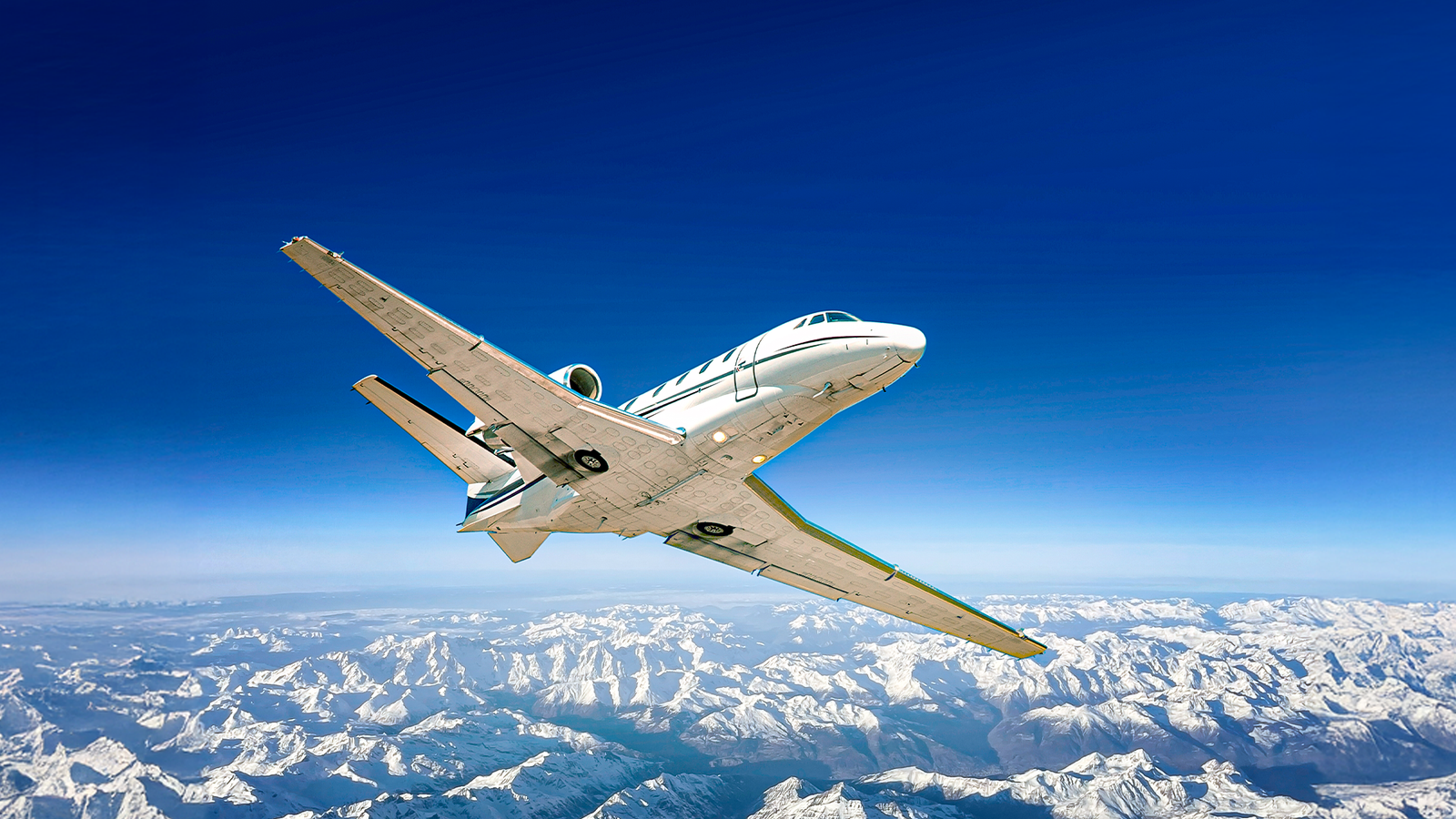
The ‘coffin corner’ is the name for a dangerous flight profile in which an aircraft’s low-speed stall threshold and maximum wing speed converge at extreme altitude. As a jet climbs into lower air density, the airspeed required to generate lift increases, raising the stall speed. At the same time, dropping ambient temperatures lower the local speed of sound. At this lofty altitude, a jet pilot can find themselves trapped in a performance bottleneck where flying just a few knots too slow triggers a violent aerodynamic stall, while flying a few knots too fast can send the jet into a dive that will rip the wings off.
Flying in the narrow performance band of the coffin corner, officially known as the ‘q-corner,’ leaves virtually zero margin for error. Clear-air turbulence, air temperature spikes, or steep banking angles will instantly increase the wing load factor. This pushes the stall speed to dangerous numbers, making the safe speed window precariously small. Overspeeding causes high-speed Mach buffet, wing damage, or nose-down pitching from shockwaves. Dropping under the lower speed threshold triggers an immediate low-speed stall, potentially causing a catastrophic loss of control.
Pilots navigating through this critical phase of flight must apply extremely precise throttle control and subtle pitch adjustments to maintain stable flight. If the plane deviates from the delicate profile, a recovery leaves little option other than cutting power and gently descending into lower, denser air layers to expand the stable speed envelope. The Lockheed U-2 spy plane is a classic example of aerospace design pushing the extreme possibilities of this aerodynamic tightrope, routinely cruising at 70,000 feet (21,336 meters) while flying inside a five-knot window between a stall and midair disintegration.
Q-Corner: The High-Altitude Aerodynamic Bottleneck
A jet’s wings encounter an aerodynamic conflict as they get closer to the Q-corner. Flying at high altitude induces the coffin corner due to two simultaneous, opposing shifts in atmospheric physics: decreasing air density and decreasing ambient temperature. As an aircraft climbs, these forces dynamically squeeze its safe speed limits from both ends. This situation results in a stationary boundary layer shockwave, chaotic airflow, and Mach buffet, a vibration that can resemble low-speed stalls but is caused by exceeding design parameters rather than insufficient speed.
A wing requires a specific mass of air flowing over it to generate enough lift to support the aircraft’s weight. Because the air is thin, the plane must travel at a much faster physical speed, its True Airspeed (TAS), just to achieve the same amount of aerodynamic lift. As altitude increases, the minimum speed required to keep the aircraft flying, or its low-speed stall limit, continually climbs higher.
In The Coffin Corner Above The Clouds

As the air gets colder with rising altitude, the speed of sound drops. At the same time, air flowing over the curved top of an airplane wing accelerates. If the plane flies too fast, that localized airflow will hit the speed of sound. This shockwave disrupts the air over the wing, causing severe turbulence, a loss of lift, and a dangerous nose-down pitch called ‘Mach tuck.’
Since high altitude raises the minimum safe speed and lowers the maximum safe speed, the two boundaries inevitably converge. At an aircraft’s aerodynamic ceiling, the margin disappears entirely, trapping the plane in a highly restrictive velocity corner where it can neither speed up nor slow down safely. Inside the coffin corner, the margin to tolerate an Angle of Attack (AoA) change is almost zero.
Pilot decision-making can be further complicated by instrumentation at the coffin apex, as signs of rapid speed, Mach limits, and low-speed stall margins converge. Modern autopilot systems reduce the hazards of overcorrection in this delicate environment by making minute modifications to preserve stability. Still, clear air turbulence (CAT) is invisible and violent. When an airplane hits an updraft or downdraft, the air hits the wing at a sudden, sharp angle. This drastically changes the wing’s AoA, sometimes catastrophically.
Technology Filling The Gaps For Stick And Rudder Skills

U-2 spy plane pilots operate under extreme physiological constraints that actively compound spatial disorientation. Cruising at 70,000 feet, the pilots must wear bulky, restrictive full-pressure spacesuits that severely limit peripheral vision, deaden the tactile feedback from the control yoke, and introduce ambient helmet noise that masks critical sounds. Compounding this isolation is the visual void of the stratosphere, where the sky above turns pitch black and the horizon below blurs into a featureless curvature.
Cockpit displays must be used exclusively due to the absence of external visual references. Significant cognitive fatigue results from operating on pure oxygen during missions longer than nine hours. The pilot has very little time and no margin for error to safely determine which side of the coffin corner they have breached in the case of a stall or overspeed occurrence due to weariness and the extremely narrow five-knot cruise window.
HOW MANY ARE FLYING?
Pick an aircraft to see how many are in the air right now
Coffin corner hazards in commercial aviation, on the other hand, are mostly caused by abrupt, disorganized shifts from flawless automation to human flying along with false inner-ear perceptions. When a loss of control triggers sudden vertical deceleration or negative G-forces, it can induce an illusion of false pitch change. That is when the brain misinterprets this acceleration as a severe pitch change in the opposite direction, convincing the pilot the aircraft is climbing when it is actually diving.
‘Automation shock’ can increase this sensory illusion. Because pilots spend nearly all their cruising time monitoring highly reliable systems, an unexpected sensor failure that disables the autopilot can trigger an adrenaline rush and cognitive tunneling. Under this extreme stress, airline pilots can easily become fixated on a single instrument or their deceptive physical sensations, completely filtering out loud stall signals because their brains cannot absorb the reality that their heavy jet is stalling in thin air.
The Psychological Traps of Stall Recovery

A stall is tactile and instantly identifiable at lower elevations. The engine sound dramatically shifts, the nose dips, and the controls become slow. A stall behaves completely differently within the coffin corner at 40,000 feet or above because, despite the thin air, the aircraft is moving at a very high actual airspeed. A pilot’s natural reaction is to pull back on the controls if they mistake a low-speed buffet for an overspeed alert. This can quickly deepen a stall past the point of saving if done incorrectly.
A recoverable standstill can turn into a deadly spiral due to spatial disorientation. In the coffin corner, the sensations of a high-altitude loss of control can directly contradict cockpit instrument readings, creating a cognitive mismatch that quickly overloads human limits. The pilot cannot intuitively tell if the vibrations are caused by a low-speed aerodynamic stall or a high-speed Mach buffet. The physical sensations of both hazards feel practically identical in the cockpit.
The Tragic Consequence Of Coffin Corner’s Toll

The Lockheed U-2 purposely operates inside the coffin corner to maintain its extraordinary cruise altitude of 70,000 feet. At this altitude, the difference between a low-speed aerodynamic stall and a deadly high-speed Mach buffet is a mere five to seven knots. The aircraft flies on a continuous aerodynamic knife-edge, where a simple banking maneuver can cause the inner wing to stall from lowering too slowly and the outer wing to break apart by exceeding its critical Mach limit.
U-2 pilots rely solely on micro-precise autopilot stability loops to survive this harsh operational environment. In contrast, Air France Flight 447 represents a commercial airliner forced into the coffin corner by human error after a technical malfunction. Cruising at 35,000 feet (10,668 meters), the Airbus A330 lost its airspeed indications when ice crystals blocked its pitot sensors, causing the autopilot to disconnect automatically.
Disoriented by the sudden manual control takeover in a severe storm, the jet was forced into a hard climb to 38,000 feet (11,582.4 meters) because the pilot unintentionally pulled back on the controls. The aircraft’s stall speed was immediately increased, and the flying envelope was slammed shut as a result of this quick rise, losing crucial forward momentum as it entered thinner air.
The crew was unaware that they had caused a high-altitude aerodynamic stall. They trapped the aircraft in an unrecoverable dive, which resulted in a deadly collision with the Atlantic Ocean, by repeatedly pulling back on the side-stick rather than lowering the nose down into thicker air to regain airspeed.
Disorientation And High-Altitude Dive Dynamics

When a U-2 slips over its five-knot cruise margin and enters a high-speed dive, structural breakdown occurs nearly instantly. The U-2, which is designed like an ultra-lightweight motorized glider with a massive wingspan, cannot withstand the tremendous aerodynamic loads or supersonic shockwaves created during a descent. Its long, frail wings will physically twist and fail at speeds somewhat higher than its regular cruise velocity.
In comparison, the Bombardier CRJ200 cargo plane involved in the West Air Europe tragedy was designed with significantly more structural strength. Believing the aircraft was pitching up uncontrollably because of a malfunctioning attitude indicator display, the captain pushed the yoke hard forward. The plane entered an inverted, near-vertical dive from 33,000 feet (10,058.4 meters), draining its altitude in just sixty seconds. Severe disorientation can set in when a steep drop is initiated from high cruise altitudes.
Spatial disorientation is brought on by this abrupt vertical acceleration. The captain’s malfunctioning display continued to show a significant rise even though the first officer’s instrument panel accurately showed that they were plummeting vertically toward the frozen landscape. The crew was unable to reconcile the contradictory data before terminal impact because they were trapped in the dark and unable to communicate efficiently due to the tremendous gravity forces. Surprisingly, even though the aircraft was approaching the speed of sound, it didn’t disintegrate in midair; instead, it only did so when it hit the ground.
