


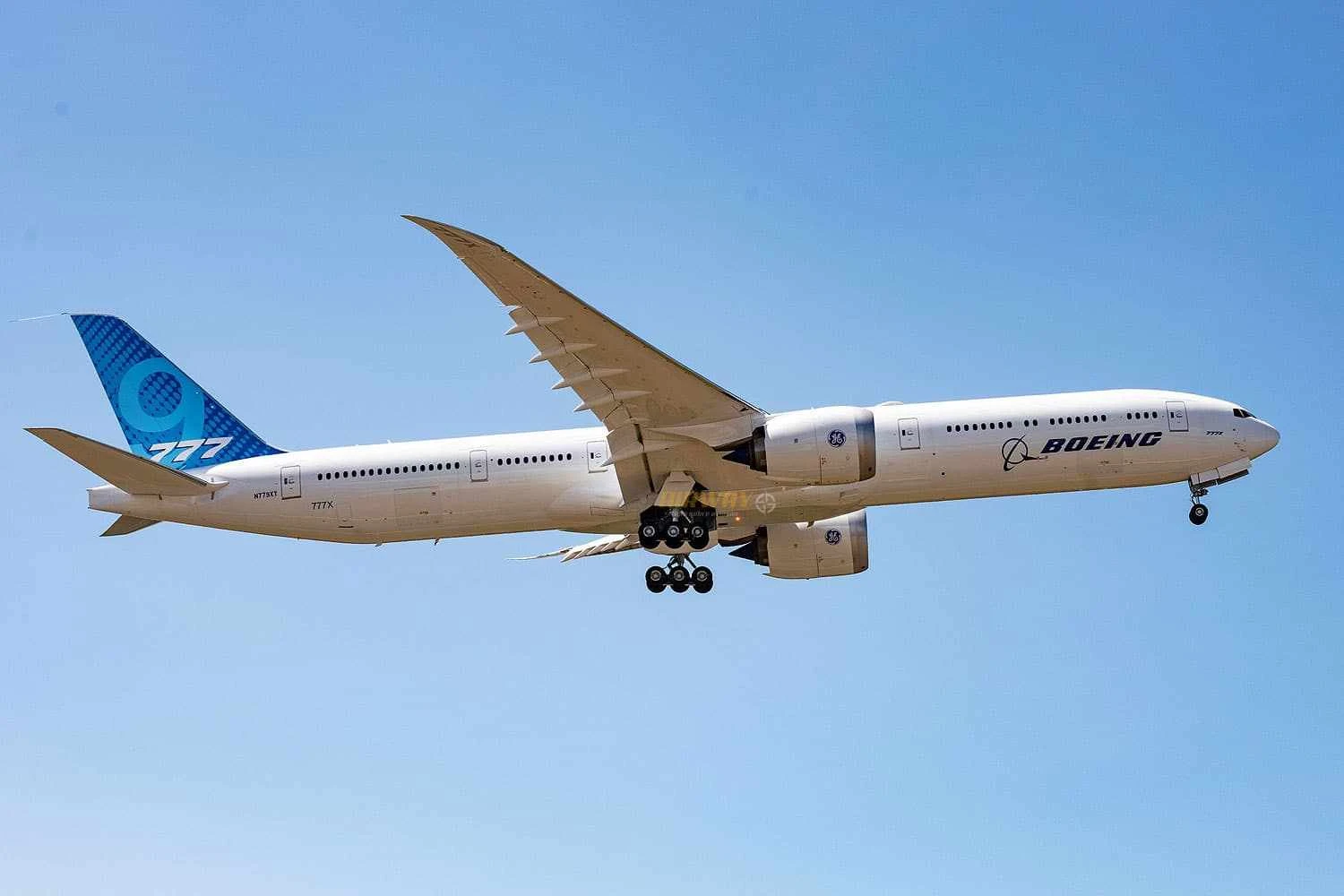
Boeing has deployed 777-9 test aircraft to two demanding environments thousands of miles apart, with one jet operating in the strong winds of Iceland and another heading to an airport more than 10,000 ft above sea level in Bolivia as the manufacturer steps up certification work on the long-delayed widebody.
The first 777-9 prototype, N779XW, has been based at Keflavik International Airport since October 28 for crosswind testing. Known internally as WH001, the aircraft has performed a succession of short local flights as crews seek the wind conditions required for the campaign.
Follow Air Data News: WhatsApp | Instagram | LinkedIn | Twitter | Facebook
Meanwhile, N779XY, or WH003, left Boeing Field in Seattle on November 2 for Sucre, Bolivia. The aircraft is heading to Alcantarí International Airport, located at 10,184 ft (3,104 m), for high-altitude testing.
Thin air reduces engine thrust and aerodynamic performance and increases the distances required for takeoff and landing, allowing manufacturers to evaluate aircraft behavior under conditions considerably different from those encountered at airports close to sea level.
WH003 has already performed similar work. In August 2024, the same 777-9 was sent to Toluca, Mexico, whose airport sits at about 8,730 ft (2,660 m), for high-altitude certification tests.
Alcantarí has recently attracted another major aircraft manufacturer for the same reason. Airbus took an A321XLR to Bolivia in April 2026 and used the airport for tests involving engines, pressurization, navigation and air-conditioning systems, as well as repeated takeoffs and landings. The aircraft also operated at Juan Mendoza Airport in Oruro during that campaign.
777-9 test fleet returns to action
The deployments come as activity across the 777-9 test fleet has increased. WH004, registered N779XZ, recently returned to the air from Seattle after a lengthy period of inactivity, while Boeing is also using production aircraft for certification-related work in addition to the four original prototypes.
In July, a seventh 777-9 joined the flight-test campaign. Boeing said the fleet had accumulated more than 4,800 flight hours during approximately 1,700 flights. Despite the lengthy campaign, which began with the 777-9’s maiden flight in January 2020, only about 50% of the planned certification testing had been completed at that point.
Most of the Type Inspection Authorizations required from the Federal Aviation Administration had been obtained, but Boeing was still waiting for the remaining approvals, including those needed for ETOPS testing.
GE9X problem adds another hurdle
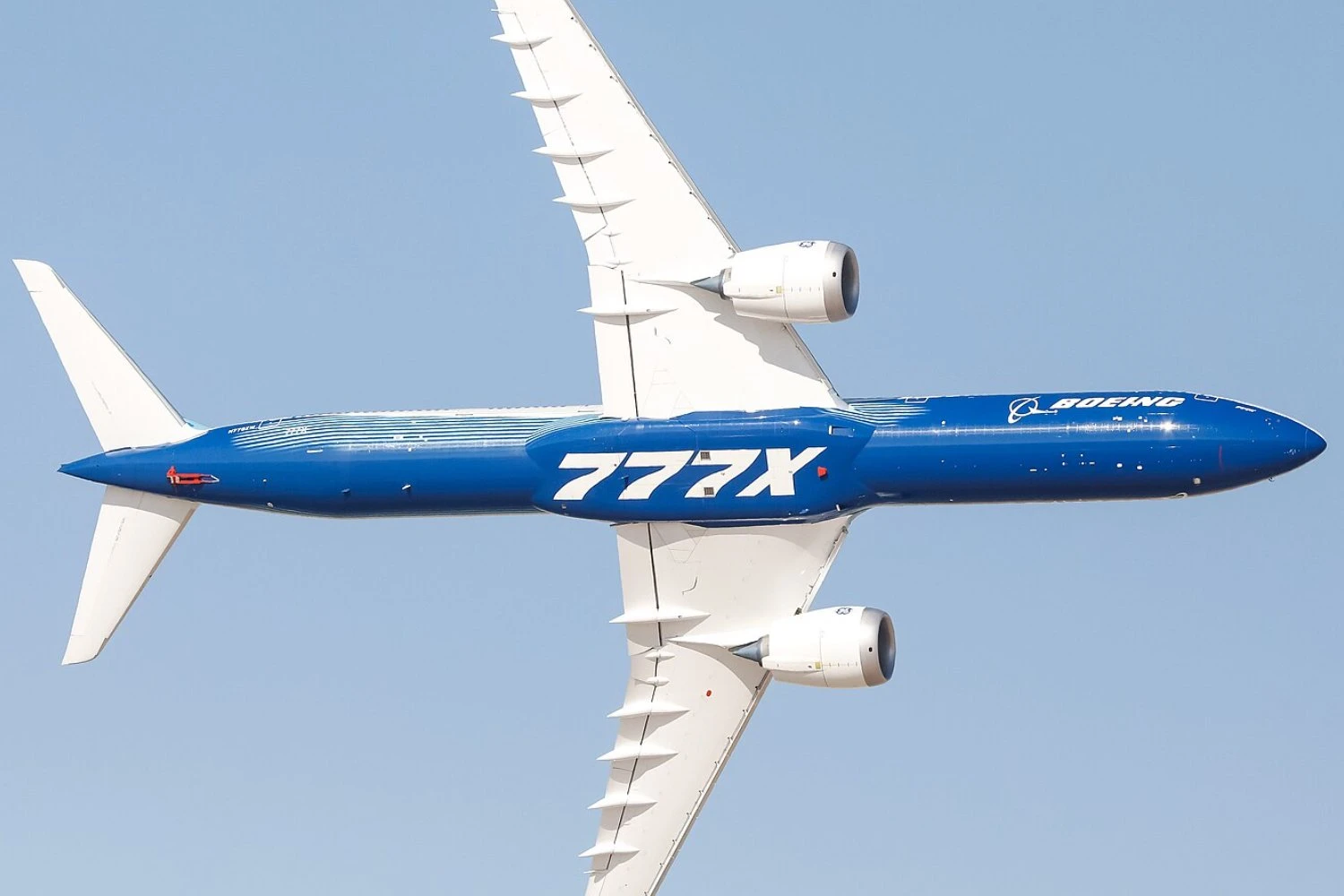
Progress has since encountered another obstacle involving the GE Aerospace GE9X engines that exclusively power the 777X.
A durability problem with an intermediate seal in the GE9X required GE to redesign the component. The manufacturer has started delivering engines incorporating the new design, but additional work to certify the solution has taken longer than initially expected.
The issue has affected Boeing’s ability to begin the ETOPS portion of the certification campaign. CEO Kelly Ortberg said in September that the FAA had not yet authorized those tests because work associated with the engine modification still had to be completed.
ETOPS approval is particularly important for the 777-9 because it allows twin-engine aircraft to operate long routes far from suitable diversion airports, a fundamental requirement for the intercontinental missions expected of the jet.
GE says testing has given it confidence in the redesigned seal and expects FAA approval of the modification. The FAA has made approval of the redesigned mid-seal a requirement for the 777-9 type certificate, although the new component does not need to be installed during ETOPS testing. Boeing has acknowledged that some 777-9 flight testing could extend into 2027.
The manufacturer continues to target the first customer delivery in 2027, several years later than originally planned.
