


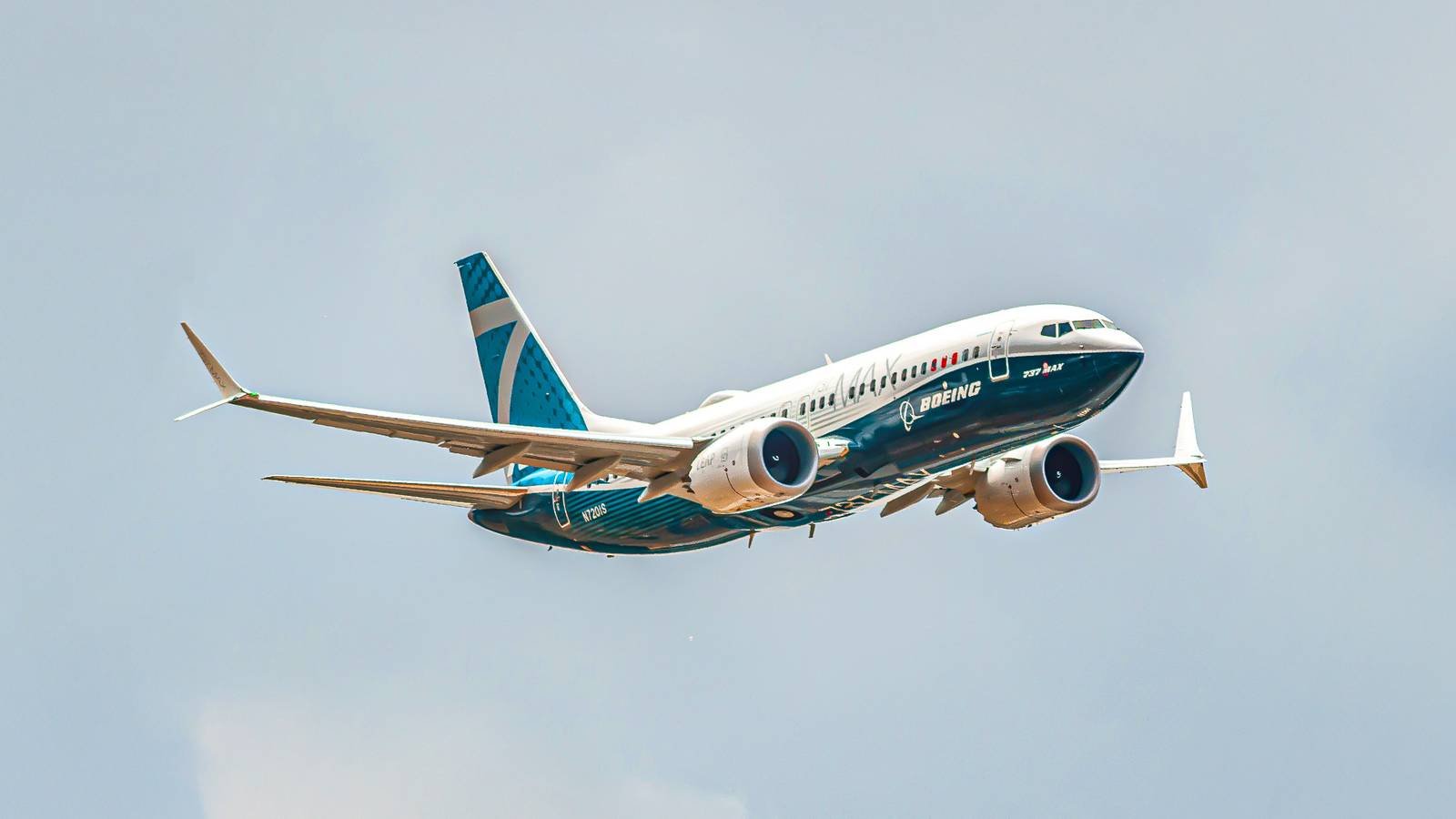
Industry reports indicate that the Boeing 737 MAX 7 could receive final FAAcertification in the latter weeks of July 2026, bringing an end to a multi-year regulatory limbo caused by the aircraft’s engine anti-ice system redesign. While the approval would mark a major milestone for Boeing, its significance is arguably even greater for  Southwest Airlines. The carrier has 314 MAX 7s on order to replace its aging fleet of 334 Boeing 737-700s and expects the type to enter passenger service in the first quarter of 2027. Southwest previously evaluated the Airbus A220but ultimately chose to preserve its single-fleet Boeing operating model, with the long-term goal of becoming an all-MAX airline by 2031.
For Southwest, the certification represents much more than the arrival of a new aircraft. The airline’s fleet renewal strategy has become increasingly dependent on the MAX 7 following years of certification delays, leaving little room for further setbacks. As the carrier works toward becoming an all-MAX fleet, the aircraft will play a central role in replacing its aging 737-700 fleet while shaping the airline’s network, growth strategy, and operational planning for the remainder of the decade.
Why The MAX 7 Is Finally Nearing Certification

Certification of the Boeing 737 MAX 7 and MAX 10 has fallen several years behind schedule, allowing Airbus to strengthen its position in the narrowbody market while Boeing’s two remaining MAX variants await regulatory approval. The delays stem from a far more rigorous certification process introduced following the two fatal 737 MAX 8 crashes in 2018 and 2019. Regulatory scrutiny intensified further after the January 2024 in-flight cabin panel blowout on an Alaska Airlines-operated 737 MAX 9, prompting closer oversight of Boeing’s design, production, and quality control processes.
The engine anti-ice system emerged as the principal certification hurdle in 2021. While regulators allowed the already certified MAX 8, MAX 8-200, and MAX 9 to remain in service and continue production, approval of the MAX 7 and MAX 10 was postponed until Boeing developed a redesigned system that met FAA requirements. Boeing has completed the engine anti-ice system redesign, and the last phase of MAX 7 flight testing is complete, with over 80% of the flight test campaign finished. The system also reduces engine noise and mitigates fan flutter. With the final phases of the certification flight-test program, the manufacturer is aiming to secure approval as soon as possible. It’s currently on track to gain approval later this month.
FAA certification would clear the final regulatory hurdle before customer deliveries can begin, although ramping up production and fulfilling the order backlog will remain Boeing’s next challenge. For Southwest Airlines, however, approval represents much more than the certification of another aircraft variant.
Southwest Has Been Waiting Longer Than Any Other Airline

Southwest Airlines has been affected by the MAX 7 delays more than any other carrier because its entire business model revolves around operating a single aircraft family. As of early 2026, the airline’s fleet consists of 305 Boeing 737-700s, 198 737-800s, and 300 737 MAX 8s, with no Airbus aircraft in service. Southwest became fully committed to the MAX 7 in 2021, reaching an agreement for 100 firm orders, with the first 30 originally scheduled for delivery in 2022. Since then, the airline has expanded its commitment to 314 MAX 7s on order, with the type now expected to enter passenger service in the first quarter of 2027 following FAA certification.
The repeated certification delays have forced Southwest to postpone a key phase of its fleet renewal strategy. Rather than retiring its aging 737-700s as planned, the airline has had to keep them in service for longer, increasing maintenance requirements and limiting the pace of fleet modernization. Unlike many competing carriers, Southwest has been unable to introduce an alternative aircraft type, leaving its long-term planning heavily dependent on the MAX 7.
Although Southwest does not expect to introduce the MAX 7 until at least six months after certification, FAA approval would finally allow deliveries to begin and the airline’s fleet renewal program to restart. Over the coming decade, the MAX 7 is expected to become the backbone of Southwest’s domestic network. With many of the carrier’s oldest 737-700s remaining in service beyond their intended retirement dates, replacing the type has become one of the airline’s highest strategic priorities.
Replacing The Airline’s Aging 737-700 Fleet

The foundation of Southwest Airlines’ single-aircraft strategy dates back to co-founder Herb Kelleher, whose philosophy emphasized operational simplicity over complexity. That approach has remained central to the airline’s business model for more than five decades. As of early 2026, Southwest still operates 334 Boeing 737-700s with an average age of approximately 27 years. Although the aircraft remain reliable, older fleets require more frequent maintenance, longer periods out of service, and higher operating costs. Having formed the backbone of Southwest’s domestic network for decades, replacing the 737-700 has become one of the airline’s largest fleet modernization projects.
When Southwest unveiled its fleet plans in 2020, the expectation was that many of its oldest 737-700s—particularly those more than 20 years old—would gradually be retired as the Boeing 737 MAX 7 entered service. However, repeated certification delays forced the airline to extend the service lives of these aircraft well into 2026 and potentially beyond. Southwest selected the MAX 7 because it offers a near one-for-one replacement for the 737-700, combining similar seating capacity with lower fuel consumption, improved operating economics, and greater range while preserving the airline’s established operating model.
Southwest’s long-term objective remains unchanged: to retire its remaining Next Generation (NG) aircraft and transition to an all-737 MAX fleet by 2031. Standardizing around a single aircraft family simplifies pilot training, maintenance, spare parts inventories, and scheduling while reducing long-term operating costs. However, remaining committed to an all-Boeing fleet has also limited Southwest’s flexibility, leaving the airline heavily dependent on the timely arrival of the MAX 7 despite years of certification delays.
Why Southwest Never Switched To Airbus

As certification delays mounted, Southwest Airlines explored potential alternatives to the Boeing 737 MAX 7. The Airbus A220 emerged as the most credible option, offering comparable capacity, excellent fuel efficiency, and strong operating economics. The aircraft has proven successful at several North American carriers, including Delta Air Lines, Air Canada, JetBlue, and Breeze Airways, leading to speculation that Southwest could abandon its long-standing all-Boeing strategy.
Ultimately, the airline concluded that introducing a second aircraft family would fundamentally alter the operating model. Adding the A220 would have required significant investment in pilot training, simulator capacity, maintenance expertise, spare parts inventories, and ground support equipment. Operational efficiencies would also have been affected, with longer turnaround times and increased complexity for flight operations, scheduling, and maintenance. The financial and operational costs of introducing a new fleet type ultimately outweighed the benefits.
Aircraft | Capacity | Range | Engine type |
Airbus A220 | Max 160 passengers | Up to 3,600 NM / 6,700 km | 2 × Pratt & Whitney GTF PW1500G |
737-700 | Max 149 passengers | Up to 3,463 nm (6,400 km) | 2 × CFM International CFM56-7B |
737 MAX 7 | Max 172 passengers | Up to 3,850 NM (7,130 km) | 2× CFM International LEAP-1B |
Remaining an all-Boeing operator has allowed Southwest to preserve the simplicity and efficiency that have long distinguished its business model. However, that decision has also left the airline heavily dependent on Boeing’s certification and production performance. After accepting years of delays rather than introducing a second aircraft type, Southwest’s focus can now shift from waiting for regulatory approval to ensuring Boeing delivers the hundreds of MAX 7s needed to complete its fleet modernization strategy.
Boeing Still Has One More Challenge

Industry reports suggest the Boeing 737 MAX 7 could receive FAA certification in the latter weeks of July 2026. While this would mark a major milestone after years of delays, it does not mean Southwest Airlines will begin receiving the aircraft immediately. Certification is only the first step, with Boeing still needing to manufacture, deliver, and prepare hundreds of MAX 7s for commercial service.
Boeing’s production system also remains under heightened FAA oversight following recent quality issues, meaning maintaining a consistent delivery schedule will be just as important as securing certification. Southwest is not expected to introduce the MAX 7 into passenger service until the first quarter of 2027, highlighting the gap between regulatory approval and operational deployment.
Southwest’s fleet renewal strategy depends on a steady flow of MAX 7 deliveries over the coming years. Any further production or delivery delays could postpone the retirement of its aging 737-700 fleet and slow the airline’s transition to an all-MAX operation. After waiting years for certification, Southwest’s next challenge will no longer be regulatory uncertainty but Boeing’s ability to deliver the aircraft on schedule.
Southwest’s Next Decade Depends On One Aircraft

Despite the prolonged certification delays, Southwest Airlines remains in a relatively strong position, reporting a load factor of 80.4% during the 2024 financial year. However, its long-term fleet strategy now largely depends on the successful delivery of the Boeing 737 MAX 7s.
Southwest’s success has long been built on the traditional low-cost carrier model. Operating a single aircraft family reduces maintenance, training, and operating costs while simplifying scheduling, spare parts inventories, and aircraft utilization. Combined with its point-to-point network and single-class cabins, these efficiencies have helped the airline remain competitive despite growing competition.
While Southwest is well established today, achieving its goal of becoming an all-737 MAX operator by 2031 will depend on Boeing’s ability to consistently produce and deliver the MAX 7. Certification may finally be within reach, but the airline’s next decade will ultimately be shaped by whether those aircraft arrive on schedule.
