


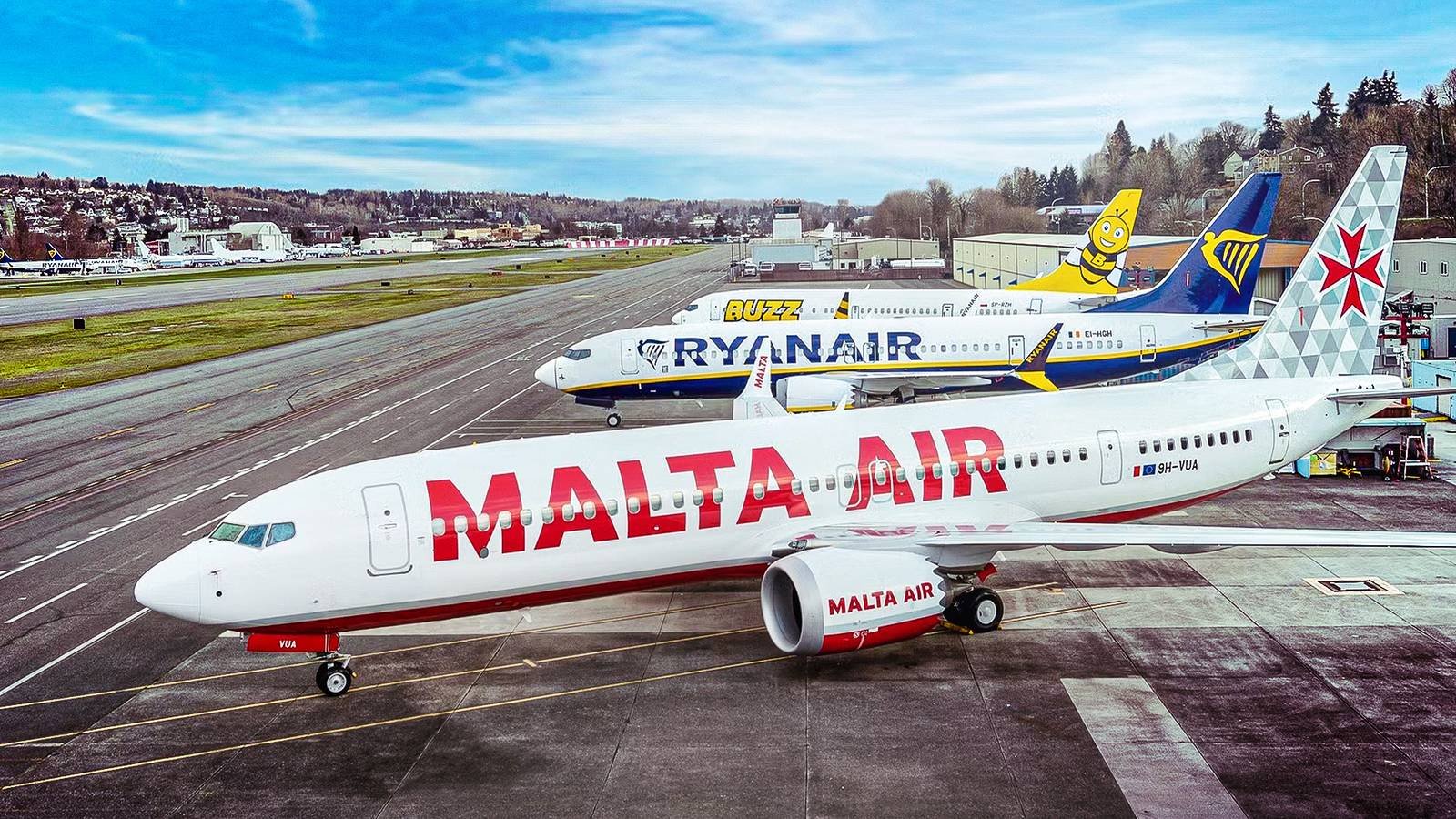
As a frequent flyer with Ryanair, I noticed one thing that didn’t surprise me, but instead, it surprised many travelers. Countless passengers, before boarding, experienced a moment of confusion at the gate when they noticed their boarding pass read “Ryanair,” but the plane they were boarding was either Malta Air, Buzz, or even Lauda Europe.
The reason is surprisingly simple. While Ryanair presents itself as a single airline brand, it is actually part of a larger corporate structure known as the Ryanair Group. Behind the scenes, several airlines operate under the same commercial umbrella, often flying identical routes, using similar aircraft, and offering virtually identical onboard experiences. The difference that confuses travelers is the livery that doesn’t say Ryanair. Understanding why these subsidiaries exist helps explain one of the most common questions asked by European travelers.
Ryanair Group: One Brand, Multiple Airlines
When most passengers think of Ryanair, they picture the Irish low-cost giant headquartered in Dublin. However, Ryanair’s own conditions of carriage define the “Ryanair Group” as consisting of Ryanair DAC, Ryanair UK, Buzz, Malta Air, and Lauda Europe. The airlines operate under separate Air Operator Certificates (AOCs) while sharing the same overall commercial strategy.
This structure allows the group to operate efficiently across different regulatory environments. Separate airlines can hold local operating licenses, register aircraft in different countries, employ crews under different legal frameworks, and maintain operating bases throughout Europe. To passengers, however, the distinctions are often invisible once on board because tickets are sold through the Ryanair website and service standards remain largely identical.
The various subsidiaries also help Ryanair expand beyond Ireland while maintaining flexibility within the European aviation market. Although the aircraft may display different registrations or liveries, passengers are generally purchasing the same low-cost product regardless of which subsidiary operates the flight. This is why travelers frequently discover another carrier’s name on their booking confirmation after purchasing a Ryanair ticket.
How to understand if you’re going to fly a subsidiary? The easiest clue is the flight code. Ryanair DAC flights generally operate under the FR code; Ryanair UK uses RK; Buzz uses RR; and Malta Air uses MW. The actual operator is often listed in the booking details or on the boarding pass. You can also check flight trackers, including our brand-new one, to see your flight details.
Ryanair UK: The Brexit-Era Airline

One of the newest members of the group is Ryanair UK. Established to preserve domestic and intra-UK flying rights following Brexit, the airline operates under a British Air Operator Certificate while remaining fully integrated into the Ryanair Group. Ryanair’s terms and conditions identify Ryanair UK as the contracting carrier for flights using the RK airline code.
Before Brexit, Ryanair could freely operate domestic services within the United Kingdom under European aviation regulations. Once the UK left the European Union, airlines needed different legal arrangements to preserve certain operating rights. Ryanair UK became the group’s solution to this challenge. It allowed the company to continue serving the British market without disruption. Operationally, passengers usually notice little difference. Aircraft wear standard Ryanair branding, crews follow similar procedures, and booking channels remain identical. The distinction is largely legal and regulatory rather than customer-facing.
Where will you encounter Ryanair UK? Passengers are most likely to fly Ryanair UK on domestic UK routes, such as London Stansted to Belfast, Edinburgh, or other British destinations. Some international flights based around UK operations may also use the RK designator.
Many travelers never realize they are flying on Ryanair UK because the onboard experience remains virtually identical to the parent brand. That consistency is intentional and helps Ryanair maintain a unified public image despite operating multiple airlines.
Catch what other flight trackers miss
Emergency squawks, holds, NOTAMs — live signals, no signup.
Open tracker
Catch what other flight trackers miss
Emergency squawks, holds, NOTAMs — live signals, no signup.
Open tracker
Ryanair UK typically operates flights such as:  London Stansted Airport to Dublin, Madrid, Rome; Manchester Airport to Malaga, Alicante, Faro; Edinburgh Airport to European city breaks (Barcelona, Kraków, Berlin)
These routes are chosen due to high UK outbound leisure demand and the need for a UK-certified operator. If your boarding pass lists Ryanair UK, you are boarding a standard Ryanair aircraft but just under a different operating certificate.
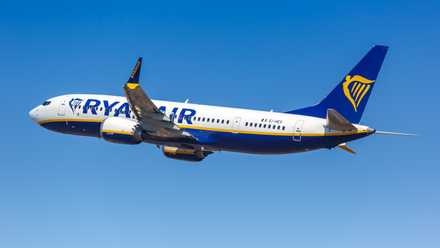
5 Differences Between Ryanair & Ryanair UK
The differences between these two operators are extremely subtle.
Malta Air: Ryanair’s Mediterranean Workhorse

Among the subsidiaries, Malta Air (do not confuse it with the defunct Air Malta!) is perhaps the one passengers encounter most frequently, especially while traveling to typical summer destinations across the Mediterranean. Created in 2019, the airline has become a major component of the group’s operations. Ryanair’s official documentation specifies that Malta Air operates flights carrying the MW airline code and serves as the contractual carrier for those services.
The airline was established to support Ryanair’s growth across Europe while leveraging Malta’s aviation regulatory framework. Aircraft registered through Malta Air can be found across the continent more often than in Malta. This often surprises passengers who assume the airline only flies to or from the Mediterranean island nation. Travelers frequently report booking a Ryanair flight only to discover Malta Air branding on the aircraft. Discussions among aviation enthusiasts consistently note that the experience remains largely the same because Malta Air is fully integrated into the Ryanair Group structure.
Where are Malta Air flights most common? Malta Air aircraft are heavily utilized on routes across Italy, Spain, Greece, France, and other major European markets. The carrier supports numerous Ryanair bases and can appear almost anywhere in the network.
For example, the vast majority of the flights I took from Malta and between Italy and Greece were operated by Malta Air, even though I booked through Ryanair’s official website. Many domestic routes in Italy, especially those linking islands to the mainland, are also served by Air Malta.
The practical reality is that if you regularly fly Ryanair within Southern Europe, there is a strong chance you will eventually board a Malta Air-operated flight. In most cases, the only obvious difference will be the aircraft registration or branding visible on the fuselage. And red seats instead of the blue/yellow ones found on Ryanair planes.
Malta Air commonly operates the following routes: UK, Germany, Scandinavia to Spain, Greece, Italy; Intra-Italy routes (Rome, Milan, Palermo, Catania); and high-demand summer routes across the Balearic and Greek islands.
A passenger flying from London to Palma de Mallorca in July may be on a Malta Air flight due to seasonal capacity shifts.
Buzz: The Polish Powerhouse Behind Many Ryanair Flights

Buzz may be the least familiar name to casual passengers, but it has become one of the most important operators within the Ryanair Group. Originally known as Ryanair Sun, the airline operates under the RR airline code and is based in Poland. Ryanair’s own conditions of carriage specifically identify Buzz as a separate contracting carrier within the group. Buzz has its own website, but bookings are made via the Ryanair page.
Buzz has grown significantly in recent years, supporting Ryanair’s expansion across Central and Eastern Europe. The airline operates both scheduled Ryanair flights and some charter services. Industry observers increasingly view Buzz as a critical component of Ryanair’s future growth strategy in Eastern Europe. The airline’s management has frequently commented on expansion opportunities across Poland and neighboring markets.
Where are you most likely to fly Buzz? Passengers are especially likely to encounter Buzz on routes involving Poland, the Baltic States, and parts of Central Europe. Airports such as Warsaw Modlin, Kraków, Gdańsk, Wrocław, and Katowice frequently see Buzz-operated aircraft.

Interestingly, many Buzz aircraft wear standard Ryanair branding, making it difficult for passengers to identify the operator unless they check the aircraft registration or booking details. Aviation enthusiasts often point out that an SP-registered aircraft is a strong indicator that Buzz is operating the flight.
Buzz typically operates the following routes from Poland: Warsaw–London, Kraków–Manchester; Southern Europe (Greece, Italy, Spain); and from the Czech Republic to the UK and Mediterranean leisure routes.
This structure allows Ryanair Group to dominate outbound tourism traffic in the eastern boundaries of the EU while maintaining cost efficiency. Passengers booking Ryanair from Warsaw Chopin Airport are highly likely to fly Buzz, especially during peak travel seasons.
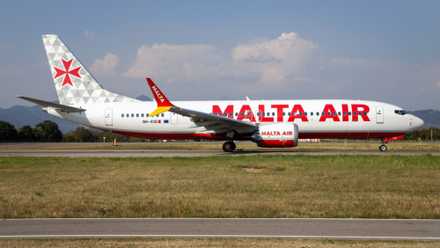
Air Malta Vs Malta Air: What’s The Difference?
Malta Air is the largest Malta-based airline, but it is a Ryanair subsidiary rather than the country’s flag carrier.
Lauda Europe: The Airbus Operator In The Family

Lauda Europe stands out from the rest of the Ryanair Group because it operates Airbus A320 family aircraft rather than Boeing 737s. The airline traces its origins to the aviation ventures established by Formula One legend and entrepreneur Niki Lauda before becoming part of Ryanair’s expanding portfolio.
Today, Lauda Europe primarily serves as an Airbus-focused operator within the group. For passengers, this often means slightly different cabin dimensions and seating arrangements compared with the Boeing aircraft commonly associated with Ryanair. Otherwise, the service philosophy remains fundamentally the same. The airline also has its own website, but when you try to book, it automatically redirects you to the Ryanair website.
Many travelers who board a Lauda-operated aircraft only realize the difference when they see the Airbus A320 waiting at the gate. Since Ryanair’s core fleet consists overwhelmingly of Boeing 737s, the Airbus experience can come as an unexpected surprise.
Where are Lauda flights most common? Lauda Europe is especially visible in Austria and several continental European leisure markets. Routes touching Vienna and other Central European destinations are among the most likely places to encounter the airline.
For aviation enthusiasts, Lauda flights offer a rare opportunity to experience an Airbus while still traveling on what is effectively a Ryanair service. For most passengers, however, the differences remain relatively minor beyond the aircraft type itself.
Lauda typically operates the following routes from Vienna: Spain (Alicante, Palma, Malaga); Greece (Heraklion, Rhodes); Italy (Rome, Milan, Naples, Palermo)
In my experience, all Ryanair flights to Vienna that I booked from various destinations were always operated by Lauda.
Why This Is Different From Traditional Codeshares

Many passengers compare Ryanair’s subsidiaries with traditional airline codeshares, but the two concepts are fundamentally different. In a typical codeshare arrangement, a ticket may be sold by one airline while the flight is operated by an entirely separate company. Examples include flights marketed by  Lufthansa but operated by Air Dolomiti, or services sold by
  Air France but flown by regional partners.
With Ryanair, the situation is different because the operating airlines all belong to the same corporate group. Ryanair, Malta Air, Buzz, Lauda Europe, and Ryanair UK share common ownership, commercial strategy, and branding. The differences largely relate to regulatory requirements, aircraft registration, employment structures, and operating certificates, while keeping the same on-board products and services.
That means travelers generally should not worry if their booking suddenly changes from Ryanair to Malta Air or Buzz. The flight remains part of the same airline family. In practice, the aircraft, cabin procedures, baggage rules, booking platform, and onboard service are usually indistinguishable. While seeing an unfamiliar airline name on a boarding pass can be surprising, it simply reflects how Europe’s largest low-cost carrier has organized itself to operate efficiently across multiple jurisdictions.
Comprehensive Ryanair Group Operating Structure
Airline | Base Country | Typical Fleet | Primary Route Focus |
Ryanair DAC | Ireland | Boeing 737-800 / 737 MAX 8 | Core Western Europe, Ireland routes |
Ryanair UK | United Kingdom | Boeing 737-800 / 737 MAX 8 | UK domestic & Europe leisure routes |
Malta Air | Malta | Boeing 737-800 / 737 MAX 8 | Mediterranean & seasonal leisure routes |
Buzz | Poland | Boeing 737-800 | Central & Eastern Europe routes |
Lauda | Austria | Airbus A320 family | Austria → Southern Europe routes |
This structure allows Ryanair Group to continuously rebalance capacity across Europe in response to demand, seasonality, and regulatory constraints.
