


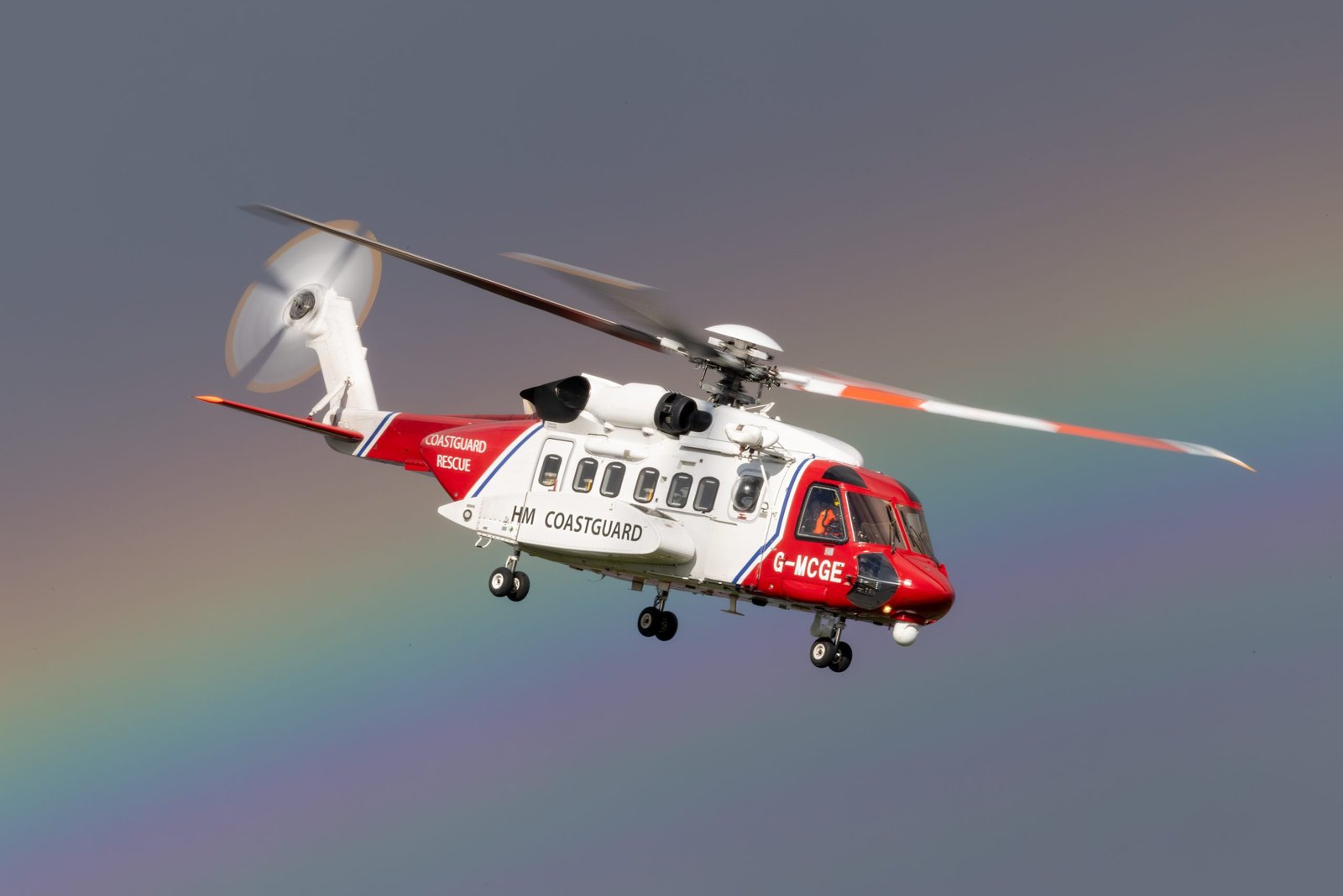
But offshore oil and gas stalwart also intends to exit Norwegian energy services market.
Bristow Group is to significantly grow its government services business with the acquisition of fixed-wing and drone specialist Berry Aviation, while simultaneously selling its offshore helicopter support operation in Norway.
Disclosing the deal on 23 June, Bristow said it will pay $105 million to current owner Acorn Capital Management for the Texas-based company. It expects the transaction to close in the third quarter of 2026, subject to conditions.
Bristow says the all-cash deal will support its strategy of increasing revenues from government services – chiefly search and rescue contracts in the UK, Ireland and the Netherlands – rather than from the energy services sector.
Based on the 2025 revenues of both companies, and factoring in the intended sale of Bristow Norway, group turnover last year would have been 54% from offshore operations, 35% government services and 11% other.
That compares with respective figures of 66%, 26% and 8% based on Bristow’s accounts.
Bristow sees revenues from long-term government contracts as less susceptible to the fluctuations seen in the oil and gas market, where contracts are also typically shorter.
Berry Aviation operates a fleet of 23 aircraft providing “government and defence aviation services across multiple countries”, says Bristow, including special missions, and intelligence, surveillance and reconnaissance (ISR) operations, as well as cargo and logistics.
All aircraft are “equipped for STOL [short take-off and landing] operations on unpaved and unimproved airfields in remote regions” and are equipped for aerial delivery of cargo, Bristow says.
Additionally, Berry Aviation offers MRO services, training and mission support, and uncrewed air systems (UAS) design and development businesses.
Combined, these units contributed around 72% of Berry Aviation’s 2025 revenues of $108 million. EBITDA stood at around $12 million, which should rise to about $18 million this year.
“Berry Aviation’s deep expertise, proven technical capabilities across a range of mission-critical operations and strong customer relationships are complementary to our existing government services operations, better positioning Bristow to compete for long-duration government programmes,” says chief executive Chris Bradshaw.
Bristow also sees Berry Aviation’s on-demand cargo business as supporting its push into next-generation hybrid- or electric-aircraft operations.
“These new capabilities can also supplement Bristow’s existing search and rescue missions,” it adds.
While Bristow had hinted in its second-quarter results that an acquisition was on the cards, most observers thought it was most likely to pursue another oil and gas operator.
On that basis, and given Bristow’s helicopter-heavy background, its exit from the offshore services segment is somewhat of a surprise.
Bristow says the planned divestment is “consistent” with its overall strategy to “deploy its assets in markets with attractive margin profiles and value-accretive returns on capital”.
Although the firm insists it remains focused on “growing its offshore energy services business”, the Norwegian market “presents limited growth opportunities”.
Indeed, the recent emergence of local firm Lufftransport as a new rival in Norway, in the process winning work from state-owned oil company Equinor, has led to a more competitive market for existing operators.
Bristow Norway operates 23 Sikorsky S-92 heavy-twin helicopters from four bases. Last year, it generated revenues of $276 million.
Multiple options for the divestment are being evaluated “though the timing and structure of any sale transaction remain subject to market conditions and other considerations”, Bristow states.
Despite the planned exit from the Norwegian offshore market, Bristow says it still plans to pursue other opportunities in the Nordic nation “such as those in the advanced air mobility space”.
Bristow last year conducted flight tests of the Beta Technologies Alia CX300 in Norway in a government-sponsored project and will in 2027 perform a similar initiative with Electra’s hybrid-electric STOL aircraft.
Subscribe to gain access to all news
Already have a subscription? Log in.
Choose your subscription
Considering a corporate subscription? Contact us to find out more.
