


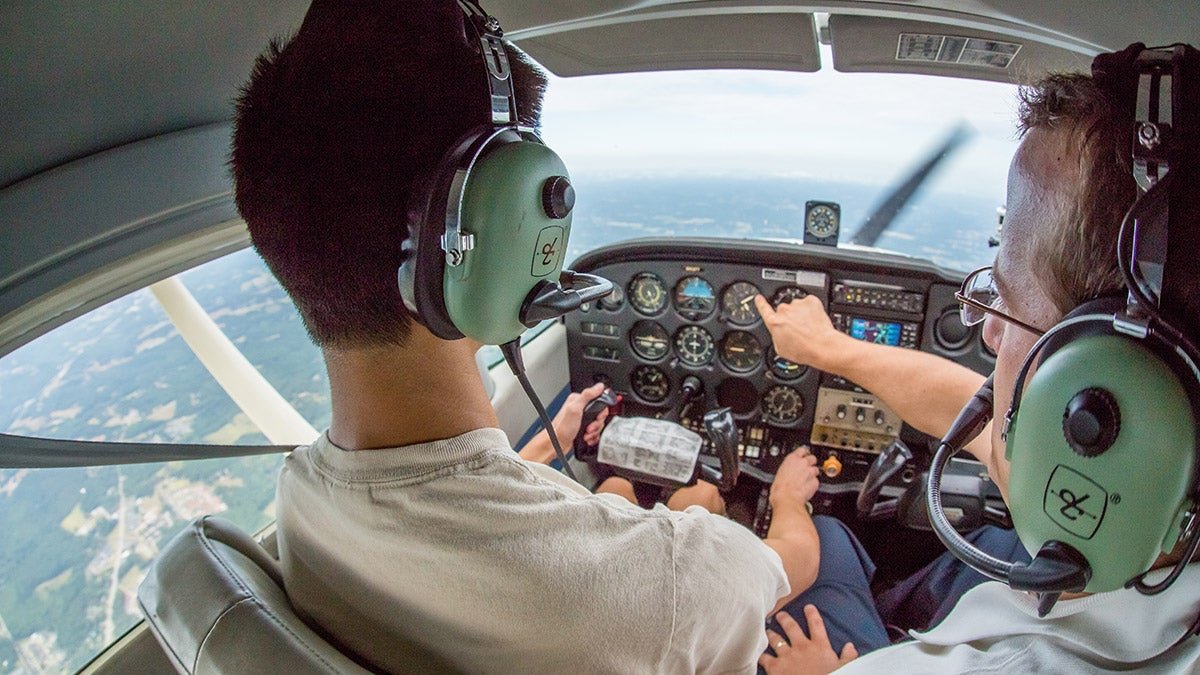
The client came to the flight school saying he had 10 or so hours in a Cessna 172 but hadn’t been allowed to take off or land yet—and he wanted to change that.
On his intro flight, he put two hands on the yoke during taxi and eschewed the checklist for the preflight inspection, claiming his previous instructor—a “buddy” of his—“didn’t make him use it,” and “they just went out and flew.”
The CFI had a feeling no instruction took place with the “buddy” and requested to see the learner’s logbook. The request was met with a blank stare. Then the CFI asked which seat the learner occupied when he flew with his friend. The answer was the right seat.
A few more questions followed, and the CFI realized what the client thought were flying lessons were actually flying with a friend who “just got his license” and persuaded his pal to help pay for the flight. The CFI told him so.
The learner didn’t exactly believe him. He came into the flight school to complain to the chief instructor (me) that the new-to-him CFI was wasting his time by taking him over the farmland and having him fly in circles or S-patterns across roads—but not really taking him anywhere—and sometimes repeating something they had done in a previous lesson. He thought flying lessons were going from airport to airport because that was what he’d been doing with his friend.
I asked to see the syllabus he’d been using. Another blank stare. Out came a syllabus for purchase. I flipped it open to the appropriate pages as I explained the building block approach—just as the CFI walked in to join the conference.
The CFI pulled out his notes that he’d been keeping, explaining to the learner that he had flown five of the 15 tasks required under cFAR 61.87 requirements for student solo.
Part of the challenge was that, although his CFI was using a syllabus, the learner didn’t have a copy of it. Flipping through it, the learner was surprised to see the amount of repetition in the pages.
Repetition (and Communication) for Learning
Without repetition, it is highly unlikely that learning takes place.
Repetition is part of training. The more you study something and practice it, the better you retain the knowledge and perform the skills. Repetition is a necessity. This concept should be introduced early in your flight training.
Your first lesson will likely be an introductory flight. With the help of a qualified flight instructor, you will learn how to perform a preflight inspection of the aircraft along with engine start, taxi, takeoff, climbs, turns, and descents. Your CFI should have already checked the weather and determined it is flyable.
In your second lesson, the CFI should be teaching you how to obtain a weather briefing and then, checklist in hand, you will repeat the inspection of the aircraft and tasks you did on your first lesson.
Both the CFI and learner should have a copy of the same syllabus with them in the airplane, and it is referenced before, during, and after the lesson. Note that the previously taught tasks are practiced again, and note the goal of this is making execution smoother and more precise.
It is important that the CFI let the learner know this is a goal before engine start for that flight.
For example, the CFI might say, “We’re going out to the practice area and doing steep turns. I want you to achieve 45 degrees of bank and hold that altitude like you’re nailed to it.”
This leads to a discussion about the importance of the right power setting and having the aircraft properly trimmed during the maneuver. And there’s the warning that if the airplane gets away from you to knock it off rather than trying to salvage the maneuver. Take a moment in level flight, discuss what you need to do differently, then try it again.
Repetition is also required for the acquisition of knowledge. You can’t learn everything you need to know to be a pilot—and probably not for the check ride—in one weekend no matter if you pull an all-nighter, your dad is a senior airline captain, or your buddy has the gouge for that particular DPE.
Your best bet is to establish a study schedule and have the discipline to keep it, even if it’s just 20 minutes a day. A consistent effort tends to foster better retention than cramming before a test.
The knowledge required to be a pilot is not something you want to “CliffsNotes” your way through.
