


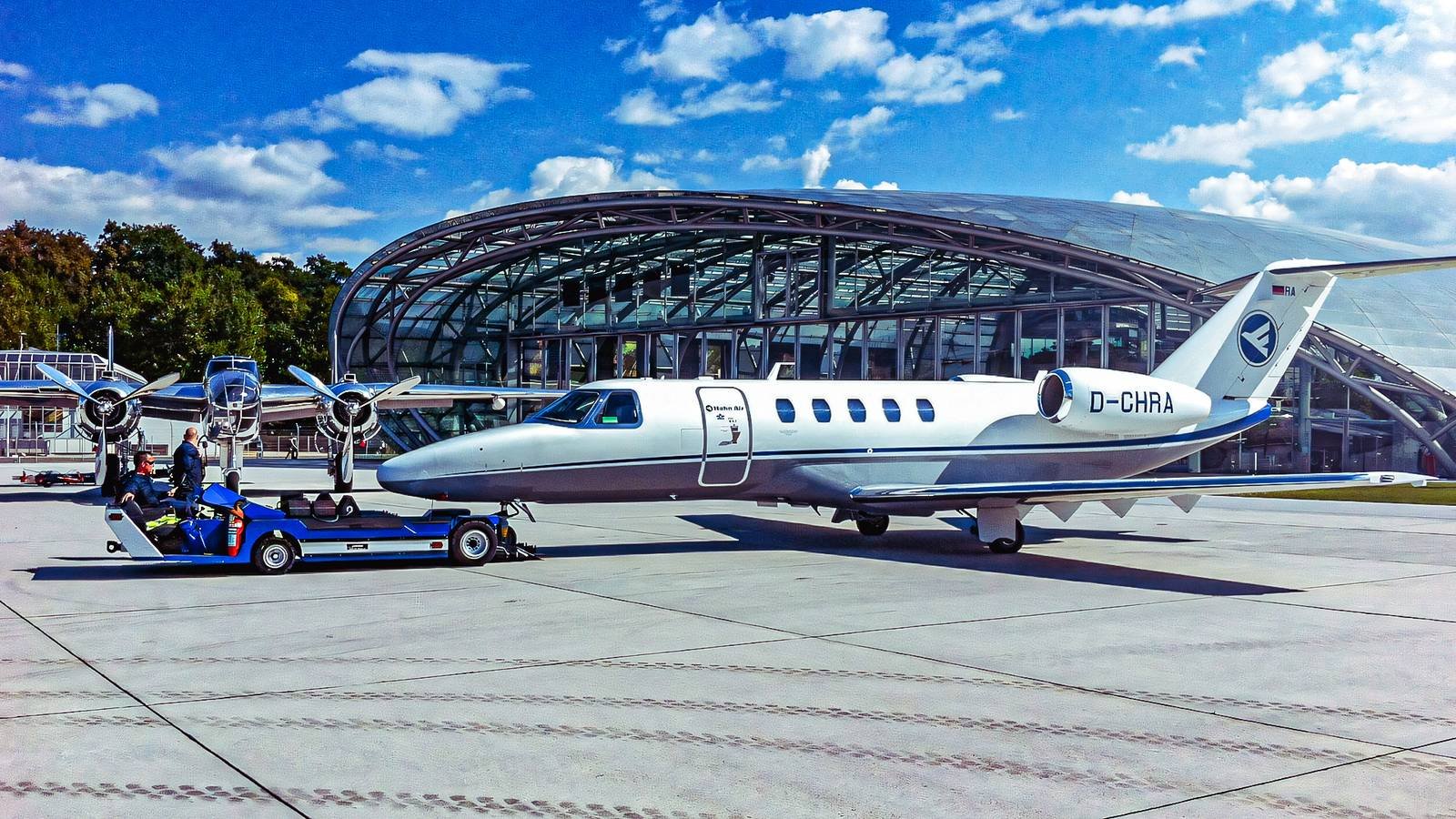
If you want to be a top earner as a pilot, the golden path to achieve the highest paycheck is working towards becoming a widebody captain as soon as possible in your career. For decades, flying aircraft like regional jets or private planes paid measly sums in comparison to what the mainline passenger airlines offer. Even being a fighter pilot in the military pales in comparison to what legacy airlines, like the big three in the US, pay their senior flight crew.
In 2026, that balance is beginning to shift, as corporate jet pilots have been earning higher salaries, with an average in the US around $130,000 today, according to Blackjet. Commercial pilots still earn more, with the annual median at about $225,000, but full-time executive jet captains flying midsize planes can now earn as much as $270,000 a year, as shown in data from Crew Blast.
Senior captains at carriers like United, American, and Delta Air Lines can still earn more, with salaries over $400,000. But pay is trending up in the corporate jet industry. For pilots who value autonomy, variety, and a tight-knit team environment over standard airline seniority, modern corporate pay makes private aviation a premier, highly lucrative career.
By The Numbers: Corporate Flying
One major point of contrast between passenger jet pilots and corporate jet flight crews is that pay is more dependent on the exact aircraft and mission in executive flying. A midsize jet captain typically flies an aircraft like a Cessna Citation in the executive aviation market. Today, these pilots can earn between $140,000 and $190,000 per year. Entry-level pilots flying aircraft like the Cirrus Vision will typically start out earning closer to $90,000, but they can still break six figures depending on the contract.
On the largest aircraft, the numbers climb substantially higher. Captains operating ultra-long-range heavy corporate jets, such as the Gulfstream G650 or Bombardier Global 7500, can earn between $250,000 and $350,000 in base pay. Some private aviation companies are now offering ‘stay bonuses’ to retain experienced pilots, which can reach as high as $50,000 per year. Some executive carriers are also paying quality-of-life adjustments to aircrew to retain pilots who would otherwise leave to fly for Part 121 commercial carriers, according to Wayman.
The aggressive pay raises in private aviation also serve to offset the unique demands of corporate flying. Unlike commercial airline pilots who operate on rigid, predictable schedules and focus strictly on flying, corporate pilots manage variable on-call schedules. They are also responsible for supplemental duties, including arranging ground transportation, managing catering, and overseeing aircraft servicing.
Air Travel In The Post-Pandemic Era

Private air travel was one of the few ways that high-income individuals could routinely and safely fly during the COVID-19 pandemic, which saw normal commercial airline activities heavily restricted. Although normal operations have returned to the commercial flying industry, there has been a sustained demand for executive aviation and premium flying products. That has created an unprecedented boom for Part 91 and Part 135 operators, directly fueling the current rise in pilot compensation.
If a commercial airline loses a pilot, it can usually pull someone from standby or rebook passengers on another flight. When airlines cut schedules and delays skyrocketed, anyone who could afford to fly private did exactly that. This caused a massive boom for charter companies and corporate flight departments. But in the private jet world, losing a pilot isn’t just an inconvenience; it actively breaks the business. That boom instantly ran into a huge wall: they didn’t have enough pilots to fly the planes, and the major airlines were aggressively poaching the ones they did have.
Private clients are paying a premium specifically for safety and enhanced service. They expect a captain with thousands of hours of experience, not a rookie. Since you can’t just fast-track an inexperienced pilot into the left seat of a business jet, the demand for veteran captains skyrocketed. Operators started throwing massive pay raises, huge signing bonuses, and better schedules at pilots just to keep them happy. That is exactly why midsize captains are now routinely clearing $190,000 today.

A Look At The Salaries Of The US Big 3 Airline Pilots In 2026
Airlines are in a fierce competition for top talent, and pilots are reaping the rewards.
Catch what other flight trackers miss
Emergency squawks, holds, NOTAMs — live signals, no signup.
Open tracker
Catch what other flight trackers miss
Emergency squawks, holds, NOTAMs — live signals, no signup.
Open tracker
Part 91 And 135 Versus Part 121

For experienced pilots transitioning from the military or major airlines, Part 91 and 135 operations offer a lucrative second act. Part 91 governs private, non-commercial operations where a company or individual owns the plane strictly for their own travel. Part 135 covers on-demand charter flights and air taxis, where clients pay to rent the aircraft and crew. Military retirees or retired airline captains can step directly into the left seat of a high-end corporate jet because they already possess the heavy jet experience, structured training background, and leadership skills that flight departments seek.
Commercial airlines enforce a strict FAA mandatory retirement age of 65 for mainline Part 121 air carriers, like the big three. Corporate jet operators fly under the regulation of Part 91 and do not have to enforce a mandatory retirement age. This allows executive jet operators to recruit experienced senior airline captains who are no longer eligible to fly for mainline passenger transport carriers. This is advantageous for corporate aviation departments to recruit experienced pilots and allows those pilots to significantly bump up their pension income.
For pilots coming up through general aviation or regional airlines who actively want to avoid the major airline track, corporate aviation has become a rewarding destination rather than just a stepping stone. Historically, regional pilots put up with low pay and brutal schedules just to build hours for a legacy carrier. Today, those pilots can jump straight to a corporate department or a large fractional ownership company like NetJets or Flexjet.
While top-tier corporate pay still falls short of the absolute peak widebody captain salaries at major airlines, the corporate path offers distinct lifestyle differences that appeal to many aviators. Airline flying can become a repetitive, sterile routine of hub-to-hub flying and hotel rooms. Corporate aviation, by contrast, offers incredible variety, with pilots flying into unique destinations, interacting directly with clients, and avoiding the monotony of the commercial grind.
How Much Do Fighter Pilots Earn Vs. Commercial Airline Pilots In 2026?
A closer look at what pilots earn in both fields around the world.
The Roadmap To The Executive Flight Deck

The market for flying the absolute largest, highest-paying private aircraft, like the Gulfstream G700, Bombardier Global 7500, or the Dassault Falcon 10X, is booming, but it is a highly exclusive club. Multi-billionaires and Fortune 100 companies spend up to $80 million on these ultra-long-range jets, and they do not spare any expense on the crew either. The job market is incredibly strong because these owners are not willing to tolerate any risk of having a $70+ million asset grounded due to a pilot shortage.
In 95% of cases, the flight department or charter company shells out the money for the type rating. If a pilot had to pay out of pocket for a type rating on a top-tier jet, it would cost anywhere from $60,000 to $100,000. The company will usually make the pilot sign a training bond. This contract states that if the pilot leaves the company within 12 to 24 months, they have to pay back a prorated portion of that $80,000 training bill. The pilots most likely to land these top-tier seats are retired airline captains or military pilots.
That is not to say that a highly experienced midsize private jet captain would not be competitive if they have the background to support a transition. The market for these massive corporate cabins is thriving because the global pool of qualified pilots is tiny. As for how to get the job, it rarely happens through a public job board like Indeed. It is almost entirely handled by specialized aviation recruiters through tight-knit, word-of-mouth industry networking. This dynamic gives qualified captains strong contract negotiation leverage.
How Much Do Boeing 777 Pilots Make In 2026?
Here is how Boeing 777 pilots can easily earn six-figure salaries.
An Exclusive Circle Of Aviators

To keep their pilots from jumping ship, top-tier corporate flight departments are offering signing bonuses between $15,000 and $40,000, paying full type-rating reinstatements, and offering base salaries that frequently push past $250,000 to $350,000 for ULR captains. The small pool of pilots with the correct skills and certifications to fly these aircraft also means that owners are very restricted in who can be hired if they do not want to pay exorbitant insurance premiums.
In executive aviation, a pilot isn’t just someone who flies the plane. The captain plays an influential role in unlocking the owner’s ability to legally and affordably operate a multi-million-dollar asset. Underwriters set demanding open pilot clauses, requiring captains to have thousands of hours of total time, hundreds of hours in that specific make and model, and regular recurrent simulator training, according to BWI Aviation insurance.
If a flight department hires a pilot who doesn’t meet those mandates, the owner’s premiums can instantly spike by tens of thousands of dollars, or the insurance company might refuse to cover the hull entirely. Because the pool of pilots who meet these strict insurance criteria and hold the necessary type ratings is incredibly small, flight departments find themselves in a constant state of vulnerability. This scarcity has turned pilot retention into an absolute business priority.
