


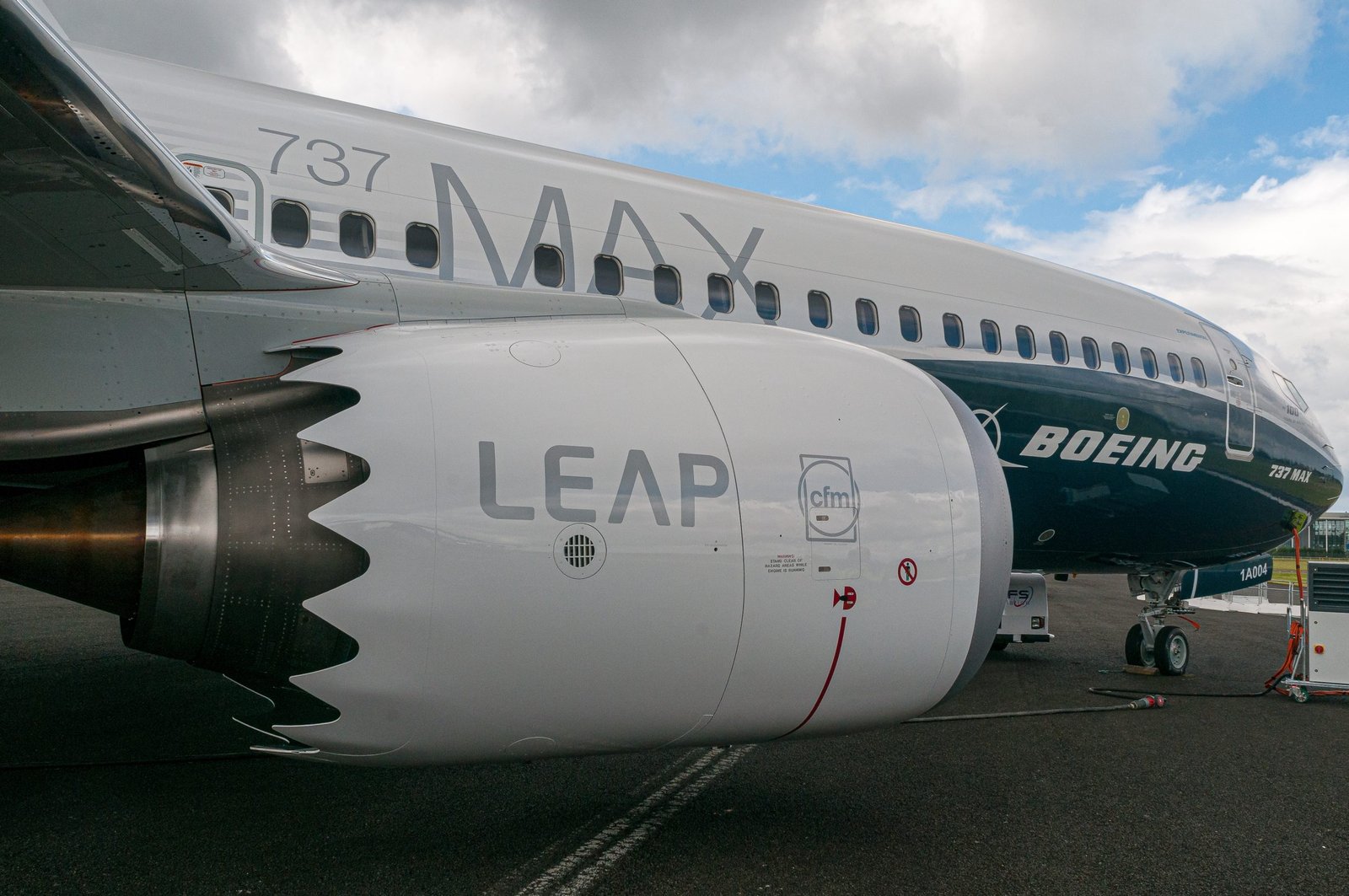
The updates are specific to the Leap variant powering Boeing’s 737 Max, though CFM already received approvals for the Leap-1A that powers Airbus jets.
The Federal Aviation Administration has certificated high-pressure turbine (HPT) and fuel nozzle durability improvements for CFM International Leap-1B turbofans, which power Boeing’s 737 Max.
The changes put CFM on track to begin delivering updated Leap-1Bs in 2027, helping address durability shortcomings that have forced some operators to overhaul Leaps sooner than expected.
CFM, jointly owned by GE Aerospace and Safran, already rolled out similar modifications for Leap-1As, which power Airbus A320neo-family jets.
The company has now secured FAA approval for the Leap-1B’s high-pressure turbine durability kit, the engine maker said on 18 July. CFM holds engine- and aircraft-level approvals for the changes.
“The system will double time-on-wing in hot and harsh environments like in [the] Middle East and India. CFM is beginning to industrialise production of the hardware, with full production cutover expected in early 2027,” it adds.
Additionally, the FAA has granted engine-level certification for a new Leap-1B reverse bleed system (RBS) intended to improve fuel-nozzle longevity.
CFM is now working with Boeing to secure the required RBS aircraft-level certification, aiming to do so before year-end, says GE Aerospace vice-president of commercial programmes Tom Levin.
The HPT kit and RBS are part of a broad project to keep Leap parts from prematurely degrading. Taken together, the changes solve 80% of durability troubles, with CFM saying “revised operating practices” can deliver the remaining 20%. Those practices include a new foam engine wash.
“We have also collaborated with the airframers to provide the option to use climb-thrust derate”, which “in certain conditions” can extend time-on-wing another 15%, Levin says.
CFM tackled the durability problems first on Leap-1A.. Some 40% of those engines already have the HPT kit and 70% have the RBS, CFM says.
Levin calls the HPT kit – composed of blades, nozzles and nozzle supports – the “foundation of our product durability roadmap”. GE executives previously said the kit involves adjustments to blade tips and trailing edges, and improvements to castings and cooling.
“We are in the process of producing those parts,” Levin says. “We are ramping up the supply chain, building up inventory so that we can then cut that configuration in both [engine models] for original equipment production as well as into the MRO system.”
He stresses that GE completed “extensive testing” to validate the HPT kit, even “reverse engineering” dust to replicate that found in harsh operating environments. It tested the original design against the HPT redesign, demonstrating that the changes provide time-on-wing comparable to that of the prior-generation CFM56 turbofan.
Levin says one Middle East operator of HPT-upgraded Leaps has surpassed 3,000 cycles since heavy maintenance.
“We have inspected those HPTs as part of routine borescope inspections and the hardware looks fantastic. These engines are going to stay on wing for a long time,” he says.
A GE presentation last year said Leaps with the prior HPT, when operated in harsh conditions, can remain on-wing roughly one-and-a-half years before requiring a shop visit, while those with the HPT update can last four years before visits.
The new RBS, which addresses a fuel-nozzle coking problem, is similar to a fan that “injects colder air” into the engine after shutdown to “minimise fuel evaporation”, GE said earlier this year.
Excessive coke can accumulate on the nozzles due to heat-induced fuel evaporation following shutdown. Those deposits can restrict fuel flow and thrust – a problem the FAA has said affected Leap-1As during at least two flights in 2024.
Additional reporting by Dominic Perry.
Subscribe to gain access to all news
Already have a subscription? Log in.
Choose your subscription
Considering a corporate subscription? Contact us to find out more.
