


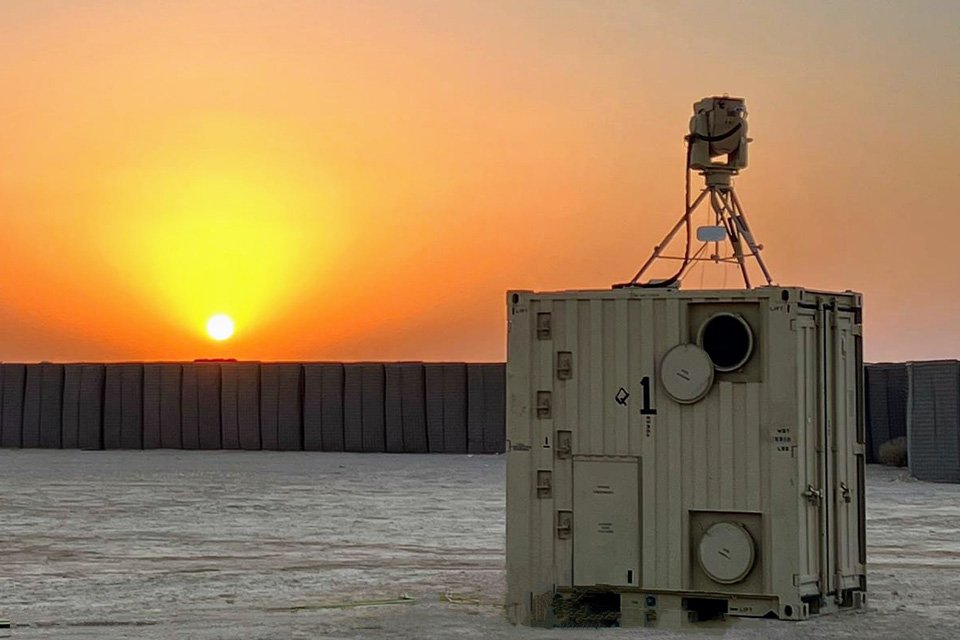
The US Federal Aviation Administration (FAA) said anti-drone lasers can be used safely in airspace where commercial aircraft are operating, clearing the way for deployment of a high-energy military counter-drone lasers along the US southern border after earlier incidents triggered airspace disruptions in Texas and New Mexico.
The FAA and Pentagon announced the agreement following what the agency described as a safety assessment of the system.
The FAA said the review found lasers not pose an “undue risk to passenger aircraft” when proper safety controls are in place.
The agency said it reached that conclusion after observing demonstrations of the laser system and signing an agreement with the Defense Department that sets procedures for its use.
The government has not publicly released the full details of those safeguards.
The decision marks a sharp turn from the confusion that surrounded the same technology recently. In February 2026, US officials used anti-drone laser systems near El Paso, Texas, as part of a border security response, prompting the FAA to halt flights at El Paso International Airport for several hours.
In a separate incident, a US government drone was mistakenly shot down by a laser-based counter-drone system, adding to scrutiny over how the technology was being deployed in civil airspace.
Under the new agreement, the FAA said additional airport closures should not be necessary when the laser systems are used properly.
The FAA has also issued a directive requiring aircraft operating within five nautical miles of the border in affected areas to use ADS-B Out equipment to support traffic surveillance during counter-drone operations.
Officials have tied the effort to persistent drone activity near the border, where the government says criminal groups have used unmanned aircraft for drug smuggling.
The announcement still leaves open questions about how the system will be managed in practical terms and how much information the government will release about coordination between military users and civil aviation authorities.
US lawmakers who pressed for answers after the February disruptions welcomed the new agreement but said they still want a fuller briefing on the safety case and operating procedures. The FAA did not spell out those procedures in its public announcement.
The FAA appears to be drawing a clear distinction between the government’s counter-drone use of lasers and the far more common issue of civilians pointing much lower power lasers at aircraft.
Pilots reported 10,993 laser incidents in 2025, according to the agency, and the FAA says violators can face civil penalties of up to $11,000 per violation and up to $30,800 for multiple violations, on top of possible federal criminal penalties that include up to five years in prison and a $250,000 fine.
