


Using ‘overpressure’ to regulate supersonic flight has spurred opposition from environmental groups; concern has even arisen within the industry despite broad support.
Opposition has arisen to the Federal Aviation Administration’s (FAA) proposal to lift the longstanding US ban on civilian supersonic flight.
Environmental groups in recent days have come out swinging against the plan, which would reopen American skies to supersonic flight so long as sonic waves do not exceed proposed specified “overpressure” limits.
Detractors insist overpressure does not actually reflect how sonic booms affect people on the ground, and they describe the metric as complex and difficult to enforce.
Even some industry players share those concerns.
“I’m honestly surprised that the FAA would propose a rule this weak,” says Daniel Rutherford, senior programme director at the International Council on Clean Transportation (ICCT). “The [proposal] defines sonic boom using a metric that a panel of UN experts discarded back in 2014 because it doesn’t actually measure loudness or annoyance.”
“It’s clearly inviting legal challenge,” Rutherford adds.
At least two other environmental nonprofits, Sierra Club and Earthjustice, also came out against the plan, urging the FAA to withdraw it.
“The FAA’s proposal …reverses decades of evidence-based safeguards and flies in the face of the agency’s statutory mandate to protect the public from aircraft noise and sonic booms,” says Earthjustice senior attorney Amanda Lineberry.
The US regulator declines to respond to those concerns but says it will review “all relevant comments before issuing a final rule”.
The FAA has for years expressed interest in, and taken some incremental steps toward, eliminating a supersonic civilian flight ban it implemented in 1973 to protect humans from sonic booms.
Efforts gained steam in June 2025 when President Donald Trump issued an executive order calling on the FAA to repeal the ban and replace it with “an interim noise-based certification standard” for supersonic aircraft.
OVERPRESSURE
In response, the FAA in July released the first of what could be several proposed rules. (Future rules could address supersonic aircraft noise during take-offs and landings, for instance).
The July proposal would eliminate the ban by permitting civilian supersonic flight if “overpressure” – meaning pressure in excess of surrounding pressure – from an aircraft’s sonic wave does not exceed 0.11 lb/sq ft at ground level. The agency had accepted comments about its proposal through 17 August.
Supersonic aircraft could meet the overpressure standard by flying within “Mach cutoff“ – a flight regime at which sonic waves emanating downward from aircraft refract upward as they encounter warmer air.
“Supersonic flight using [Mach cutoff] may produce low-level noise on the ground that does not have all the characteristics of a sonic boom and are known as evanescent waves,” the FAA says. “These waves were measured and described by NASA as low ‘rumbling’ noise at the level of background street noise.”
Mach cutoff requires specific atmospheric conditions and flight parameters, with speeds generally not exceeding Mach 1.3, various sources say. The phenomenon has been known for decades and long viewed as a possible avenue for allowing supersonic flight.
The FAA’s proposed rule would leave operators with the burden of demonstrating that their aircraft both can meet the standard and will not exceed it during actual flights.
Aerospace lobby groups largely support the measure, with the Aerospace Industries Association calling it “an important and necessary step toward enabling the next generation of civil supersonic aviation”.
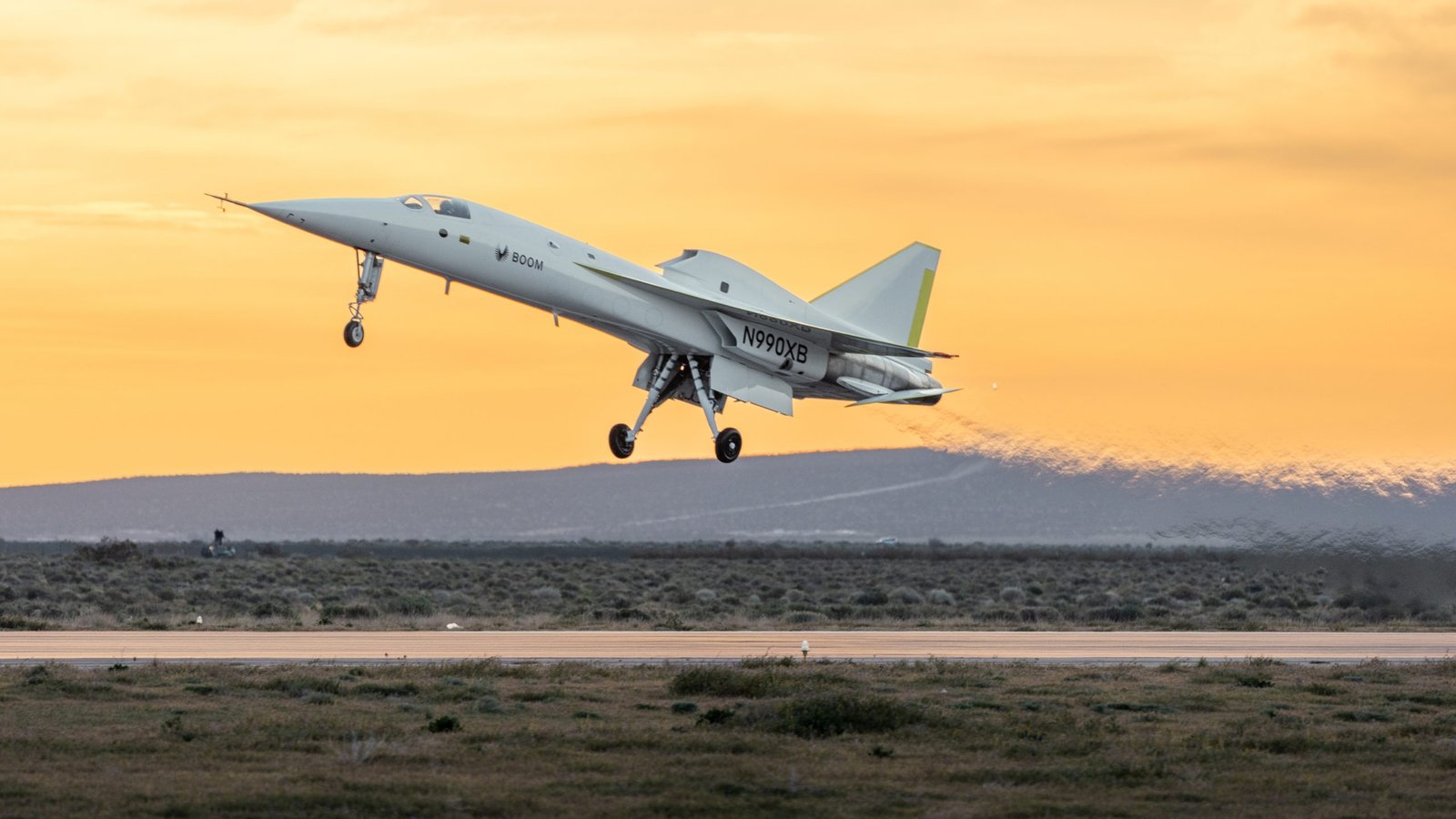
US start-up Boom Supersonic, which is developing a supersonic civilian airliner called Overture, says the proposal “establishes a practical pathway toward safe civil supersonic operations over land”. Boom has said it intends to fly Overture in Mach cutoff.
EFFECTS ON THE GROUND
But environmental groups are not letting up.
Their opposition largely targets the FAA’s use of overpressure for regulating sonic booms. (They also cite the relative fuel inefficiency, and hence increased carbon emissions, of supersonic compared to subsonic aircraft.)
In its proposal, the FAA calls 0.11 lb/sq ft overpressure a “level where sonic booms were sufficiently abated” and “consistent with the administrator’s duty to protect the public health from” sonic booms. But the FAA also concedes there is a “lack of integrated metric data available to determine a tolerable level of sonic boom”.
Rutherford from the non-profit ICCT calls overpressure a “blunt physical metric” that does not actually reflect “loudness or annoyance” and “is not linked to any data on human impacts”.
“Overpressure measures only the amplitude (height) of a noise signal and does not account for other factors that also influence how humans react to noise,” ICCT adds in a 10 August letter to the FAA. “A safe level of sonic boom cannot be defined because the data needed, in the form of a dose-response curve linking varying levels of sonic boom to human annoyance, do not exist.”
In a joint 14 August letter to the FAA, Sierra Club and Earthjustice say overpressure “does not actually measure human impacts” and that the FAA’s proposal “would have vast environmental and public health impacts”.
Detractors say sonic waves from different aircraft can have similar overpressure but much different effects on the ground.
Additionally, ICCT says flying within Mach cutoff is “challenging under real-world flight conditions, as it will be sensitive to speed, altitude, temperature, wind direction (horizontal and vertical) and humidity”.
The groups also say much more will soon be known about how sonic booms affect humans thanks to NASA’s X-59 supersonic demonstrator, an aircraft developed by Lockheed Martin to evaluate boom-reducing design features. NASA has been flight testing X-59 and plans to complete “community” overflights for the purpose of understanding how people on the ground perceive it.
INDUSTRY CONCERNS
Some manufacturers are also questioning the overpressure standard.
“Studies suggest community perception and annoyance may be more correlated to the noise level” than to overpressure, Rolls-Royce says in a 10 August letter to the FAA. Overpressure “has the potential to vary significantly in different operational environments. The amount of variability potentially could result in scenarios where the pressure is significantly higher”.
In a 17 August letter to the FAA, the union Air Line Pilots Association says “different combinations of aircraft speed, manoeuvres, aerodynamics and atmospheric conditions could result in different pressure waves”.
“Avoiding exceedances, given variances in atmospheric conditions throughout the entire airplane’s flight envelope, presently seems implausible,” ALPA adds.
The post FAA’s supersonic plan draws fire over sonic-boom metric first appeared on FlightGlobal.
