


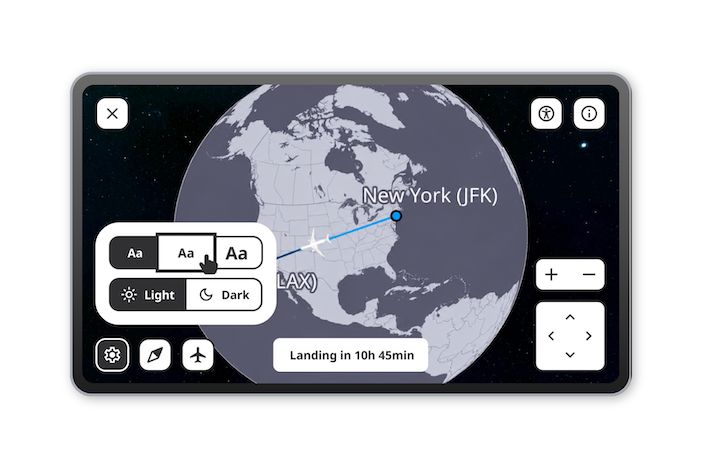
FlightPath3D, a developer of inflight moving map systems, has released the latest generation of its Accessibility Map, which was shortisted in the Crystal Cabin Awards.
FlightPath3D has monitored two years of active use of the system and listened to customer feedback, and has developed three new features for the updated version that are designed to improve usability and functionality for travellers with auditory, visual, and motor impairments.
The new features are available now for all Accessibility Map customers, and can be deployed digitally via FlightPath3D’s seamless content update process.
Passengers using accessibility mode in the Accessibility Map now have access to trip narration via the Luci AI-powered assistant. Luci’s ‘highlights’ functionality can deliver a narrative on the screen throughout the journey.
The information shared includes the air speed, altitude, and remaining travel time of the flight. Updates are streamlined to simplify the interface, limiting the types of messages shared to focus on the most relevant travel information, which can lessen sensory overload for users.
Additional configuration options in the update give users more control over the features of the Accessibility Map. A new button on the interface presents passengers with a settings menu where they can easily adjust font size, colour inversion, and other parts of the display to suit their individual preferences. Similarly, a new hand icon has been added to the user interface, which helps users improve navigate the system.
The initial version of the Accessibility Map was built to standards set by Web Content Accessibility Guidelines (WCAG) 2.2 in order to ensure regulatory compliance while also providing entertainment and information for travellers.
FlightPath3D consulted with the travellers most likely to the system, most notably including Delta Air Lines’ Advisory Board on Disability, to assess how best to extend the feature set of the Accessibility Map beyond those base WCAG standards and legal requirements. That direct feedback from users helped FlightPath3D decide which updates would address the real needs of a wide range of travellers.
Looking ahead, this meaningful feedback loop with actual users has enabled the FlightPath3D team to create a future product roadmap for the Accessibility Map. For example, text-to-speech narration and availability via Cloud Map and other personal device-based access methods are in development.
FlightPath3D anticipates that these additional features will expand the addressable market for the accessibility features, helping to deliver on the company’s goal to provide an inflight map service that can be enjoyed by any traveller, regardless of ability, age, or the device they use.
“Accessibility is not a one-time challenge. It requires vigilance and constant refinement to ensure we’re meeting the needs of all travellers,” stated Duncan Jackson, president of FlightPath3D. “We’re excited to continue innovation in accessibility, addressing essential passenger concerns today while laying out a roadmap for additional future updates.”
